



The World Cup has always been more than just a tournament; it is a global theater where the grand dramas of human ambition, identity, and resilience play out on a canvas of green grass. In the grand hierarchy of international football, few nations command as much awe and institutional reverence as Germany, a four-time world champion heralded for its clinical precision, deep tactical pedigree, and a population of 83 million people obsessed with the sport. Contrast this juggernaut with Curacao, a small, sun-drenched island in the southern Caribbean with a population of just under 160,000—a community so intimate that its entire populace could easily fit inside the host metropolitan area of Houston several times over. When these two wildly disparate nations scheduled their showdown at NRG Stadium in Houston, the match-up felt like the classic archetype of David versus Goliath. To the analytical observers, the tactical pundits, and the bookmakers, the game was a foregone conclusion, a mere warm-up exercise for the German machine on its inevitable path to glory. Yet, football has a wonderful, poetic habit of rejecting pre-written scripts. For a brief, magical moment under the Texas sky, the staggering divide between these two nations completely dissolved, replaced by a beautiful, agonizingly perfect state of equality that reminded every single spectator why they fell in love with humanity’s game.
As the whistle blew to start the match, Germany did exactly what was expected of them, immediately asserting their dominance with a masterclass in possession and spatial control. They moved the ball with an icy, calculated efficiency that left the Curacaoan defenders chasing shadows on the pitch. The inevitable breakthrough arrived with agonizing speed; just six minutes into the match, Germany orchestrated a flawless attacking sequence to take a 1-0 lead, a moment that felt like the beginning of an inevitable landslide. For most teams making their historical debut on the world stage, conceding such an early goal to a footballing powerhouse would trigger a psychological collapse, leading to a defensive retreat and a long evening of damage control. But the men representing Curacao possessed a different kind of resolve. Instead of bowing to the relentless pressure or allowing the early deficit to break their spirit, they dug their boots into the pitch and weathered the German storm with incredible dignity. They did not simply park the bus; instead, they worked in unison, keeping their defensive lines organized and slowly building the self-belief required to turn a projected blowout into a genuine, competitive contest.
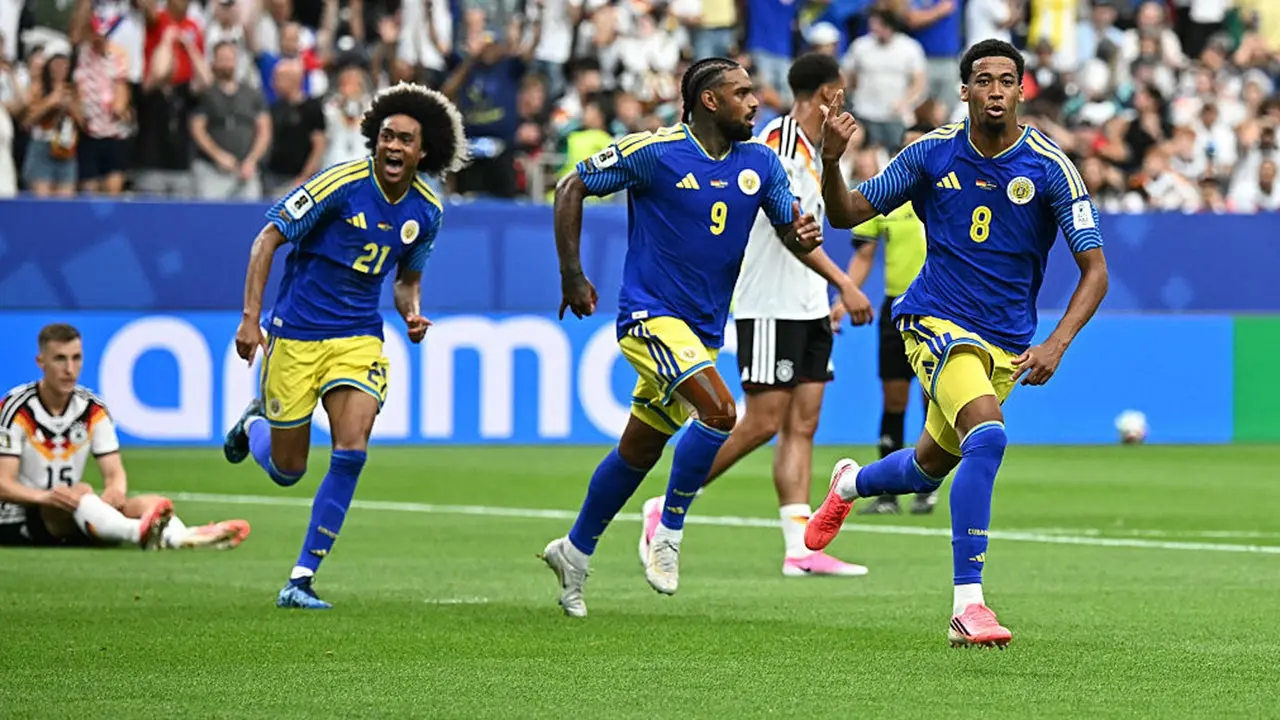
What followed next was a moment of pure, unadulterated sporting romanticism—a sequence of play that will be whispered about in the streets of Willemstad for generations to come. Amid Germany’s relentless possession, Curacao intercepted a pass, transitioned forward with courageous intent, and launched an attack that culminated in a historic, mind-boggling equalizer. The author of this unforgettable milestone was Livano Comenencia, a 22-year-old defender who plays his club football in the quiet, picturesque leagues of Switzerland. Displaying the composure of a veteran striker, Comenencia found himself in the perfect position to strike a blow for his country, sending the ball soaring past the German goalkeeper to claim Curacao’s first-ever goal in World Cup history. The ensuing celebration inside NRG Stadium was an explosion of raw, emotional catharsis. The roughly 7,000 Curacaoan fans in attendance erupted into a sea of blue and yellow, shedding tears of disbelief and joy as they embraced strangers in the stands. For those few seconds, it did not matter that Germany was a global superpower; what mattered was that a tiny island nation had left a permanent mark on the greatest stage in sports, proving that courage can level any playing field.
To grasp the true, human depth of this achievement, one must understand the unique tapestry of identity and heritage that defines this Curacaoan national team. The squad is not merely a collection of athletes; it is a moving testament to the modern diaspora and the profound emotional ties that bind families across oceans. Almost the entirety of the Curacao roster consists of players who were born and raised in the Netherlands, possessing the talent to chase comfortable, high-profile careers within the European footballing ecosystem. Yet, they made a deeply personal, conscious decision to bypass the Dutch national team to instead represent the small Caribbean island of their parents and grandparents, honoring the sacrifices of the generations that had migrated to Europe in search of new opportunities. Guiding this passionate band of brothers from the touchline is Dick Advocaat, a legendary 78-year-old manager whose illustrious career includes leading the Netherlands to the quarterfinals of the 1994 World Cup. Advocaat brought a wealth of tactical wisdom, old-school discipline, and a calming paternal energy to this youthful squad, helping these young men channel their deep ancestral pride into a cohesive, fearless unit capable of shocking the world.
Even when the match eventually shifted back in Germany’s favor—with the European giants reclaiming the lead in the 38th minute off a beautifully executed corner kick—the magic of Curacao’s moment remained entirely untarnished. In the grander context of the tournament, this match was never going to be defined solely by the final scoreline, because Curacao’s journey to the World Cup was already a miracle in and of itself. Ranked 82nd in the world, this tiny Caribbean nation had reached its maiden World Cup by remaining undefeated throughout a grueling CONCACAF qualifying group, defying the odds to finish ahead of traditional regional powerhouses like Jamaica, Bermuda, and Trinidad & Tobago. When you compare the sheer numbers, the narrative becomes almost biblical: the host city of Houston alone boasts a population of 2.4 million people, meaning that a single American city is fifteen times more populated than the entire island of Curacao. When contrasted with Germany’s massive population of 83 million and its endless line of corporate sponsorships, Curacao’s ability to stand competitive on the same pitch was more than just a stellar athletic performance; it was a profound victory of the human spirit over mathematical probability.
Ultimately, this unforgettable encounter in Houston served as a beautiful, poetic reminder of why the World Cup holds such a sacred place in the collective human consciousness. It is a rare, democratic space where geopolitical might, economic dominance, and historical privilege are momentarily stripped away, leaving nothing but twenty-two human beings, a ball, and a set of white lines. Curacao may have walked away from the match without the three points, but they left the stadium with something far more permanent and valuable: the universal respect of the sporting world and a permanent place in the annals of football history. For Livano Comenencia, Dick Advocaat, and the thousands of tearful fans who traveled across the world to wave their flags in Houston, that single goal was a glorious vindication of their culture, their roots, and the beautiful struggle of the underdog. Decades from now, when fans look back at the grand tapestry of the 2026 World Cup, they will remember the afternoon when a tiny Caribbean island dared to look a giant directly in the eye and, for one brilliant, fleeting moment, stood absolutely equal on the world stage.