


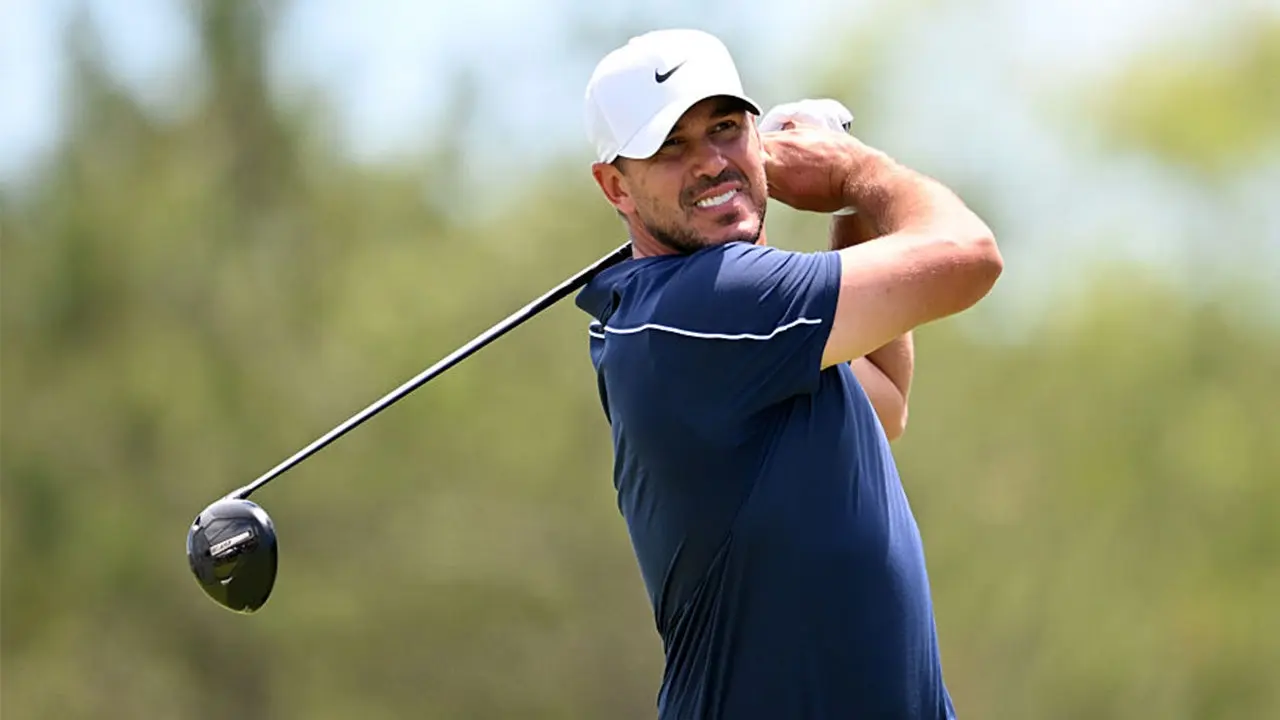
In the high-stakes, pressure-cooker world of professional golf, few players embody raw physical dominance and mental resilience quite like Brooks Koepka. Yet, even the game’s toughest competitors are ultimately at the mercy of their own bodies. This harsh reality came to a head on Sunday morning at TPC Toronto, when the five-time major champion was forced to make the agonizing decision to withdraw from the final round of the RBC Canadian Open. Having fought tooth and nail through a grueling Saturday round, Koepka found himself at six-under-par and just seven strokes off the lead—well within striking distance for a player of his caliber. But before he could even step onto the driving range to warm up for his final-round tee time, the physical toll became too much to bear, leaving fans with a stark reminder of the razor-thin margin between championship glory and sudden physical vulnerability.
The root of this sudden departure lies in a frustratingly mysterious hand injury that began plaguing the 36-year-old during Saturday’s third round. For a golfer, the hands are the singular conduit of control, translating years of muscle memory, speed, and precision directly into the clubface. After battling his way to a hard-fought, two-over-par 72 on Saturday afternoon, Koepka opened up about the unsettling sensations he was experiencing while trying to play. He described a bizarre numbness spreading through his hand, rendering him completely unable to secure a proper grip on his golf club with his ring and pinkie fingers. To feel one’s fingers slip and go loose at the top of a backswing is a terrifying feeling for any golfer, let alone a major champion navigating a crowded leaderboard. Koepka admitted that he had never encountered this specific type of physical ailment before in his career, leaving both him and his medical team scrambling for answers as the club repeatedly broke free from his grasp.
The timing of this physical setback is nothing short of devastating, casting a massive shadow over what was supposed to be a triumphant homecoming. Next week, the golfing world converges on the legendary Shinnecock Hills for the U.S. Open—the very course where Koepka cemented his legacy by winning his second consecutive U.S. Open title back in 2018. For a competitor who has built his entire brand around peaking for major championships, the opportunity to return to the site of one of his greatest career achievements was undoubtedly circled in red on his calendar. Now, instead of fine-tuning his ball-striking to conquer the brutal, windswept fescue of Shinnecock, Koepka faces an anxious race against time, with his status for the year’s third major championship suddenly hanging in jeopardy.
This injury roadblock is particularly heartbreaking given the impressive career arc Koepka has been carving out over the last year. Having navigated the complex political and competitive waters of leaving LIV Golf to return to the PGA Tour under the Returning Member Program at the start of 2026, he had been playing with the quiet confidence of a man eager to prove he still belongs at the absolute peak of the sport. His season leading up to the Canadian Open had been a testament to his renewed focus, yielding six top-20 finishes across 11 starts, including a highly encouraging tied-for-12th finish at the Masters in April. He was actively writing a compelling chapter of redemption and consistency, demonstrating to skeptics and supporters alike that his elite competitive fire remained entirely undiminished.
Beyond the emotional and historical weight of missing a major, the withdrawal also inflicts a practical blow to Koepka’s strategic season goals. By stepping away on Sunday morning, he forfeited a crucial opportunity to secure valuable FedEx Cup points—a critical currency for a player in his unique position. Under the current tour structure, Koepka lacks automatic status for the highly lucrative and prestigious Signature Events remaining on the calendar. Every single tournament round represents a vital chance to claw his way up the season-long standings to secure his future schedule. In professional golf, the margin for error is non-existent, and being sidelined during a stretch of highly productive play can derail months of calculated preparation.
As the golf world shifts its gaze toward the daunting test of Shinnecock Hills, the narrative surrounding Brooks Koepka quickly transitions from one of athletic dominance to one of human perseverance. The golf course is a lonely theater when your own body refuses to cooperate, and Koepka’s abrupt exit from TPC Toronto highlights the quiet frustration that athletes endure behind closed doors. Whether this strange hand numbness is a fleeting nerve issue or a symptom of a deeper physical problem remains to be seen. What is certain, however, is that the sporting world will be watching closely, hoping to see one of the era’s most formidable “big-game hunters” recover his grip in time to walk the historic fairways of the U.S. Open once again.