


The Executive Crusade Against Central Bank Autonomy
            _.-'''''''-._
          .'  ________   '.
         /  .'/______/'.
        |  | /         |   |
        |  | ________/ |   |
           '.________.'   /
          '.             .'
            '-.._____..-'
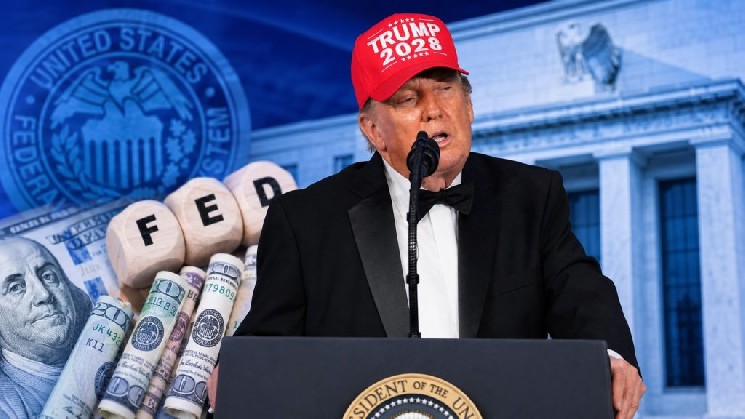
In a direct challenge to the traditional boundaries separating the executive branch from the nation’s monetary authorities, the current administration has intensified its public campaign to steer the course of domestic financial regulation. By asserting that the United States is structurally entitled to the lowest interest rates in the industrialized world, the executive office has brought long-standing systemic tensions between political cycles and central bank governance into sharp relief. This persistent pressure highlights a fundamental debate over the independence of the Federal Reserve, an institution historically insulated from electoral dynamics to prevent short-term political pressures from fueling structural inflation. Critics within monetary circles argue that treating interest rates as a tool for political posturing risks undermining foreign confidence in the dollar’s stability and domestic price mechanisms. Meanwhile, the administration’s public complaints regarding the alleged politicization of the Fed’s Board of Governors—particularly concerning internal consensus-building processes involving prominent figures like former Fed Governor Kevin Warsh—reveal deeper disagreements over who should ultimately steer the nation’s financial course. By framing these internal debates not as objective, data-driven policymaking but as politically motivated obstructionism, the administration seeks to redefine the terms of public accountability for a central bank that has long guarded its policy neutrality as a core pillar of its global credibility.
The Macroeconomic Tug-of-War Ahead of the Fed’s Looming Decision
             _________________
            /                /|
           /   INTEREST     / |
          /      RATES     /  |
         /________________/   |
        |   __________   |    |
        |  |  TRENDS  |  |    /
        |  |__________|  |   /
        |________________|  /
        |________________| /
This brewing institutional friction arrives at a critical juncture as global financial markets prepare for the Federal Reserve’s upcoming policy meeting, where policymakers must navigate an exceptionally complex economic landscape. The debate over whether to ease borrowing costs or maintain a restrictive policy stance is unfolding against a backdrop of conflicting data, where resilient consumer spending and tight labor markets clash with stubborn inflationary pressures across key economic sectors. While the administration contends that immediate, aggressive rate cuts are essential to stimulate domestic industrial investment, accelerate capital expenditure, and ease the burden of debt servicing on American households, central bank officials remain highly cautious about premature monetary easing. Historical precedents suggest that cutting interest rates too early, before inflation is fully stabilized, can de-anchor inflation expectations and force even more painful rate hikes down the road. This divergence in economic philosophy highlights the fundamental division between an administration prioritized on rapid domestic expansion and a central bank tasked with maintaining long-term financial stability, leaving global investors to parse every official communication for hints of a shift in policy direction.
High-Stakes Diplomacy and the Shadow of Military Intervention in Tehran
                 .---.
                /
                |  O  |   DIPLOMATIC
                  |  /    CORRIDOR
                 '-|-'
                   |
                 - _ -
Beyond the realm of domestic monetary policy, the administration is simultaneously managing a highly volatile foreign policy agenda, marked by a delicate diplomatic dance with Iran. Revealing that backchannel communications with Tehran are ongoing, the executive office has presented a dual-track strategy of open-ended diplomacy backed by the threat of decisive military action. This approach, which claims that Iranian representatives initiated the requests for negotiations, seeks to project strength while keeping diplomatic options on the table to address regional instability and nuclear proliferation. However, this strategy operates under a strict, self-imposed timeline; Washington has made it clear that its patience is not limitless and that any failure of the diplomatic track could trigger a swift transition to a powerful military response. By pairing these diplomatic overtures with the direct threat of military force, the administration is attempting to force concessions from an adversary weakened by international sanctions, even as regional observers warn of the unpredictable consequences of a potential military escalation in the Middle East.
The Fractured Alliance: Navigating Geopolitical Friction with Israel and Russia
             /         /
            /         /
           /    _____/
          |   __       __   |
          |  |  |     |  |  |
          |  |__|     |__|  |
                          /
                         /
             ___________/
This high-stakes diplomatic effort is further complicated by growing strategic differences between the United States and its closest regional ally, Israel, particularly regarding the long-term approach to handling Iranian influence. While both nations share the goal of neutralizing threats from Tehran, public acknowledgments of policy disagreements with Israeli Prime Minister Benjamin Netanyahu highlight a deeper debate over the timing, methods, and thresholds for direct intervention. This delicate situation is further strained by reports that Moscow may have supplied advanced satellite reconnaissance technology to Iran, a development that could significantly alter the military balance in the Middle East by giving Tehran enhanced early-warning capabilities. In response, the administration has indicated its intention to confront Russian President Vladimir Putin directly on this matter, adding another layer of complexity to an already tense relationship between Washington and Moscow. This convergence of regional rivalries and superpower competition underscores the challenges of managing global alliances when tactical disagreements threaten to disrupt unified geopolitical strategies.
Patriot Missiles and the Industrial Demands of Global Defense Architecture
                .===.
                |   |      [PATRIOT]
                |===|      |||||||||
                |   |      =========
                |   |          |
                |   |         /
                '---'        /
Recognizing that diplomatic posturing requires credible military backing, the administration has emphasized the scale and responsiveness of the American defense industrial base, pointing to the accelerated production of Patriot air defense systems as a key element of its global deterrence strategy. As one of the world’s most powerful and advanced interceptor technologies, the Patriot missile system serves as a tactical shield for U.S. forces and allied nations operating under constant threat of drone and ballistic missile attacks. The administration’s focus on boosting production capacity is both an assurance to security partners and a clear warning to potential adversaries regarding America’s industrial stamina. However, rapidly scaling up production of these complex systems presents significant challenges, requiring highly coordinated supply chains, specialized engineering talent, and sustained capital investment at a time when domestic manufacturing faces ongoing logistical and labor constraints. This industrial push highlights the growing friction between expanding global defense commitments and the practical limits of domestic manufacturing, demonstrating that modern deterrence is as much about supply chain resilience as it is about tactical execution.
Volatility in the Pits: Goldman Sachs Outlines the Global Shift Toward Macroeconomic Risk
            _________________
           /                /|
          /  GOLDMAN SACHS / |
         /    MARKET NOTE /  |
        /________________/   |
        |   __________   |    |
        |  |  ENERGY  |  |    /
        |  |__________|  |   /
        |________________|  /
While politicians and diplomats navigate these complex geopolitical waters, the global financial community is closely analyzing how these international tensions are reshaping market dynamics. A recent analysis by Goldman Sachs highlights this environment, tracking how heightened volatility in global energy markets has fundamentally altered investor behavior. According to the investment bank’s research, the wild fluctuations in crude oil prices—driven by conflict in the Middle East and shifting OPEC+ production strategies—have forced a rapid reallocation of capital, shifting investor focus from individual corporate assets and balance sheets to broader macroeconomic indicators like inflation, interest rates, and GDP growth. In this environment of heightened uncertainty, traditional microeconomic analysis of corporate earnings has taken a backseat to macro-driven hedging strategies, as market participants prepare for a prolonged period of higher-for-longer interest rates. Although Goldman Sachs expects the Federal Reserve to hold its benchmark rate steady in its upcoming decision, the growing anticipation of a more hawkish policy outlook demonstrates how geopolitical instability feeds directly into financial markets, complicating the central bank’s efforts to guide the global economy toward a stable landing.
Key Takeaways from the Evolving Policy Landscape
| Area of Analysis | Core Executive Stance | Institutional & Market Realities |
|---|---|---|
| Monetary Policy | Demands the “lowest interest rates in the world” to spur U.S. investment; accuses the Fed of acting politically. | The Fed prioritizes long-term price stability over political cycles, wary of premature rate cuts rekindling inflation. |
| U.S.-Iran Relations | Open to diplomatic talks with Tehran, but warns of a “very powerful” military option if discussions stall. | Regional dynamics and strategic timelines limit the window for a stable, long-term diplomatic resolution. |
| Global Alliances | Acknowledges strategic disagreements with Israel’s Netanyahu; intends to question Russia’s Putin on satellite transfers. | U.S. foreign policy must balance regional defense commitments with broader global superpower rivalries. |
| Defense Output | Highlights massive domestic production of advanced Patriot air defense missiles as a cornerstone of deterrence. | The defense industrial base faces ongoing supply chain and labor constraints while attempting to scale production. |
| Market Outlook | Argues that current monetary tightening is unnecessarily restrictive and holds back economic growth. | Goldman Sachs notes that oil market volatility has shifted investor focus to large-scale macro risks, pricing in a hawkish Fed. |
Disclaimer: This article is for informational and journalistic purposes only and does not constitute financial, investment, or geopolitical advice.