


The taste of long-awaited triumph still lingers in the humid air of the Carolinas, a sweet residue of a season that finally broke a decade-long drought of postseason relevance and restored a sense of fierce pride to a weary fanbase. For the first time in ten grueling years, the Carolina Panthers climbed back to the absolute summit of the NFC South, a resurrection culminated by a breathtaking, heart-stopping wild-card clash in January that saw them push Matthew Stafford and the battle-tested Los Angeles Rams to the absolute brink of elimination. Though that playoff run ended in a narrow, agonizing defeat on their own turf, it served as an undeniable declaration to the rest of the football world that Carolina was no longer a rebuilding project, but a genuine, rising powerhouse. This newfound identity was solidified and celebrated in the spring when the front office officially picked up the fifth-year option for quarterback Bryce Young, a decisive and expensive vote of confidence in the former number-one overall draft choice who had successfully navigated the crucible of early career skepticism to become the undisputed heartbeat of the franchise. As the calendar turns toward the highly anticipated 2026 campaign, the atmosphere surrounding Bank of America Stadium is thick with a potent mixture of soaring optimism and intense, unrelenting pressure. No longer the scrappy underdogs flying under the radar, the Panthers must now adjust to the psychological weight of being the hunted, entering the year with the explicit, high-stakes goal of securing back-to-back division titles and proving that their recent success was not a mere flash in the pan. Yet, in the brutal, hyper-competitive landscape of professional football, the margin between a triumphant march to glory and a catastrophic descent into mediocrity is notoriously razor-thin, often determined not by grand strategic designs, but by the physical resilience of the human beings tasked with executing them.
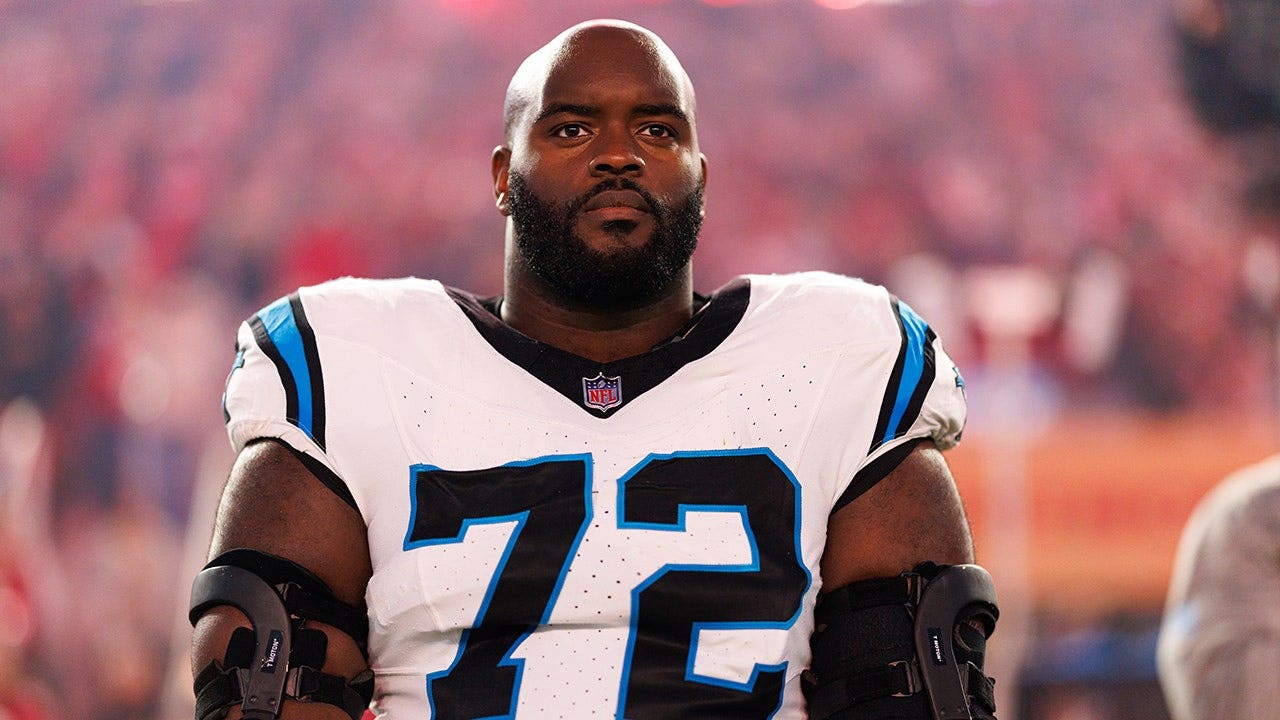
This precarious reality of athletic longevity was brought into sharp, terrifying focus on Tuesday when the Panthers organization confirmed a devastating medical setback for one of their most beloved and reliable veteran anchors. Taylor Moton, the stalwart starting right tackle who has served as the quiet, unbreakable guardian of Carolina’s offensive line for nearly a decade, will be completely sidelined when the regular season officially kicks off this September. The news struck the organization like a physical blow, transforming what is usually a period of optimistic training camp preparation into a sobering reminder of life’s unpredictable hurdles. In late June, during what should have been a standard offseason period of rest and physical conditioning, medical professionals made the alarming discovery of a blood clot nestled within Moton’s left lung. For a thirty-one-year-old athlete who has built his entire life around physical peak performance and durability—originally drafted by the Panthers in the second round of the 2017 draft out of Western Michigan and playing all nine of his stellar NFL seasons in Charlotte—the diagnosis instantly transcended the boundaries of sports, morphing into a deeply personal health crisis. Moton was immediately placed on a regimen of blood thinners, a treatment to which his body has fortunately responded remarkably well under the constant, vigilant supervision of the Carolina medical staff. However, because the physical contact inherent to professional football is entirely incompatible with active blood-thinning medication, the franchise was forced to place their veteran leader on the non-football injury list. While Moton’s long-term health remains the absolute priority, his sudden absence leaves a monumental, cavernous void on the right side of the offensive line, depriving Bryce Young of a trusted protector who has spent years establishing himself as one of the most reliable and consistent edge blockers in the entire league.
Making matters exponentially worse for the Panthers’ offensive brain trust is the chilling reality that the left side of the offensive line is facing its own severe crisis of physical integrity. Starting left tackle Ikem Ekwonu, the former first-round blue-chip prospect who was drafted to be the absolute cornerstone of Charlotte’s pass protection scheme, is still locked in a grueling, painful rehabilitation process following a catastrophic injury suffered during that intense January wild-card playoff battle. Ekwonu suffered a fully ruptured patellar tendon in his right knee, an injury notorious in the sporting world for its agonizing recovery timeline and the immense mental and physical toll it extracts from athletes trying to regain their explosive lateral power. For the young lineman, this devastating knee injury represents the latest chapter in a bizarre, deeply frustrating saga of physical adversity; only a year prior, in August of 2025, his developmental trajectory was abruptly interrupted by an emergency appendectomy surgery that stripped him of vital training camp reps and threatened his early-season conditioning. The grueling journey back from a ruptured patellar tendon is a lonely, exhausting path characterized by countless hours of monotonous physical therapy, swelling management, and the slow, agonizing process of learning to trust one’s own limbs again under extreme force. As the September opener rapidly approaches, the uncertainty surrounding Ekwonu’s readiness creates a highly volatile situation for a franchise whose entire future is mathematically and financially tied to the physical safety of Bryce Young. To drop a young franchise quarterback into a regular-season environment without his primary blindside protector is akin to sending a general into battle without his armor, creating a palpable sense of anxiety that reverberates from the front office down to the passionate fans in the nosebleed section.
Adding another layer of complexity and anxiety to this injury-plagued summer is the defensive side of the ball, where the Panthers’ secondary has been dealt its own highly frustrating blow with the sidelining of star cornerback Jaycee Horn. Horn, a two-time Pro Bowl defensive back whose elite coverage skills are absolutely vital to defensive coordinator Ejiro Evero’s aggressive secondary schemes, joined Moton on the non-football injury list this week after experiencing a freak accident during his private offseason training regimen. According to official team statements, the highly talented cornerback suffered a deep cut to his foot while running, an agonizingly minor yet highly disruptive injury that halts his preparation at a critical juncture of the pre-season. Horn is no stranger to the delicate balance between elite athletic dominance and the frustrating reality of physical setback; last season, he was forced to miss a crucial Week 12 showdown against the powerhouse San Francisco 49ers, though he ultimately displayed remarkable toughness by battling back to make sixteen high-impact appearances over the course of the year. The recurring pattern of minor and major injuries limiting Horn’s consistency has been a narrative he has fought desperately to rewrite, making this bizarre offseason foot laceration feel like a cruel joke of fate. The non-football injury list is often a legal and roster-management necessity, but the human reality behind it is one of profound frustration for a player who wants nothing more than to prove his durability and solidify his status as one of the premier shutdown defenders in the NFL. With Horn and Moton both temporarily sidelined, the team’s depth chart is being stretched to its absolute limits before a single padded practice has even been conducted, testing the mental fortitude of a squad that must remain focused amidst a flurry of bad news.
In the high-stakes, ruthless chess match of NFL front-office management, however, anticipation is often the only shield against total disaster, and General Manager Dan Morgan’s offseason maneuvers are now looking nothing short of prophetic. Sensing the inherent fragility of an NFL roster, the Panthers’ brass had already moved aggressively in free agency back in March to sign versatile veteran tackle Rasheed Walker, primarily as a high-quality insurance policy for Ekwonu’s uncertain recovery timeline on the left side of the line. But the true stroke of strategic genius—or perhaps incredibly fortunate foresight—occurred during the 2026 NFL Draft when Carolina used their coveted first-round selection, the eighteenth overall pick, to secure the services of Monroe Freeling, a mountain of an offensive tackle prospect with elite athletic traits. Originally drafted with the long-term vision of developing him into a franchise tackle of the future, Freeling now finds his developmental timetable drastically accelerated by the unforgiving hand of fate. With Moton sidelined on the right side and Ekwonu racing against the clock on the left, the rookie out of the draft is suddenly thrust into a high-pressure baptism by fire, likely tasked with securing the starting right tackle position on day one of his professional career. The transition from the collegiate ranks to the brutal, hyper-speed environment of the NFL is already one of the most mentally taxing leaps in all of professional sports, but doing so with the immense weight of protecting a franchise quarterback makes Freeling’s upcoming training camp one of the most critical storylines in the league. This is the unvarnished reality of the “next man up” philosophy: a process that strips away the luxury of patience and demands immediate, elite-level execution from rookies who, just months ago, were sitting in college classrooms.
Ultimately, the true measure of the 2026 Carolina Panthers will not be found in the aesthetic perfection of their roster paper, but in how they navigate the agonizing, unpredictable crucible of physical adversity that has compromised their offensive front line. The narrative of this upcoming season has transformed overnight from a story of triumphant, smooth ascension into a gritty test of survival, depth, and structural adaptability. For Bryce Young, this challenge represents an opportunity to elevate his status from a highly talented young quarterback to a transcendent, unifying leader who can elevate the play of those around him, delivering quick passes and executing a dynamic offense even when the blocking scheme is compromised. The human element of this sport is defined by these very moments of crisis, where the collective will of a locker room must rise to compensate for the physical absence of their legendary warriors like Moton and the rehabbing Ekwonu. If the coaching staff can successfully integrate Rasheed Walker and rapidly mature Monroe Freeling into an effective, cohesive boundary duo, while the medical staff guides Moton back to full health and safety, this period of tribulation could ultimately forge a far more resilient championship contender. As September approaches and the heat of the summer yields to the crisp air of autumn football, the eyes of the entire sports world will be on Charlotte, waiting to see if this battered but unyielding roster has the depth to defend their division crown, or if the ruthless war of attrition will claim another promising season before it ever truly begins. In the end, the path to greatness is rarely paved with easy victories; it is carved through the stubborn, collective refusal to let adversity dictate the final chapter of their story.