




There is a unique, almost palpable electricity that runs through the historic city of Philadelphia when its beloved baseball team is clicking on all cylinders—a buzzing kinetic energy that flows from the heart of Broad Street straight into the raucous, red-brick confines of Citizens Bank Park. For years, the Phillies searched for a defining identity, drifting through frustrating seasons of untapped potential and quiet winters until a decisive leadership change brought manager Rob Thomson to the helm. That crucial transition ignited a profound culture shift, transforming a quiet, tense clubhouse into a roaring, tight-knit powerhouse where players are encouraged to be their authentic, passionate selves. On a warm, sticky Saturday evening, this collective transformation reached a poetic and highly historical crescendo against their bitter divisional rivals, the New York Mets, in a game that felt less like a standard mid-season divisional matchup and more like a theatrical exhibition of pure, joyful sporting dominance. At the absolute center of this offensive masterclass were two men whose names are already etched deeply into the lore of modern Major League Baseball: Kyle Schwarber, the burly, blue-collar folk hero possessing light-tower power, and Bryce Harper, the generational prodigy who has fully embraced Philadelphia as his eternal, spiritual home. Together, they orchestrated an offensive onslaught that did not merely defeat their Queens adversaries but thoroughly dismantled them in a breathtaking 15-3 blowout, leaving the sellout home crowd in a state of sheer, unadulterated delirium. It was a magnificent night where individual milestones and team-wide chemistry fused perfectly, creating a three-hour spectacle that reminded every soul in attendance why baseball, in all its agonizing slow-burn glory, is a sport of unmatched romance, legacy, and sudden, explosive drama. This resounding victory served as a definitive, loud statement to the rest of the league: under Thomson’s steady hand, these Phillies are no longer just chasing postseason dreams; they are actively dictating the narrative of the sport on their own terms.
To understand the sheer physical magnitude of this memorable evening, one must first break down the thunderous performance of Kyle Schwarber, a player whose batting style is the sporting equivalent of an exhilarating demolition derby. Schwarber does not merely hit baseballs; he banishes them into the summer night sky with a violent, beautiful swing that captivates even the most casual observers of the game. On this particular Saturday, the Mets’ pitching staff served as his unfortunate victims, starting with a historic third inning that will be talked about by Phillies historians for decades to come. Facing New York’s beleaguered hurlers, Schwarber first launched a colossal 456-foot home run that seemed to hang suspended in the humid air before crashing into the distant, cheering seats of the stadium. Unbelievably, he was far from finished. As the Phillies batted around in that very same frame, Schwarber found himself back in the batter’s box, this time facing Mets reliever Cionel Pérez. With the crowd still buzzing from his previous exploit, he turned on an inside pitch and launched an almost identical 457-foot rocket that sent the stadium into an absolute frenzy of flying cups and high-fives. With those two massive swings, Schwarber became only the 67th player in major league history—and just the second this season—to hit multiple home runs in a single inning. In doing so, he joined an incredibly exclusive group of Phillies legends, becoming only the fourth player in franchise history to achieve the feat alongside modern star Trea Turner (2023), Von Hayes (1985), and Andy Seminick (1949). He would ultimately cap off his legendary night in the seventh inning with a towering two-run blast, bringing his season total to a league-leading 28 home runs and securing the fifth three-homer game of his career. It was a masterclass in raw power, illustrating how Schwarber defies traditional baseball wisdom by combining patient eye contact with catastrophic, game-altering power.
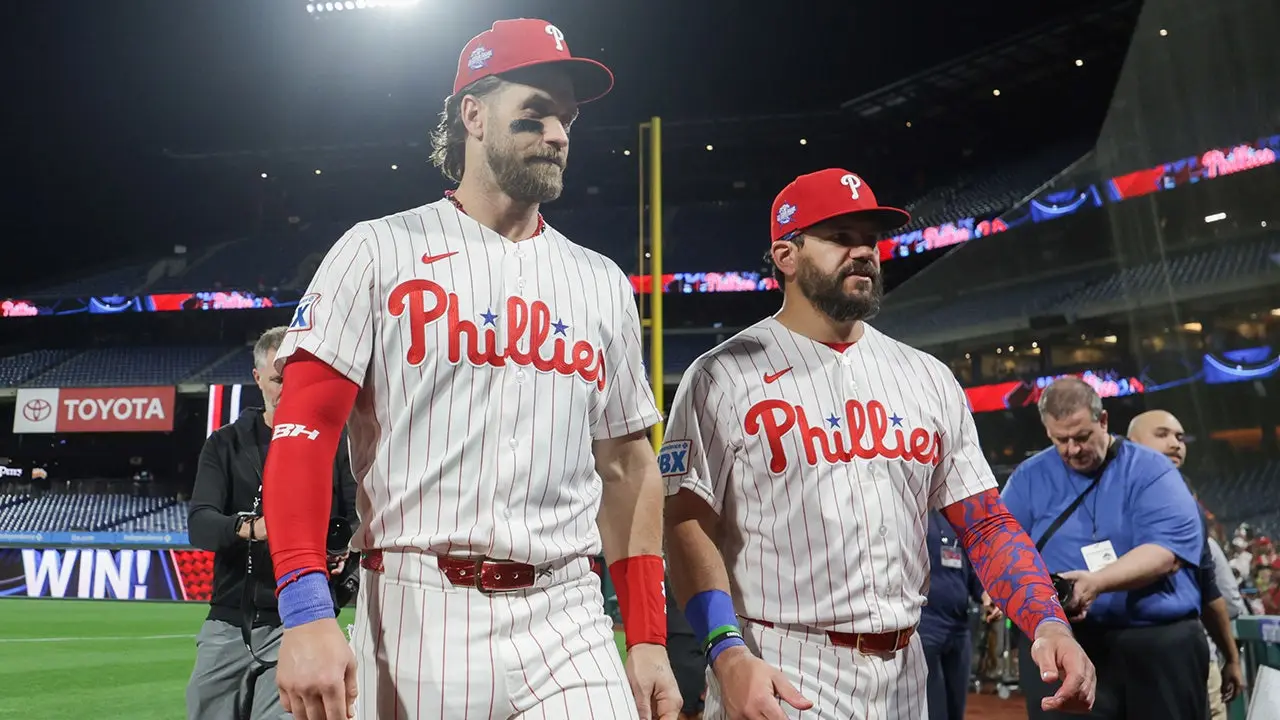
While Schwarber provided the raw, trembling thunder, Bryce Harper painted a masterpiece of pure baseball poetry, achieving a career milestone that had somehow eluded him throughout his highly decorated, decade-long run in the majors. Harper has always been a consummate showman, a player who actively seeks the grandest stages and delivers moments of theatrical brilliance when his city needs them most. On Saturday, his relentless quest for historical perfection began in the very first inning when he crushed his 16th home run of the season, a majestic solo blast that set an aggressive, uncompromising tone for the rest of the lineup. In the explosive third inning, playing supporting actor to Schwarber’s historic display, Harper kept the line moving by lacing a sharp double down the line and following it up with a timely single, putting him precisely halfway to the most difficult individual feat in the sport: the cycle. As the game progressed into the fifth inning, the tension inside Citizens Bank Park grew heavy and sweet as fans realized that baseball immortality was within arm’s reach. Facing a crucial plate appearance with runners aboard, Harper drove a pitch deep into the gap in left-center field. As the ball skipped wildly toward the wall, Harper put his head down, his signature long hair flowing wildly beneath his helmet as his boots kicked up dirt, rounding second base with reckless, driving determination. He slid into third base with a chest-first, dramatic triple, driving in two runs and sealing his very first career cycle. The stadium erupted into a prolonged, deafening standing ovation, validating the 11th cycle in Phillies history. It was a moment of pure, unadulterated sporting beauty that highlighted not just Harper’s incredible athletic versatility, but his deep, reciprocal love affair with a city that demands and rewards hustle above all else.
Amidst the deafening fireworks and historic hitting displays from the offense, it would be dangerously easy to overlook the quiet, clinical masterclass delivered on the mound by starting pitcher Cristopher Sanchez, whose performance was just as vital to this historic triumph. Pitching in the long shadow of high-profile offensive giants can often be a thankless, high-pressure task, but Sanchez went about his business with an ice-cold precision that systematically dismantled the Mets’ hitters from his very first warm-up pitch. Over six incredibly efficient and masterfully crafted innings, Sanchez surrendered only a single earned run, a minor blemish on an otherwise spotless night that lowered his season earned run average to a spectacular, elite-level 1.80. What makes Sanchez’s performance truly historic, however, is the staggering, mechanical consistency he has displayed on his home turf. Saturday’s outing marked his 23rd consecutive start at Citizens Bank Park in which he allowed two earned runs or fewer. To put that achievement into proper perspective, it is the second-longest such streak by any pitcher at a single ballpark in Major League Baseball history since 1913, trailing only the legendary Jacob deGrom, who put together a mind-boggling 24-start streak for the Mets at Citi Field between September 2019 and August 2022. Sanchez’s uncanny ability to transform the Phillies’ home stadium into an impenetrable, hostile fortress for opposing lineups has provided the pitching staff with an invaluable, calming anchor. His journey from an uncertain prospect with control issues to a historically reliable ace is a testament to the club’s player development under Rob Thomson and his own relentless work ethic. On this night, his quiet composure served as the perfect, steady counterweight to the explosive energy of the offense, illustrating that the Phillies’ success is built on a foundation of elite, disciplined pitching just as much as it is on thunderous, tape-measure home runs.
The true beauty of this dominant 15-3 blowout lies in the organic way it encapsulates the deep, brotherly chemistry that has come to define this current iteration of the Phillies. Under the relaxed, trust-based leadership of Rob Thomson, this roster has completely transitioned away from the transactional relationships often found in modern professional sports, replacing them with a genuine, infectious joy for one another’s personal success. When Harper slid safely into third to complete his cycle, or when Schwarber launched his historic second third-inning blast, the television cameras did not just capture the ecstatic, beer-spilling reactions of the fans; they captured the absolute, uninhibited madness erupting within the home dugout. Highly paid veterans and young, hungry rookies alike hung over the iron railings, throwing their hands in the air, high-fiving, and screaming in delight, showcasing a tight-knit squad that genuinely loves playing the game alongside each other. This authentic, playground-like camaraderie is the secret, driving force behind their rapid ascension to the top of the division. In a modern sporting landscape where individual statistics and personal contract values are so often prioritized, this particular Phillies team plays with a refreshing, collective selflessness that resonates deeply with the proud, blue-collar spirit of Philadelphia. The historical context of the night—with Schwarber and Harper joining the legendary, dust-covered ranks of past Phillies icons—serves as a beautiful, emotional bridge between the franchise’s storied, often heartbreaking history and its incredibly bright, hopeful present. It is a vivid, colorful reminder that while baseball is a game increasingly governed by cold data, spin rates, and analytical spreadsheet metrics, it is ultimately driven by the warm human spirit, by the deep bonds forged in the locker room, and by a singular, collective obsession with bringing a championship trophy back to a fanbase that values heart and hustle above all else.
As the dust finally settled on the pristine green grass of Citizens Bank Park and the final, satisfying outs were recorded, the lingering scent of stadium popcorn, fresh-cut turf, and the joyous, echoing melodies of the post-game celebration hung heavy in the cool summer evening air. The Phillies and the Mets will quickly return to this very same field on Sunday night to conclude their emotional, high-stakes three-game series under the bright lights of the national spotlight, but no matter what transpires in that highly anticipated finale, the vivid memories of Saturday’s historic and soul-stirring performance will remain permanently etched in the minds of anyone fortunate enough to witness it. For the thousands of passionate, red-clad fans who packed the stadium, slowly filing out into the warm Philadelphia night with wide smiles plastered across their faces, this was not just another standard notch in the win column; it was one of those rare, magical nights that parents will fondly tell their children about decades from now—a beautiful testament to where they were when Schwarber launched his historic rockets and Harper completed his heroic cycle. In a grueling, exhausting, and often mundane 162-game season filled with inevitable slumps, nagging injuries, and quiet, frustrating defeats, performances of this legendary caliber serve as a powerful, grounding reminder of why we fall so deeply in love with athletic competition in the first place. Under the calm, guiding light of manager Rob Thomson, stars like Kyle Schwarber, Bryce Harper, and Cristopher Sanchez did not just put on a highly entertaining show; they gifted the city of Philadelphia a timeless, generational memory. It was a beautiful, shining testament to what can happen when elite, world-class talent, meticulous preparation, and a deep, reciprocal love for a city and its sport collide on a perfect, absolutely unforgettable summer night in Pennsylvania.