





1. The Miracle and the Promise
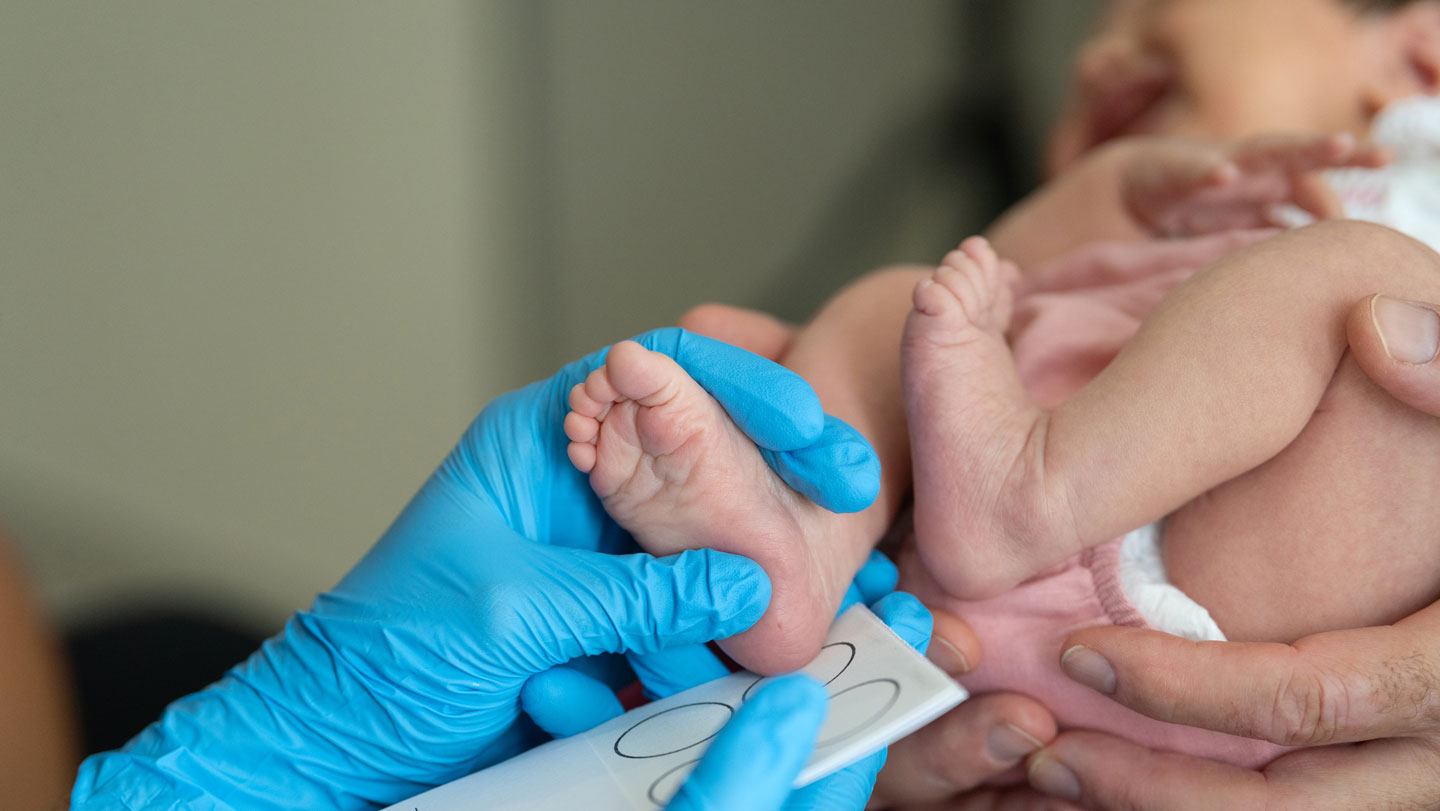
The stark white lights of the newborn nursery hum a soft, mechanical lullaby, punctuated by the occasional sharp cry of a new arrival testing the outer limits of her lungs. The tradition is a simple heel prick, a quick stab that draws a few precious droplets of blood onto a filter card to test for a handful of metabolic disorders—a standard rite of passage in the modern birthing suite. But as we stand on the precipice of a new era in genomic medicine, a quiet revolution is stirring in the refrigerators of those laboratories. The same blood that tests for phenylketonuria and cystic fibrosis could soon be sequenced in its entirety, revealing the entire blueprint of a human life, including the ticking time bombs of cancer-causing mutations nestled deep within the DNA. The promise is breathtaking: to catch a malignant storm before it ever forms, to see the shadow of a tumor years before it casts a shadow on an X-ray. For a parent holding their sleeping infant, the idea is intoxicating—a shield forged from pure information. Yet, as we peer deeper into this microscopic crystal ball, we must confront a profound and uncomfortable truth: knowledge, even life-saving knowledge, is rarely weightless. It does not come without a cost, and that cost is often tallied not in dollars, but in sleepless nights, in the tremors of anxiety that tighten a parent’s chest, and in the subtle, corrosive fear that can transform a healthy childhood into a waiting room for a diagnosis that may never come. The dilemma of newborn genetic screening for cancer mutations is one of humanity’s most complex, forcing us to balance the unassailable power of prevention against the fragile, precious, and often overwhelming weight of human emotion. This is not merely a scientific debate; it is a deeply personal, human struggle that asks us to define what it means to be healthy, what it means to be safe, and what it means to be a parent in the digital age of the genome.
2. The Medical Head Start
Let us consider the undeniable triumph of early intervention. For certain pediatric cancers, the timeline is brutally short. A child with a hereditary mutation in the RB1 gene, for example, has an almost 90% chance of developing retinoblastoma, a cancer of the eye that can blind a child or require the surgical removal of the eye if caught too late. With newborn screening, an ophthalmologist can perform a retinal exam in the first weeks of life, often finding and treating tiny tumors while they are still microscopic, preserving sight and life more effectively than any treatment started six months later. Similarly, mutations in genes like APC signal Familial Adenomatous Polyposis, a condition where hundreds of polyps carpet the colon by the teenage years, almost inevitably leading to colorectal cancer by age forty. A child identified at birth can be enrolled in a rigorous surveillance program—colonoscopies starting in early adolescence—allowing doctors to remove precancerous polyps as they appear, effectively preventing a lethal cancer. For those with Multiple Endocrine Neoplasia type 2, the RET gene mutation carries a near-certain risk of medullary thyroid cancer in early childhood; a prophylactic thyroidectomy before age five can add decades to a life. These are not hypothetical futures; they are the hard-won victories of precision medicine. The genetic test is not a doom-laden prophecy but a road map. It tells the doctor exactly where the danger lies on a vast and otherwise uncharted highway of life. It transforms oncology from a reactive discipline—waiting for the insidious symptoms of weight loss, pain, or fatigue to signal a catastrophe—into a proactive, strategic field. It allows parents to create care plans, to seek out specialists months before a crisis, and to provide their children with a childhood that, while laced with hospital visits, is unmarred by the violent shock of a stage IV diagnosis. In the starkest terms, this knowledge is a lifeline, offering a defiant “no” to the inherited fate that nearly struck down their ancestors, allowing the family narrative to be rewritten with a happy ending.
3. The Psychological Weight
But what is the psychological price of that stunning head start? Every child is a symphony of potential, but the child labeled as a “mutation carrier” is often relegated to a single, low note playing beneath all others—the note of cancer. Psychologists call it the “Vulnerable Child Syndrome,” a state of being where parents forever view their offspring through the lens of fragility, even when they are entirely healthy. A scraped knee is no longer a minor scrape but a potential port for infection; a slight fever is no longer a common viral illness but a harbinger of leukemia. The anticipatory grief sets in early. Parents mourn the cancer that might never happen, losing years of carefree joy to the shadow of a biostatistical risk. This anxiety is not merely a parental burden; it becomes woven into the very fabric of the child’s identity. Imagine a ten-year-old who learns they carry a BRCA1 mutation—a gene often associated with breast and ovarian cancer in adulthood. The whispers of “genetic mutation” become a phantom limb, a constant awareness of a body that is simultaneously theirs and yet fundamentally untrustworthy. They might become hyper-vigilant, performing self-examinations they are too young to understand the purpose of, or they might develop a fatalistic attitude, engaging in risky behaviors driven by the belief that they are already destined to die young. The stethoscope and the MRI machine become familiar, terrifying friends. The innocent curiosity of “What do you want to be when you grow up?” is replaced with the more mundane, terrifying question, “Will I be alive to grow up?” The most insidious risk is the loss of a normal childhood. The decision to shield a child from the information until adulthood contradicts the point of early screening, yet telling them too early can fracture their developing sense of self. The balancing act between protection and knowledge is a grueling, heart-wrenching tightrope walk that no parent should have to perform without extensive psychological armor.
4. Ethical and Medical Uncertainty
Beyond the emotional turmoil lies a more technical and equally unsettling hazard: the ambiguity of the genome itself. The human genome is not a perfect, static manuscript; it is a living, breathing text riddled with typos, punctuation errors, and annotations. When a lab sequences a newborn’s DNA, they often find what are called Variants of Unknown Significance (VUS). These are mutations that look suspicious but have no confirmed link to cancer. The result is a clear case of information without interpretation. A pediatrician calls a parent with the terrifying news that their child has a “change” in a cancer gene, only to follow up with, “but we don’t know what it means.” This can lead to a destructive cascade of overtreatment. Terrified parents may insist on aggressive prophylactic surgeries, unnecessary chemoprevention, or endless, unneeded scans that expose their growing child to cumulative radiation. The medical establishment is also riddled with ethical debates. The American College of Medical Genetics recommends returning results for 59 specific genes associated with medically actionable conditions, regardless of whether the child is at risk, because early intervention matters. But is it ethical to test an infant for a gene like BRCA1, a mutation that confers a high risk for a cancer that won’t strike until middle age? The child cannot consent to this genetic surveillance. Their privacy is compromised from the moment of birth. A medical record detailing a lifetime of cancer risk can follow them through life, affecting their ability to get certain types of insurance, their employment prospects, and even their romantic relationships. We are making a profound, irreversible decision for a person who has no voice, and we are making it based on probabilities, not certainties. Furthermore, false positives are a stark reality—a screening test that indicates a mutation where, upon further analysis, the sequence is benign, leaving a family shattered by an entire week of grief over a ghost.
5. The Family and Societal Impact
The ramification of a newborn’s genetic test ripples out far beyond the baby’s bassinet. Genes are hereditary, and a positive test for a cancer syndrome in a child is an inevitable declaration about their parents. If a baby carries a mutation in the TP53 gene (Li-Fraumeni syndrome), that mutation almost certainly came from the mother or the father. The utterly shocking news of the infant’s risk often ignites a family crisis. The parent who passed it on may be consumed by an unbearable, crushing guilt—a sense of having “poisoned” their own child. This can fracture marriages, create deep resentment between the parents, and strain relationships with grandparents who might also be carriers. A simple test in a newborn can turn into a multi-generational epidemiological investigation, dredging up decades of family secrets about cancers and untimely deaths. The financial toll is also immense. While genetic testing itself is becoming cheaper, the subsequent surveillance—yearly MRIs, CT scans, blood work, specialist visits—can bankrupt a family. It can place a massive burden on public health systems. Societally, we must also confront the dark side of genetic determinism. If a couple knows one parent carries a lethal mutation, they might face terrible decisions about IVF selection or, in some tragic cases, termination of pregnancy. The line between preventing suffering and devaluing human life blurs. We risk creating a society of “genetic haves” and “genetic have-nots,” where a child with a predisposition to cancer is somehow tainted, seen by insurance companies as a liability, or by schools as a burden. The ivory tower of genomic medicine forgets that genes operate inside human hearts, throbbing with love, fear, and resentment. The decision to screen a newborn is never just a medical calculation; it is the inception of a family saga that will be written in the language of DNA for generations to come.
6. The Path Forward
So, where does this leave us? We stand before a blazing fire, at once drawn to its life-giving warmth and terrified of its capacity to burn us. The answer is not to turn our backs on the technology, nor is it to plunge headlong into screening every newborn for everything. The path forward requires a symphonic collaboration between the lab, the doctor, the genetic counselor, and the family. Universal, mandatory genetic counseling must become as standard as the heel prick itself. Parents must be presented with the stark probabilities, but also the profound uncertainties. They must be given the tools to consent, not as panicked laypeople, but as informed stakeholders in a deeply personal project. We need legislation that protects genetic privacy absolutely, ensuring that a sequence can save lives without ruining livelihoods. We need to fund research not just into new treatments, but into the psychological support systems that hold families together when they receive difficult news. The dream is not to create a perfect, superhuman race devoid of genetic stumbles; the dream is to humanize science. It is to treat the child in the crib as more than a string of A’s, T’s, C’s, and G’s. A genetic test can tell us the weather forecast for a child’s future, but it cannot tell us the shelter they will build, the courage they will summon, or the love that will surround them. The true miracle of newborn screening is not the mere detection of a flawed gene; it is the human capacity to face a daunting unknown with resilience, to transform a map of risk into a compass for living. We must wield this powerful tool with the same humility we reserve for the mysterious, beautiful, and unpredictable nature of life itself—ever mindful that a blueprint is just a drawing, and the real architecture of our lives is built with hope, perseverance, and the unyielding embrace of a caring community.