





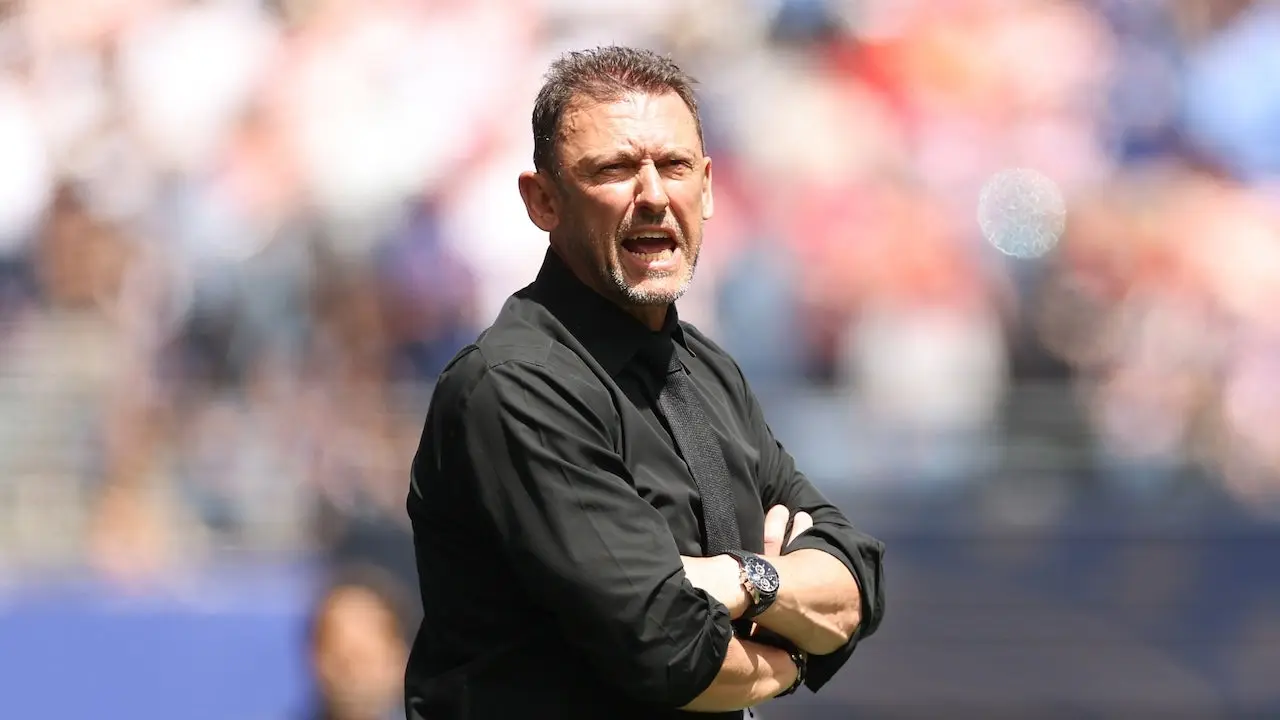
Under the gray, heavy skies of Seattle, a city that breathes sport with an almost religious intensity, the latest chapter of international soccer was written in sweat, controversy, and high drama. The match between the United States and Australia was never going to be a simple, routine affair, but few could have predicted the sheer emotional turbulence that would define this encounter. When the final whistle blew, sealing a hard-fought 2-0 victory for the energetic host nation, the scoreboard told only a fraction of the human story that had transpired over the preceding ninety minutes. For Australia’s newly minted manager, Tony Popovic, the evening was a masterclass in the cruel, unpredictable nature of elite sports, leaving him to balance the defense of his players with a candid assessment of the stark reality they faced on the pitch. Standing before a packed press room, Popovic did not shy away from the controversial moments that defined the match, nor did he sugarcoat his team’s shortcomings. With a quiet, yet burning frustration, he remarked that it was not the best day of officiating for the refereeing crew, a statement that immediately captured the collective exasperation of the Australian contingent. Yet, beyond the whistles and the contested calls, this was a game about the crushing weight of expectation and the raw atmosphere of a stadium filled with hostile noise. The physical toll of the match was etched onto the faces of both squads, serving as a reminder that these athletes, as extraordinary as they are, are still susceptible to the suffocating pressure of a host nation’s home crowd. Popovic’s reflections captured the essence of the beautiful game: a delicate dance between tactical preparation and the uncontrollable human variables of nerves, stamina, and psychological endurance, leaving the Socceroos to unpack a night of profound disappointment and learn from the harsh lessons of the Pacific Northwest.
The focal point of the match’s intense debate arrived in the dying embers of the first half, specifically at the conclusion of the 43rd minute, a moment that would fundamentally alter the trajectory of the contest. Following a fiercely contested American free kick that was initially deflected and stopped, the ball found its way to the rising star Alex Freeman, who leaped through the damp Seattle air to head it firmly into the back of the net. Freeman, carrying the heavy legacy of his father, former NFL star wide receiver Antonio Freeman, demonstrated that the family’s legendary athletic DNA had seamlessly transitioned from the gridiron to the soccer pitch. However, the jubilant celebrations of the American squad were instantly met with fierce, animated protests from the Australian players, who surrounded the match officials arguing that their goalkeeper had been unfairly impeded, or that an offside infraction had occurred during the chaotic sequence. The stadium held its breath as German referee Felix Zwayer signaled for a Video Assistant Referee (VAR) review, a modern technological intervention that often strips the spontaneous joy from the game, replacing it with agonizing minutes of anticipation. For the players standing on the pitch, these moments of waiting are a psychological purgatory where heart rates spike and tension thickens. Ultimately, the silent video technicians in their booth determined the goal was indeed valid, upholding the on-field decision and dealing a devastating psychological blow to the Socceroos just before halftime. This decision highlighted the inherent tension between the objective precision of modern technology and the subjective, high-speed reality of human perception on the field. To the Australians, it felt like a grave injustice, while to the Americans, it was a moment of hard-earned validation that solidified their tactical dominance and showcased the rising brilliance of a second-generation American sports legacy.
Amidst the tactical battles and physical clashes, one of the most poignant and humanizing moments of the match centered around the man in the middle, German referee Felix Zwayer. At 45 years of age, officiating a modern, high-intensity international football match is an extraordinary physical feat, requiring the referee to match the conditioning of elite athletes who are often half his age. As the match progressed into its final, grueling minutes, the intense physical demands of the game caught up with Zwayer, who suddenly collapsed to the turf, clutching his left leg in the agonizing grip of a severe muscle cramp. In a sport often criticized for its tribalism and bitter rivalries, what happened next was a beautiful testament to the universal brotherhood of athletes. Instead of exploiting the pause or walking away, players from both opposing sides immediately rushed to the fallen official’s aid. Folarin Balogun, the dynamic American forward, and Aiden O’Neill, the gritty Australian midfielder, cast aside their national jerseys and the fierce animosity of the match to help Zwayer. Together, they carefully stretched out the veteran referee’s leg, offering physical support and a moment of shared humanity on the pitch. This striking image of two competitors collaborating to comfort a suffering referee served as a powerful reminder of the mutual respect that exists beneath the surface of intense professional competition. It showed that despite the fury of the fans, the tactical anger of the coaches, and the immense stakes of the tournament, the health and well-being of a fellow human being on the pitch transcends national pride. Zwayer’s brief moment of vulnerability, and the swift, compassionate response it elicited, stood out as a highlight of pure sportsmanship on a night otherwise dominated by physical combat and bitter disputes.
The thin veneer of sportsmanship was severely tested, however, as the match reached its boiling point and frustration threatened to consume the players entirely. The intense pressure of the game finally manifested in a shocking physical altercation that sent shockwaves through the stadium and set social media ablaze. Australia’s imposing defender, Harry Souttar, found himself locked in a heated battle with the United States’ mercurial forward, Folarin Balogun. In a moment of pure adrenaline and unchecked aggression, Souttar wrapped his arm around Balogun’s neck, executing what astonished television commentators quickly described as a “rear naked chokehold” straight out of a mixed martial arts octagon. The stunning display of physicality threatened to spiral the match into complete chaos, as players from both teams rushed to the scene, pushing and shoving in defense of their respective teammates. Felix Zwayer, having recovered from his physical ailments, had to summon all his authority and experience to regain control of a highly volatile situation. With a stern countenance, the German official distributed yellow cards to the primary antagonists, Souttar and Balogun, as well as to Australian midfielder Jacob Italiano, who had thrown himself into the fray. By the time the dust finally settled, the statistical sheet recorded a highly physical, combative affair, with Australia receiving four yellow cards and the United States picking up three. This explosive incident served as a stark reminder of the immense psychological pressure these athletes endure; when the physical body is exhausted and the stakes are monumentally high, the boundary between controlled athletic intensity and raw, unbridled survival instinct can disintegrate in a matter of seconds, leaving fans with an indelible image of football’s violent undertones.
In the aftermath of the chaotic battle, Tony Popovic stood before the press with a demeanor that combined elite professionalism with raw, painful honesty. Rather than using the controversial officiating or the referee’s physical struggles as an easy excuse for the loss, the Australian coach turned his critical gaze inward, delivering a remarkably candid assessment of his squad’s performance. He admitted that his players appeared sluggish and heavy-legged throughout the match, struggles he attributed to either the overwhelming occasion of playing in a hostile stadium or the sheer physical exhaustion of a grueling travel schedule. Popovic noted with palpable disappointment that the Americans had won nearly every critical duel, secured almost every second ball, and systematically denied Australia any opportunity to build meaningful momentum. “When you think about this noise here—the host nation—it clearly had an impact,” Popovic observed, acknowledging the powerful psychological advantage that the passionate Seattle crowd had gifted to the American team. He lamented the concession of two “soft goals” in the first half, acknowledging that at this incredibly high level of international football, giving away such significant advantages early in the game is almost always a death sentence. To his credit, Popovic did find a silver lining in the darkness, praising his team’s spirited resilience in the second half, where they finally began to demonstrate their true quality and went toe-to-toe with their counterparts. This duality of critique and praise highlighted Popovic’s sophisticated managerial style, showcasing his understanding that while tactical errors can be corrected on the training pitch, overcoming the psychological demons of fear and fatigue is a much more complex, deeply human challenge.
As the dust settles on this captivating encounter, the mathematical reality of Group D comes into sharp, unforgiving focus, leaving both nations with very different paths moving forward. With their impressive 2-0 victory, the United States firmly establishes itself at the absolute summit of the group standings, boasting a perfect six points and a commanding position that practically guarantees their progression. Australia, despite the sting of defeat, remains alive in second place with three points, knowing that their fate still rests largely in their own hands if they can quickly recover their physical and mental sharpness. Meanwhile, the dark horses of the group, Paraguay and Turkey, sit precariously at the bottom of the table with zero points, facing a high-stakes, must-win clash that could completely reshape the destiny of Group D. Should Paraguay manage to secure a victory or even a hard-fought draw against Turkey in their late-night matchup, the United States will officially clinch the group victory, earning themselves a highly favorable draw in the upcoming, pressure-packed Round of 32. For the Socceroos, the focus now shifts entirely to recovery, introspection, and preparation for the challenges that lie ahead. The beautiful game moves at a relentless pace, offering little time to grieve over controversial VAR decisions or physical altercations. As the players depart from the rain-slicked pitch of Seattle, they carry with them the physical bruises of a brutal contest and the valuable knowledge that in the arena of international soccer, success demands not just a tactical blueprint, but a resilient human spirit capable of conquering both the opponent and the overwhelming noise of the world stage.