




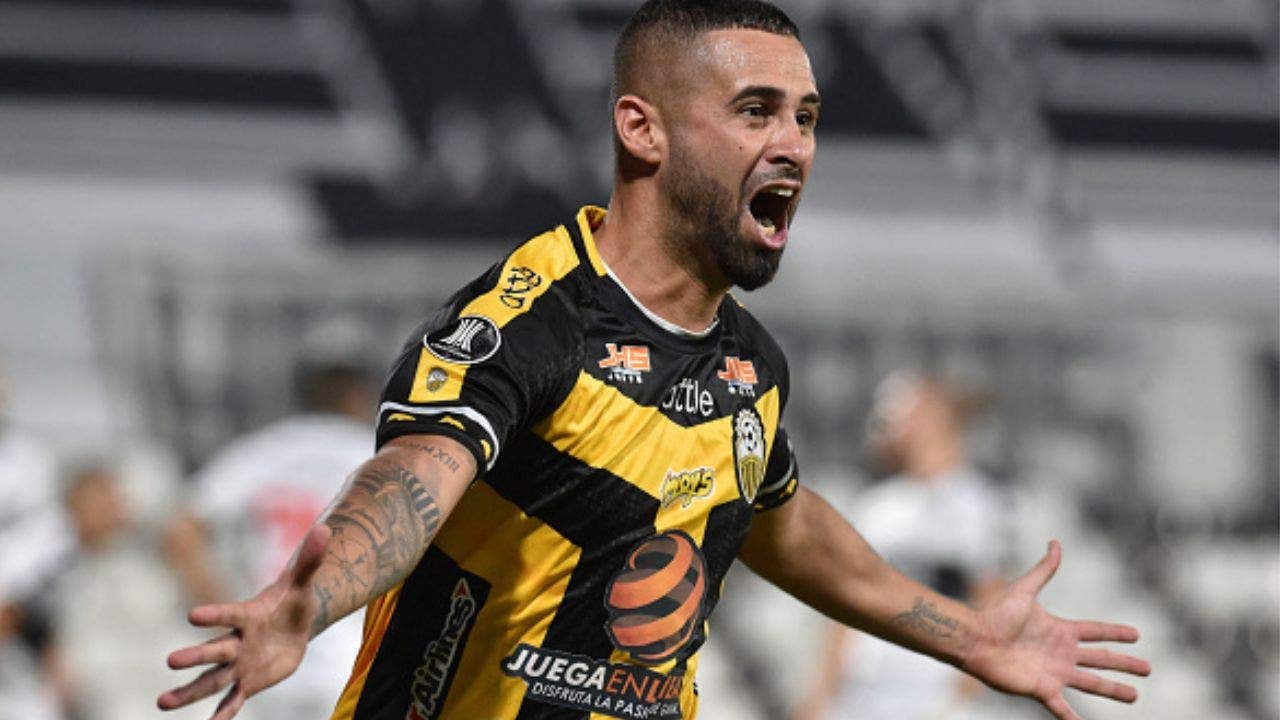
The life of a professional athlete is often defined by structure, discipline, and the pursuit of victory on the pitch, but for thirty-eight-year-old Argentine center back Lucas Trejo, a routine trip to Caracas with his club, Sport Maritimo de La Guaira, quickly dissolved into an unimaginable living nightmare. On a seemingly ordinary Wednesday, the tranquility of Venezuela’s northern coastline was violently shattered when two massive, back-to-back earthquakes, measuring 7.2 and 7.5 on the Richter scale, tore through the region. As the ground buckled and apartment buildings swayed and collapsed under the immense force of the tremors, Trejo was miles away in the capital city, completely unaware that his entire world was about to be buried under tons of concrete. The twin natural disasters did not merely disrupt the infrastructure of a nation; they instantly severed the fragile threads of safety for thousands of families, leaving Lucas Trejo to face a sudden, terrifying race against time to discover the fate of those he held dearest.
The moment news reached Caracas that the apartment complexes in the coastal area of Playa Grande, La Guaira, had suffered catastrophic failures, a primal instinct took over the veteran defender. Abandoning his athletic commitments, Trejo rushed headlong into the disaster zone, navigating buckled roads and chaotic traffic to reach the place he called home. Stranded in the agonizing limbo between hope and despair, he turned to social media in the dark, early hours of the search, casting a digital message in a bottle to a world paralyzed by the scale of the tragedy. On Instagram, he poured out his raw anxiety, pleading with anyone in the vicinity for information: “Our building in Playa Grande collapsed. I don’t know anything about my family. Please pray for them and share this message in case someone saw them. I want to believe they weren’t there.” This desperate public cry humanized the immediate panic of the disaster, capturing the universal terror of a husband and father begging for a reality in which his loved ones had somehow escaped the collapsing concrete walls of their own home.
As the hours transitioned into days, the search site became a grim theater of human endurance, solidarity, and fading hope, drawing people together from across borders to fight a ticking clock. Trejo’s father and brother quickly made the arduous journey from Argentina to Venezuela, driven by the fierce, protective bond of family to stand shoulder-to-shoulder with local search teams. Under the oppressive heat of the coastal air, amidst swirling gray dust and the constant threat of aftershocks, these grieving relatives joined forces with weary firefighters, military personnel, and selfless local volunteers who refused to stop digging through the jagged ruins. Every shovel of dirt removed and every piece of twisted rebar cut away was a physical manifestation of a collective refusal to give up, even as the survival window desperately narrowed for the thousands of people still reported missing across the devastated coastline.
The exhausting 74-hour vigil ultimately culminated in the quiet, crushing stillness that rescue workers dread most: the recovery of the bodies of Trejo’s beloved family. Beneath the heavy ruins of what was once their peaceful Playa Grande home, rescuers located the lifeless bodies of his wife, Yanina Maranella, and their two young children, Aaron and Ainhoa. In that singular, devastating moment, the grueling physical search ended, and an agonizing lifetime of grief began for Lucas Trejo, transforming him from a hopeful, active searcher into a man who had lost his entire universe in a matter of seconds. The loss of an entire nuclear family in such a sudden, violent manner serves as a stark, heartbreaking reminder of the indiscriminate cruelty of natural disasters, leaving a profound void that no amount of time, athletic success, or public sympathy can ever truly fill.
News of the tragedy instantly resonated far beyond the borders of La Guaira, triggering a massive wave of grief and deep solidarity throughout the entire South American soccer community. Fellow Argentine footballer Edson Tortolero, a close personal friend of Trejo, chose to share his own brokenness publicly, offering words that echoed the thoughts of millions who watched the tragedy unfold from afar. “Today my heart breaks into a thousand pieces,” Tortolero wrote in a raw, emotional tribute. “There are no words that can ease so much pain. I ask God to give Lucas strength to endure this unimaginable loss.” Soon after, Club Sport Maritimo de La Guaira released a somber official statement recognizing the profound grief enveloping their player, offering prayers for the souls of Yanina, Aaron, and Ainhoa, and wishing comfort for Lucas and his extended family during a time of absolute darkness.
While the soccer world wraps its arms around Lucas Trejo in his hour of deepest grief, his immense personal tragedy remains intrinsically tied to a much larger humanitarian crisis unfolding along Venezuela’s northern coast. Emergency response crews and volunteers continue to work tirelessly in the affected regions, searching for survivors among the nearly 50,000 citizens currently unaccounted for in the wake of the catastrophic double earthquake. As the physical debris is slowly cleared and the nation begins the long, difficult road to physical reconstruction, the story of the Trejo family stands as a painful monument to the human cost of the disaster. It reminds us that behind every statistic, every news headline, and every rescue update, there are real human faces, shattered dreams, and families whose lives were altered forever in a single, terrifying afternoon on the coast of La Guaira.