


The Tale of a Temperamental Sun and the Silent Stars
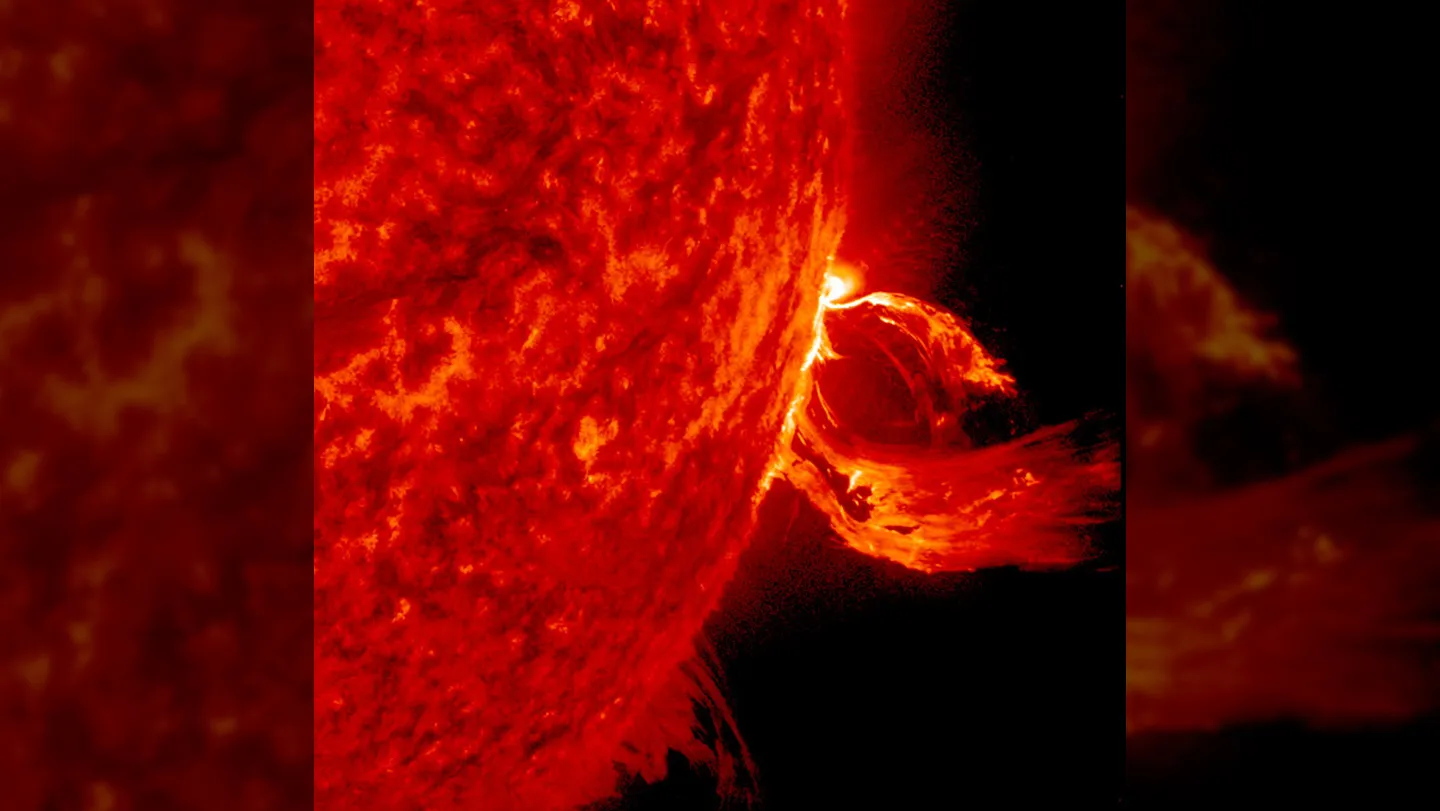
Our sun, for all its comforting golden warmth, is not a serene, eternal candle burning gently in the window of the cosmos. It is a seething, boiling cauldron of superheated plasma, a temperamental titan that periodically clears its throat with violent, planet-sized convulsions. Every so often, it launches enormous bubbles of magnetized gas into the void—events we call coronal mass ejections, or CMEs. Think of them as cosmic belches, or the shedding of a fiery skin. These eruptions can contain billions of tons of matter, hurtling through space at speeds exceeding a million miles per hour. When these clouds of charged particles slam into Earth’s protective magnetic bubble, the magnetosphere, they create dazzling auroras that paint the polar skies in shimmering curtains of green and red. Yet, they also carry a darker power: they can disrupt our satellites, confound GPS navigation, and even knock out entire power grids, plunging cities into darkness. We live in the shadow of a star that essentially has unpredictable tantrums, and we’ve watched these tantrums closely for decades, mapping the sun’s 11-year cycle of rising and falling activity, from its quiet emotional valleys to its roaring peaks of sunspot chaos. This constant, violent activity is so familiar to us that we assume it’s simply the standard behavior for any star—a basic, universal fact of stellar physics.
But here lies a profound and humbling mystery. When astronomers turn their telescopes to the rest of the galaxy, to the billions of other suns that speckle the night sky, they encounter a baffling silence. They see the distant flashes of stellar flares—those bright, sudden emissions of energy that are the cousins of our solar flares. They observe giant, dark starspots drifting across the faces of distant suns, reminding them of our own sun’s freckled complexion. But the other thing—the giant belch of plasma, the actual physical expulsion of a CME leaving a star and sailing into interstellar space—is extraordinarily rare to witness. It’s as if we live next door to a neighbor who regularly throws wild, loud parties, but when we visit other neighborhoods in the galaxy, we find the houses completely quiet, despite evidence that the residents are clearly energetic. Astronomers have spent decades, armed with powerful X-ray telescopes and sensitive spectrographs, actively hunting for this signature. They’ve had a handful of tantalizing successes—a few young, active stars have been caught in the act, demonstrating that these events definitely do happen. But the frequency is absurdly low compared to what we see on our own sun. If our sun is a textbook case of stellar behavior, why are its siblings in the galaxy so secretive about their explosive moods? This stark discrepancy has puzzled scientists for years, forcing them to reconsider what they really know about how stars work.
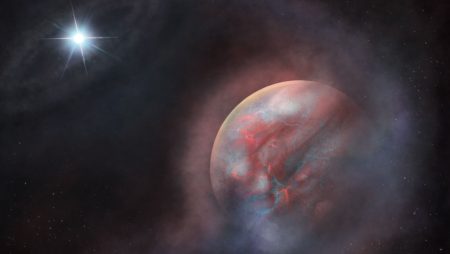
The leading explanation for this cosmic quietness lies in the invisible, intricate architecture of magnetism. Magnetic fields are the fundamental scaffolding upon which all stellar activity is built. They are the invisible threads that channel the flow of electrified gas, or plasma, throughout a star’s atmosphere. On our sun, the magnetic field is relatively weak, chaotic, and highly disorganized. It twists, tangles, and breaks under the immense pressure of the boiling plasma below. When these field lines become too stressed, they snap like a rubber band stretched to its breaking point, releasing pent-up energy and flinging material outward. Crucially, the sun’s magnetic field is “open” in certain regions, particularly near its poles, providing an escape hatch for superheated gas to flow freely into space. The sun is, essentially, a leaky balloon. On many other stars, however—particularly the smaller, cooler, red dwarf stars that are the most common in our galaxy—the magnetic fields are believed to be vastly stronger, sometimes thousands of times more intense than our sun’s. In these stellar environments, the magnetic fields act less like a leaky rubber band and more like an incredibly rigid, indestructible cage. The massive energy released by a flare simply cannot push the plasma through these magnetic barriers. Instead of hurling a huge blob of material into space, the plasma gets trapped, whipped around, and slammed back down onto the star’s surface like a prisoner whose breakout attempt has just failed. The star’s magnetic field is a superglue, a cosmic straitjacket that physically prevents the explosive release of plasma from escaping.
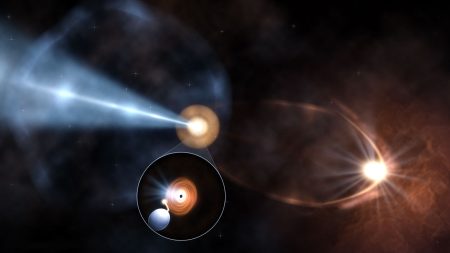
But the story of magnetic fields doesn’t end with simply being strong enough to trap plasma; it also involves the intricate geometry of how those fields are arranged. Even in cases where a star’s magnetic field might not be strong enough to prevent an eruption entirely, the shape of that field can conceal the event from our line of sight. On our sun, a coronal mass ejection is a relatively messy, spherical-ish puff. It expands in all directions, spreading out into a broad cloud that we can easily detect when it washes over Earth. In contrast, strong magnetic fields on other stars tend to be highly structured, often possessing a dominant, dipolar topology (like a giant bar magnet). In such a rigid environment, an eruption might be severely constrained. Imagine a powerful water cannon being fired. The sun’s version is a spray nozzle, dispersing water everywhere. The distant star’s version is a focused laser-like jet, forced by the magnetic field lines to shoot along a very narrow, specific axis. This collimation means that the ejected plasma is concentrated into a tight beam. Now, if that beam isn’t pointed directly at Earth—and statistically, it almost never is—we simply don’t see it. We detect the bright, flashy flare (the energy release), but we miss the physical movement of the matter (the doppler shift in spectral lines that would reveal plasma moving toward or away from us). We are like a sailor looking through a tiny porthole, watching a universe of ferocious storms and tsunamis, yet only ever catching a glimpse of the occasional droplet that happens to hit our glass. The magnetism of these stars acts as a giant traffic cop, funneling all the cosmic debris down specific highways that almost always avoid Earth’s sensors, rendering the most dramatic stellar events practically invisible to us.
This cosmic detective work has profound implications for one of humanity’s most persistent questions: Are we alone, and could we survive elsewhere? We now know that the magnetic fields of distant stars hold the key to the ultimate fate of the planets that orbit them. On one hand, the idea that strong magnetic fields trap violent CMEs sounds like fantastic news for potential alien life. If a star doesn’t fling devastating blobs of radiation and plasma at its planets, then those planets’ atmospheres are much safer from being stripped away over billions of years. The magnetic fortress protects its planetary children from the harshest cosmic weather. However, the picture is far more intricate. While the star might not lose large chunks of mass, the strong magnetic field itself generates continuous, intense ultraviolet and X-ray radiation. This relentless high-energy bombardment can slowly eat away at a planet’s atmosphere, even without the violent CMEs. Furthermore, the tight geometry of these fields might funnel a steady stream of particles directly onto the poles of a nearby planet. Imagine auroras a thousand times more brilliant than our own, permanent, dazzling lightshows that would bathe the sky in blinding, radiant fire. That would be a breathtaking sight, but it also represents a constant, concentrated flux of charged particles. Life on such a world would have to adapt to an environment bathed in intense radiation, possibly forcing them to evolve primarily underground or underwater. The magnetic field is a bouncer at an exclusive nightclub—it keeps out the rowdy, disruptive brawlers (the CMEs) but, in doing so, it pumps up the heat and creates a hostile, focused bass line (the radiation and particle streams) that makes just standing there uncomfortable.
In the end, gazing into the silent, magnetic prisons of other stars makes us appreciate our own sun in a radically new light. Our sun is, in many ways, beautifully, wonderfully messy. It is leaky. It throws tantrums. It flings its plasma around with reckless abandon. This chaos, however, might have been the very catalyst that allowed life to flourish on Earth. By releasing solar winds and CMEs, our sun helped sculpt our planetary environment, pushing some volatile chemicals away and delivering others. Its relatively weak, chaotic magnetic field allows it to vent its energy, preventing it from building up a chokehold of deadly radiation. It gives us a stable, predictable climate, despite the occasional geomagnetic storm that knocks out a satellite. We now understand that the reason we see eruptions on our sun so clearly is that we are living inside the very bowel of the beast, looking at it from inches away. The absence of observed CMEs on other stars doesn’t mean the cosmos is a calm, placid sea; it means the universe is a wild and varied orchestra, played with different instruments. Some stars are gentle flutes, others are roaring tubas, but the vast majority are string instruments whose music is too high-frequency, or too narrowly directed, for us to hear. As we continue to probe the cosmos with ever-more-sensitive instruments, we are not just looking for more explosions; we are learning to read the delicate magnetic fingerprints of distant worlds. We are learning that our sun, with all its volatile personality, is not just a star—it is our unique, fortunate, and fiercely protective cosmic parent, whose occasional, beautiful, violent outbursts are merely the quirks of a star that found the perfect balance in a universe of extremes.