



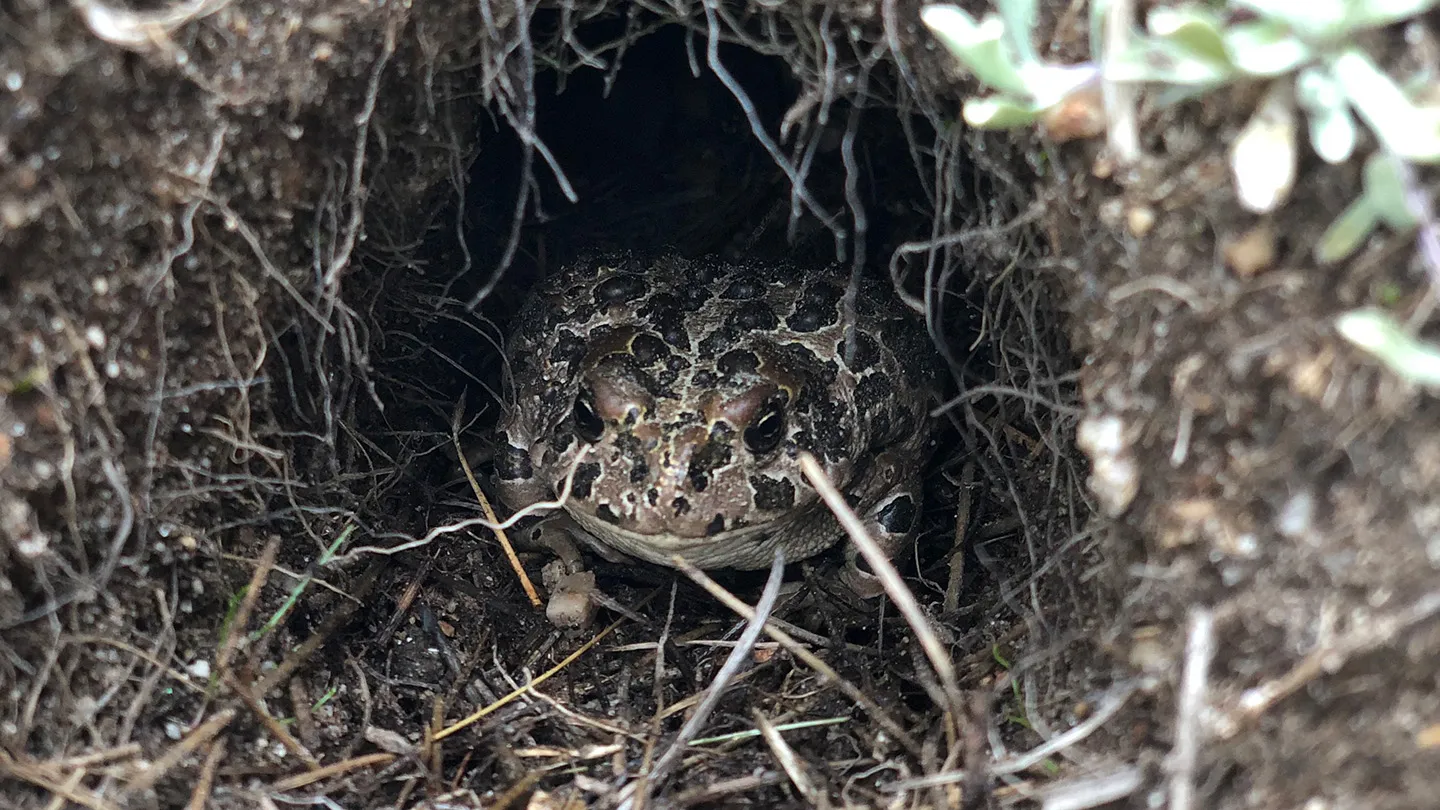
Each autumn, as the high meadows of California’s Sierra Nevada begin to freeze and the first snow dusts the granite peaks, young Yosemite toads do something that seems almost magical: they dig themselves into the earth, tuck their little bodies into burrows, and settle in for a long, dark winter. It is a necessary survival strategy, a kind of deep rest called brumation that helps them escape the harshest months of the year. But a safe-looking winter refuge can turn into something far more dangerous. New research reveals that some young Yosemite toads emerge from their first winter underground carrying a deadly hitchhiker: a chytrid fungus called Batrachochytrium dendrobatidis, or Bd. This fungus is notorious among scientists, conservationists, and amphibian lovers because it is one of the most devastating wildlife diseases ever recorded. The study, published in the journal Functional Ecology on September 23, points to an unexpected and risky chapter in the toad’s life. For years, researchers assumed Bd spread mostly through water, moving between ponds and streams as tadpoles and adults swam, mated, and went about their amphibian lives. But the new evidence challenges that assumption: in the dry, crowded, underground burrows where young toads wait out the winter, the fungus can infect and multiply in ways that scientists never anticipated. What seems like a quiet period of rest may actually be a hidden battleground, and the consequences for these already-threatened toads are profound.
To understand why this discovery is so important, it helps to understand just how vicious Bd can be. Chytrid fungus attacks the skin of amphibians, and that is a big problem because a frog or toad’s skin is not just a protective covering—it is a lifeline. Amphibians use their skin to breathe, absorb water, and maintain the delicate balance of electrolytes and fluids their bodies need to survive. When Bd infects the skin, it disrupts this entire system. The animal’s ability to regulate salt and water collapses, and the heart often stops. It is a brutal, almost invisible killer. Bd has been blamed for declines in at least 500 amphibian species and has likely driven as many as 90 species to extinction, according to a 2019 estimate. It has swept through amphibians all over the world, turning chattering wetlands into silent, empty pools. Yosemite toads, known scientifically as Anaxyrus canorus, are among the casualties. These toads live only in California’s Sierra Nevada mountains, a landscape of granite cliffs, alpine meadows, and crystal-clear streams. They spend most of their lives on dry land, unlike many other toads, venturing into shallow pools only to breed. But because they live at high elevations, they also endure long, brutal winters. For about half of every year, they are not active at all. They bury themselves underground, slow their heartbeats, stop eating, and enter brumation—a hibernation-like state for cold-blooded animals. For a long time, scientists thought of this as a period of dormancy, a safe pause in the toads’ busy lives. The new study suggests that for many young toads, that pause can be the most dangerous time of all.
The mystery began with a deceptively simple question, raised by ecologist David Daversa of the University of California, Los Angeles: How does a water-loving fungus survive and cause infection when toads are spending months in dry, cold burrows? Bd is a waterborne pathogen, so it loves moisture and spreads easily in aquatic environments. But winter burrows are not ponds. They are holes in the ground, insulated by snow, often dry, and lacking the flowing water that the fungus usually needs to move around. Daversa and his colleagues wanted to understand whether the fungus was somehow hanging on through the winter, waiting for the toads to emerge in spring. So they trekked into Yosemite National Park and conducted a study that must have required enormous patience. They captured Yosemite toads of all ages, including the very youngest ones, both before the toads disappeared into their burrows in the fall and again when they emerged in the spring. They gently swabbed the toads’ skin to test for traces of Bd. The goal was simple: to compare infection levels before and after the long winter underground. By doing this, they could see whether the young toads were entering the winter clean and getting infected inside the burrows, or whether they were carrying hidden infections that somehow exploded during the cold months. The results, when they finally came together, were startling.
The fungus was far more common in juvenile toads after their first winter than in breeding adults splashing in the water. Before the young toads went into their first brumation, only about 23 percent of them tested positive for Bd. That might sound low, but it already suggested that the fungus was present in the population. After the winter, the picture changed dramatically. More than 90 percent of those young toads emerged from their burrows carrying Bd, and some had severe infections. In contrast, fewer than half of the breeding adults tested positive. This was a huge surprise, because adult toads, which are larger and spend more time in the world, would seem more likely to pick up the fungus. Instead, it was the youngest toads, the ones that had barely begun their lives, that were bearing the heaviest burden. Daversa and his colleagues do not yet know exactly why the fungus thrives underground. One possibility is that the young toads enter their burrows carrying very low, undetectable levels of Bd, and during the winter the fungus finds the conditions just right—cool, damp, protected—so it grows and multiplies until it overwhelms the toad’s defenses. Another possibility is that the fungus spreads from toad to toad when many young toads burrow together in the same refuge. In the cramped space of a burrow, contact between toads could easily pass the pathogen along. It is even possible that the cold, dark underground environment somehow weakens the toads’ immune systems, making them more vulnerable to infection. The scientists are honest about how much they still do not know. But the finding is a powerful reminder that ecological mysteries often hide in plain sight, in the places where we least expect to look.
The practical implications of this discovery are already being felt. Yosemite toads are listed as threatened under the U.S. Endangered Species Act, and conservationists have been working hard to protect them and rebuild their populations. One major effort, a reintroduction program involving the San Francisco Zoo and the U.S. National Park Service, was designed to give Yosemite toads a boost by raising them in captivity and releasing them into the wild. But the new findings have changed the program’s strategy. Instead of releasing young toads, which are exactly the ones most vulnerable to Bd after their first winter, the program now focuses on releasing mature toads that have already made it through those dangerous early years. This is a small but meaningful shift, and it shows how scientific research can translate directly into conservation action. If releasing young toads simply sends them into a winter underground where most will emerge carrying a deadly fungus, then that approach is not helping the population recover. By waiting until the toads are older and better able to cope with infection, the program gives them a better chance of surviving, breeding, and contributing to a healthy, self-sustaining population. Daversa hopes the study will inspire other conservationists to look beyond the obvious aquatic life stages of amphibians and consider the hidden, underground parts of their lives. As he puts it, perhaps we can “nip chytrid in the bud in these early life stages when it seems to proliferate most.” That kind of thinking—paying attention to the whole life cycle, including the unseen months beneath the snow—could make all the difference for species like the Yosemite toad.
Perhaps the biggest lesson from this study is that nature is full of surprises, and conservation requires us to think beyond the obvious. For decades, researchers studied Bd in the water, tracking its spread through ponds and streams and looking for ways to protect amphibians during their aquatic phases. But the Yosemite toad reminds us that some of the most important events in an animal’s life happen when we are not watching. Winter burrows, underground nests, hidden crevices—these are not just shelter from the cold. They can also be places of disease transmission, death, and survival. The study opens up a whole new set of questions. Are other amphibians that brumate, hibernate, or hide underground facing similar risks? Could the fungus be persisting in soils, burrow walls, or even the bodies of other underground creatures? How does Bd survive months without water, and what does that mean for efforts to control it? These are not just academic questions. They matter for real animals in real places, and they matter for the people trying to protect them. The chytrid fungus has already caused unimaginable damage to amphibian populations, and understanding its secrets is one of the best tools we have to fight back. The Yosemite toad study is a reminder that scientific discovery often begins with a simple question—how can a waterborne fungus live underground?—and ends with a deeper understanding of the delicate, hidden connections that shape life on this planet. It also offers a quiet kind of hope: if we can learn to see these hidden dangers, we can learn to protect the creatures that face them. The young toads that dig into the earth each autumn may be entering a world of darkness and risk, but the researchers who study them, and the conservationists who work to save them, are determined not to let that darkness be the end of their story.