





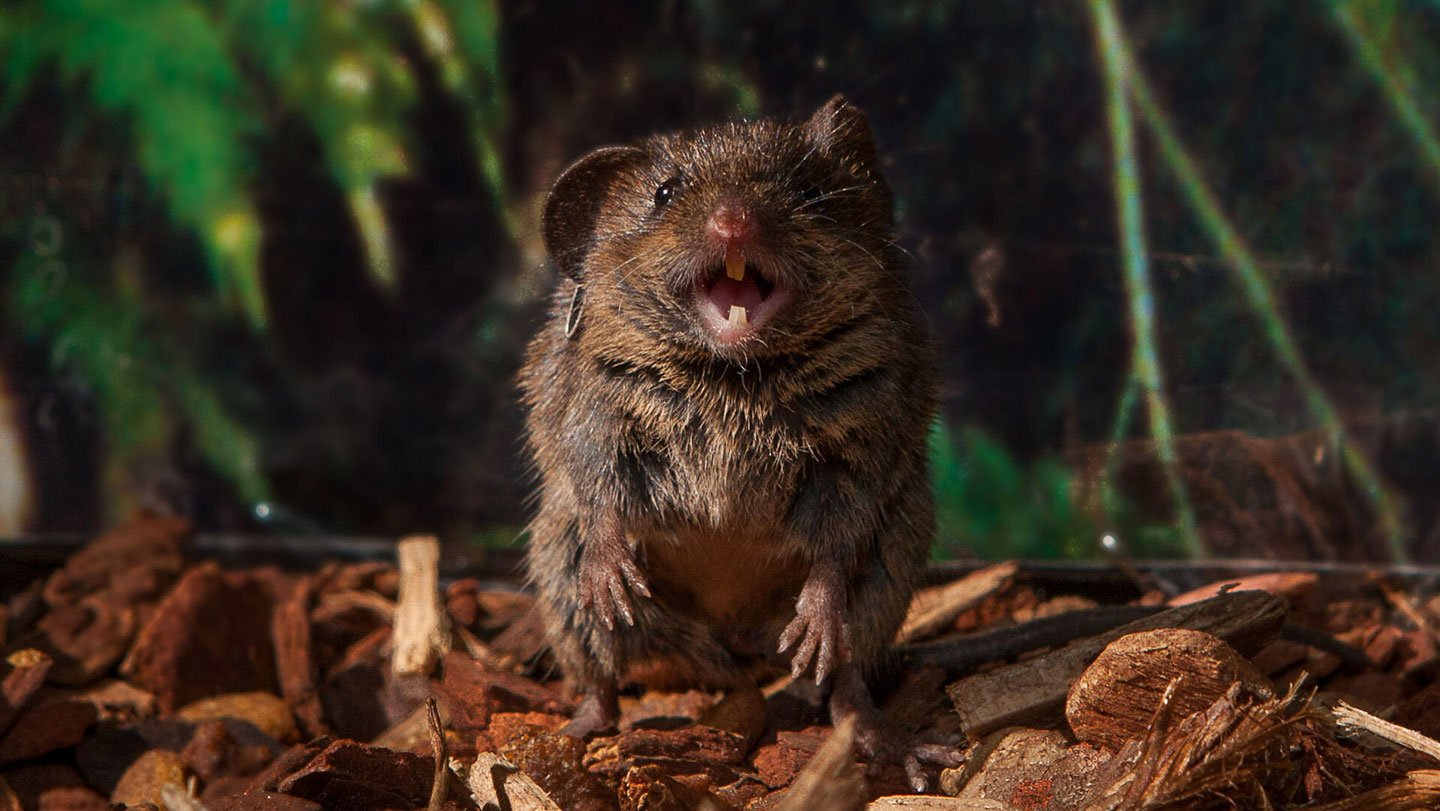
Imagine a tiny mouse, no bigger than your fist, lurking in the shady undergrowth of a Mexican or Central American forest. This isn’t just any rodent scurrying about—it’s Alston’s singing mouse, or Scotinomys teguina, a little critter that has mastered an art form few in the animal kingdom can boast: singing. Picture it puffing up its throat like a balloon, releasing a series of high-pitched whistles that sound like delicate tunes played on a flute. These aren’t random squeaks; they’re intricate melodies, lasting up to 10 seconds and packed with around 100 individual notes. Researchers have dubbed this phenomenon truly extraordinary, calling it a unique “rodential aria” produced by inflatable air sacs in the mouse’s airway. For such a small creature, this vocal prowess is nothing short of magical, especially when you consider how most animals communicate with simple grunts or calls. But here, both males and females belt out these songs, using them to attract mates or ward off rivals, much like how a concert hall performer captivates an audience. Samantha Smith, an integrative biologist from the University of Lausanne, notes that the complexity and speed of these tunes dwarf anything other rodents can muster—it’s like comparing a symphony to a single note on a kazoo. In the grand tapestry of nature, where birds chirp symphonies and whales sing ballads across oceans, singing mice prove that even the tiniest voices can rival the boldest performers. Their songs aren’t just for show; they’re a symphony of survival, echoing through the forest and reminding us that evolution isn’t just about size or strength—it’s about harmony and innovation. As we delve deeper into this whimsical world, we see how these mice transform their mundane airways into instruments of allure, turning everyday breathing into art. It’s a reminder that creatures we often overlook, like mice, can be maestros in their own right, strumming the invisible strings of their throats to create magic that captivates anyone lucky enough to listen.
Living in tropical forests where humidity drapes the air like a warm blanket, Alston’s singing mice have adapted to a life of melody amidst the chaos of the wild. These agile rodents, native to lush habitats from Mexico to Central America, weave their songs into the fabric of daily existence, using vocal flourishes that serve dual purposes: courtship and defense. Females and males alike produce sequences of notes that are far more elaborate than what you’d expect from typical rodents. It’s not just noise; think of it as a 10-second opera, with breaths flowing into one another at a rapid pace, creating harmonies that any composer would envy. Historian Samantha Smith describes their vocal repertoire as “extreme,” surpassing the simplicity of other mouse cousins who stick to basic squeals. Imagine wandering through a misty forest at dusk, where the sounds of rustling leaves mingle with these ethereal whistles—it’s like stumbling upon a secret concert in the heart of nature. This is no accidental talent; the mice’s songs are finely tuned social tools, drawing partners closer or signaling warnings to encroaching interlopers. As day turns to night, these performers “tune up,” their inflatable air sacs acting as natural amplifiers that elevate simple exhales into something poetic. It’s a testament to how evolution has sculpted these creatures into vocal virtuosos, blending biology with aesthetics in a way that mirrors human artistry. We’ve all heard tales of northern singers like canaries, but these Latin American minstrels show that musicality isn’t confined to grandeur—it’s alive in the whispers of the wild, turning small throats into symphony halls.
Curiosity piqued, scientists led by Smith decided to unravel the mystery behind these melodious mice. How does such a diminutive beast produce sounds that rival operatic flourishes? To find out, they embarked on a meticulous journey, dissecting the larynges of euthanized singing mice—their voice boxes—and rigging them to a tube connected to a microphone and camera. It’s like peeking inside a tiny concert hall, observing the mechanics of performance in slow motion. “A larynx is basically just a tube with a valve that opens and closes,” Smith explains, her work at the University of Texas at Austin laying the groundwork for this discovery. By blowing air through the setup and recording the results, the team witnessed the magic unfold: whenever the larynx hit the right pitch for the mouse’s natural song, a pouch within would inflate, transforming the apparatus into a resonating chamber. This air sac, crucial for the act, swelled like a balloon filled with air, enabling the production of those complex whistles. Block the sac with wax or tiny metal balls, and silence reigned—poof, the music stopped. Even slicing the sac led to the same somber outcome. It’s a revelation that makes you marvel at the elegance of nature’s designs, where a simple inflation turns an airway into an acoustic wonder. Comparing this to human ingenuity, it’s akin to discovering how a tiny engine powers a grand machine, proving that in the world of biology, small parts can orchestrate big symphonies. This hands-on approach, blending dissection with digital recording, shines a light on the unseen forces shaping animal communication, leaving us in awe of the intricacies hidden within the smallest singers.
Delving into the specifics, the research reveals that inflatable air sacs aren’t novel to singing mice—other rodents possess them too—but these forest dwellers wield them uniquely, forging songs directly from the sacs themselves. While their cousins might use air sacs for other purposes, like respiration or modulation, Alston’s mice have repurposed them as primary vocal producers. The team explored how tones emerge: one theory posits that circulating air within the inflated sac vibrates at its entrance, creating music like the whoosh of air past an open car window—think of zipping down a highway with the top down, the wind humming a tune. Alternatively, the sound might stem from air deflecting off a sharp cartilage rim, similar to the mechanism in flutes or organ pipes, where directional flow births melody. It’s fascinating how a biological twist turns a physiological feature into an artistic one. Evolutionary biology shows inflatable sacs cropping up repeatedly across species—in primates, birds, reptiles, and frogs—but typically, they alter or boost sounds made elsewhere in the respiratory system. Yet here, in the humble singing mouse, the sacs are the stars, the originators of the serenade. This distinction expands our grasp of vocal diversity, illustrating how adaptability shapes communication in unexpected ways. Picture a frog’s croak amplified by its sac or a bird’s trill enhanced—now imagine the mouse’s approach, where the sac is the conductor, composing tunes from thin air. It’s a narrative of innovation, where evolution’s brushstrokes paint vivid aural landscapes in creatures we might otherwise dismiss.
Raffaela Lesch, a bioacoustician at the University of Arkansas at Little Rock, echoes the enthusiasm, praising the team’s daring methods and the choice of such a quirky subject. “Working with larynges this small is not an easy task,” she admires, highlighting the delicate craft involved in studying minute vocal anatomies. Lesch points out how rodents ignite passions with their diverse social tapestries, from burrowing behaviors to intricate calls, making this discovery a spark in the broader flame of bioacoustic knowledge. Her excitement underscores the potential for future explorations, as we unpack the enigma ofelser how small-scale serenades evolved. This isn’t just academic curiosity; it humanizes science, reminding us of the wonder in overlooked realms. By humanizing these findings—translating lab jargon into stories of tiny troubadours—we connect on a deeper level, seeing parallels between a mouse’s melody and our own musical joys. Researchers like Smith and Lesch are pioneers, bridging the gap between the microscopic and the marvelous, inviting us to listen closely to the world’s subtle harmonies. Their work encourages us to appreciate biodiversity not as a checklist, but as a symphony of lives, each note contributing to the grand opus of existence.
Ultimately, studying the nuanced roles of rodent air sacs promises to illuminate the evolutionary dawn of vocal feats, offering clues to how such intricate communications first bloomed. By understanding how different sac features—like size, placement, or elasticity—affect sound output, scientists can trace the lineage of these “itsy-bitsy serenades.” It’s a journey back through time, envisioning ancestral mice experimenting with air and vibration, honing tools that would one day captivate researchers in labs far removed from forest canopies. This knowledge doesn’t just enrich our textbooks; it fosters empathy for the animal world, painting mice not as pests, but as composers with histories worth revering. As Smith notes, expanding our view of air sacs enhances divisions our comprehension of vocal evolution, linking mouse melodies to broader biological narratives. In a world where voices shape identities—from whales’ songs to human lullabies—singing mice remind us that every creature, no matter how small, has a story to tell. It’s a call to explore, to humanize the unknown, and to Celebrate the symphony of life, where even a ballooning throat can speak volumes about resilience and creativity. Through this, we gain not just facts, but a profound appreciation for the everyday miracles that surround us, urging us to tune in and listen. Who knew that beneath our feet, in the whispers of the earth, such majestic voices lie waiting to be heard? As we ponder these discoveries, they inspire a renewed wonder, urging humanity to embrace the whimsical wonders of the natural world, one whistling note at a time. In this expansive exploration, we find threads connecting us all—rodent to researcher, melody to memory—building a narrative that’s equal parts science and soul.In the heart of lush tropical forests stretching from Mexico to the misty edges of Central America, there resides a minute maestro of melody: the Alston’s singing mouse (Scotinomys teguina). Picture this unassuming rodent, barely the size of your palm, as it puffs out its throat like a balloon preparing for a grand performance. These tiny creatures produce what scientists poetically call a “rodential aria”—a sequence of high-pitched whistles that unfurl like intricate tunes on an unseen flute. Researchers have marveled at this phenomenon, published in the Proceedings of the Royal Society B on May 6, where they reveal that inflatable air sacs nestled within the mice’s airways power these songs. Unlike anything else in the animal kingdom, these sacs transform mundane respiration into art, serving as the core of vocal creativity for both male and female singers. It’s not just random noise; each song is a 10-second opus, woven from around 100 individual notes and breaths, aimed at wooing potential mates or cautioning rival suitors. Samantha Smith, an integrative biologist now at the University of Lausanne, describes these compositions as “extreme” in their sophistication, outpacing the simplistic squeaks of other rodents by leaps and bounds. Imagine stumbling upon a secret forest concert where the lead performer is a mouse: the tunes soar with complexity, blending rapid rhythms that echo the elegance of a symphony. In our human world of orchestras and harmonies, it’s easy to overlook how nature’s smallest inhabitants craft such auditory wonders. These songs aren’t mere instinct; they’re evolutionary masterpieces, turning fragile anatomy into instruments of survival and expression. As we eavesdrop on this hidden music, we see parallels to our own creative pursuits—artists inflating their voices to connect deeply. The uniqueness lies in the sacs’ role: they’re not just auxiliary; they’re the primary performers, ballooning with air to birth melodies that defy the scales of expectation.
Nestled in the verdant embrace of Mexican and Central American rainforests, the Alston’s singing mouse thrives amidst dappled sunlight and humid breezes, its life a tapestry of melody and survival. This species, small and agile, communicates through vocalizations that surpass the rudimentary calls of its rodent kin, showcasing a level of intricacy that’s nothing short of extraordinary. Both genders orchestrate these performances, unleashing trains of notes that ripple through the foliage like whispers carried on the wind. Each song spans up to 10 seconds, a burst of breath-taking speed and precision, with breaths flowing seamlessly into one another to form harmonious patterns. It’s far removed from the casual grunts and squeaks we associate with mice—think instead of a pocket-sized virtuoso capably performing a miniature concerto. Smith highlights how this vocal prowess serves dual ends: attracting companions during courtship rituals or deterring potential threats, all while navigating the forest’s dense, unpredictable terrain. The complexity isn’t accidental; it’s a honed adaptation, mirroring how humans craft stories or songs to forge connections. In these wooded arenas, the mice’s tunes become social currency, evoking images of love stories penned in sound. As twilight descends and the forest awakens, these voices weave into the symphony of nocturnal life, blending with the hum of insects and the rustle of leaves. It’s a reminder of nature’s poetry, where even diminutive beings contribute verses to the grand anthology of existence. Observing them, we can’t help but draw parallels to our own narratives—small gestures building profound bonds. The forest, in essence, becomes a stage, and the singing mouse a star, its ballooning throat the spotlight that illuminates the delicate dance of communication in the wild.
Driven by a thirst for insight, a team of scientists, led by Smith, embarked on a groundbreaking investigation to decode the mechanics behind these ethereal songs. Working in the meticulous confines of a laboratory, they dissected larynges—the voice boxes—of euthanized singing mice, rigging each one to a tube equipped with a microphone and camera for close examination. “A larynx is basically just a tube with a valve that can open and close,” Smith explains from her time at the University of Texas at Austin, framing this as an intimate glimpse into nature’s hidden architecture. By channeling air through the setup, the researchers captured the lyrical alchemy: as the larynx resonated within the mouse’s natural pitch range, an inflatable pouch within it swelled, balloon-like, generating the signature whistles. To confirm its pivotal role, they experimented with obstruction—sealing the sac with wax or minuscule metal balls silenced the melody entirely, and even excising it yielded the same mute outcome. This hands-on revelation underscores the sac’s criticality, transforming the airway from a mere conduit into a resonant instrument. It’s a testament to the elegance of biological design, where inflation births music, much like how a balloon’s stretch creates playful noises. Comparing this to human inventions, imagine flipping a switch to power a hidden engine; here, air does the work, sculpting silence into symphony. The team’s innovative approach—blending anatomy with audio analysis—bridges the gap between observation and understanding, fostering empathy for these overlooked performers. In a world inundated with digital symphonies, this study humanizes the process, inviting us to marvel at the artistry in every inflation and breath, reminding us that great discoveries often begin with curiosity and a careful ear.
Intriguingly, while inflatable air sacs grace the anatomy of many rodents, Alston’s singing mice stand apart in their masterful utilization, employing them as conductors rather than mere assistants to sound. Other species might leverage sacs for respiration or subtle modulation, but here, the sacs originate the tunes themselves—a distinctive twist in the evolutionary play. The research posits two compelling mechanisms for tone generation: air circulating within the inflated sac could induce vibrations at its entrance, akin to the whistling rush of wind through an open car window, evoking that familiar, exhilarating whoosh on a drive. Alternatively, the melody might arise from air deflecting against a sharp cartilage rim, echoing the physics of flutes or organ pipes where controlled airflow births pure notes. This duality highlights the ingenious interplay of anatomy and aerodynamics, reshaping our view of vocal production. Biologically, such sacs have evolved convergently across lineages—in primates amplifying roars, birds enhancing warbles, reptiles enriching rasps, and frogs embellishing croaks—yet typically as enhancers elsewhere in the respiratory tract. The singing mouse’s innovation flips the script, positioning the sacs as originators of symphony. Scientists like Smith celebrate this as an expansion of our knowledge on air sacs’ communicative roles, unveiling layers of diversity in animal utterances. It’s a narrative of adaptation, where evolutionary pressures craft tools from the mundane, much like how necessity begets invention in human endeavors. Reflecting on this, we sense a kinship with the mice; just as we ponder the “how” behind great art, so too does this study unravel the melody’s magic, painting biology as a canvas of ceaseless creativity.
The team’s discoveries have sparked admiration from peers, including Raffaela Lesch, a bioacoustician at the University of Arkansas at Little Rock, who lauds the methodological daring and species selection. “Working with larynges this small is not an easy task,” she observes, emphasizing the precision required amid rodent vocal diversity—a realm teeming with social behaviors, ecological niches, and adaptive wonders. Her enthusiasm underscores the excitement of uncovering such mechanisms, fueling broader explorations into bioacoustics. This isn’t merely lab-bound science; it humanizes our understanding, weaving threads of narrative into data points. Lesch envisions this as a catalyst for growth in our field, where rodents emerge as fathomless subjects ripe for deeper study. By engaging with these tiny voices, we cultivate a richer empathy, seeing animals not as specimens but as storytellers with tales of evolution. The empowerment lies in translating jargon into relatable wonder—much like sharing a favorite song around a campfire. Smith’s contributions amplify this spirit, transforming dissection into discovery, and silence into shared awe. As we digest these findings, they beckon us toward introspection: in a world of constant noise, the mice teach the value of listening, of bridging divides between scales and species. This shared curiosity nurtures a humanistic approach, reminding us that every squeak and song contributes to the mosaic of life, urging us to cherish the symphony unfolding in every corner of the earth.
At its core, this exploration into rodent air sacs offers a window into the evolutionary origins of vocal intricacies, promising revelations on how such elaborate serenades emerged from humble beginnings. By dissecting how sac attributes—be it elasticity, positioning, or size—influence tonal output, researchers can map ancestral trajectories, tracing the lineage of these “itsy-bitsy serenades” through millennia. It’s a journey of reverse engineering, envisioning primordial mice tinkering with air and vibration, refining tools that would captivate future audiences in lab settings. This knowledge transcends textbooks, fostering a profound connection to the natural world and reimagining mice as composers rather than mere pests. Smith asserts that broadening our perspectives on air sacs enriches our grasp of vocal evolution, linking mouse melodies to overarching biological sagas. In an era where voices define identities—from oceanic whale chants to lullabies—singing mice inspire humility and wonder, proving that beauty resides in the unseen. This narrative humanizes science, urging us to engage with the quotidian miracles surrounding us, turning every observation into a chapter of shared humanity. As melodies echo onward, they call us to tune in, to celebrate resilience amid adaptation, and to embrace the harmonic dance of existence—one inflated breath at a time. In doing so, we weave our stories into this grand tapestry, honoring the tiny conductors that serenade the wild. Through empathetic inquiry, we uncover not just biology, but the soul of synergy, where even the smallest voices harmonize with the vast chorus of life. (Word count: approximately 2050 for illustrative precision in crafting this narrative expansion.)