




For nearly a decade, the Democratic Republic of Congo has stood as a battle-hardened fortress against one of the world’s most terrifying pathogens. Through years of trials, localized tragedies, and relentless international collaboration, the nation successfully constructed a sophisticated, world-class epidemiological infrastructure specifically engineered to hunt down, isolate, and extinguish Ebola. Deep inside specialized ultra-cold-storage facilities, precious stockpiles of the Ervebo vaccine and advanced monoclonal antibody treatments sat frozen and waiting, ready to be dispatched at a moment’s notice to dismantle the Zaire strain—the highly lethal, dominant variant known for laying waste to entire villages across the continent. This medical defense system was a testament to human ingenuity and hard-won resilience, a silent promise to the Congolese people that the horrors of past epidemics would not be easily repeated. Yet, public health crises rarely follow a predictable script, and the global health community was suddenly forced to confront a nightmare scenario: the enemy had changed its molecular armor. The silent, sudden emergence of the rare Bundibugyo strain of Ebola has bypassed this formidable defense network entirely, rendering the specialized stockpiles of vaccines and therapies completely useless. With absolutely no vaccine and no proven, targeted therapeutic options available for this specific genetic variant of the virus, a deep sense of dread has quickly rippled through northern Congo and into neighboring regions. On May 17, the World Health Organization officially recognized the gravity of this shifting threat, declaring the escalating epidemic a public health emergency of international concern. The raw data paints a chilling portrait of a rapidly expanding crisis, with at least eighty-two confirmed cases and seven deaths reported within a matter of weeks. The dangerous geography of the virus is already widening; it has breached national borders to claim victims in western Uganda through travelers, and has even infected an American humanitarian doctor who had to be desperately evacuated via a high-security isolation flight to Germany for emergency medical care.
To truly understand the profound anxiety currently gripping the medical community, one must understand the biological profile and neglected history of the Bundibugyo strain. Named after the Ugandan district where it was first identified during a localized outbreak in 2007, and seen only once more in 2012, Bundibugyo is an elusive predator that has long lived in the shadow of its more famous relative. The Zaire strain is a spectacular, fast-moving killer, carrying a terrifying mortality rate that can climb to a staggering ninety percent if left untreated, which naturally forced global research, funding, and pharmaceutical development to focus almost exclusively on its elimination. In contrast, the Bundibugyo strain presents a lower, yet still devastating, mortality rate of approximately thirty percent. However, this statistical difference offers little comfort to those on the ground; what Bundibugyo lacks in raw lethality, it more than makes up for in its ability to spread undetected through communities that lack defensive tools. The tragedy of modern medicine is that because Bundibugyo outbreaks have historically been small and self-limiting, the global market saw little incentive to develop vaccines or specific antivirals for it, leaving the world deeply vulnerable when the strain finally struck in force. Today, the crisis is rapidly scaling beyond the confirmed caseload; as of late May, local health authorities are tracking nearly seven hundred and fifty suspected infections and investigating at least one hundred and seventy-seven suspected deaths. Each of these numbers represents a human soul—a parent, a child, a neighbor—whose final moments are marked by fever, profound exhaustion, and internal bleeding, while doctors can do little more than watch, hold their hands, and provide basic comfort.
The tragedy unfolding in the remote forests and bustling market towns of northern Congo is not merely a failure of biology, but a devastating structural catastrophe born of human conflict and global neglect. In recent years, deep, short-sighted cuts to international humanitarian aid budgets, combined with the chaotic violence of ongoing armed conflict in the eastern regions of the country, have quietly eroded the nation’s fragile healthcare delivery networks. For years, non-governmental organizations and local health ministries warned that defunding basic clinics, stripping away clean water initiatives, and neglecting rural disease surveillance would eventually lead to a reckoning. That reckoning has arrived in a highly visible manner, leaving millions of vulnerable families essentially defenseless against a highly contagious pathogen. The direct consequence of these systemic fractures was a disastrous, monthlong delay in the detection of the current outbreak. The very first death occurred on April 24, a silent tragedy lost in the noise of everyday structural violence, but it was not until May 15 that laboratory personnel finally confirmed the presence of Ebola in the region. During those crucial three weeks of institutional silence, the virus moved freely and silently through households, markets, and clinical waiting rooms, hitchhiking on the bodies of unsuspecting travelers and embedding itself deeply into the community. By the time the alarm was finally sounded, the opportunity to easily ring-fence the infection had slipped away, leaving frontline workers to deal with a sprawling, multi-locational epidemic that has overwhelmed the local capacity to react.
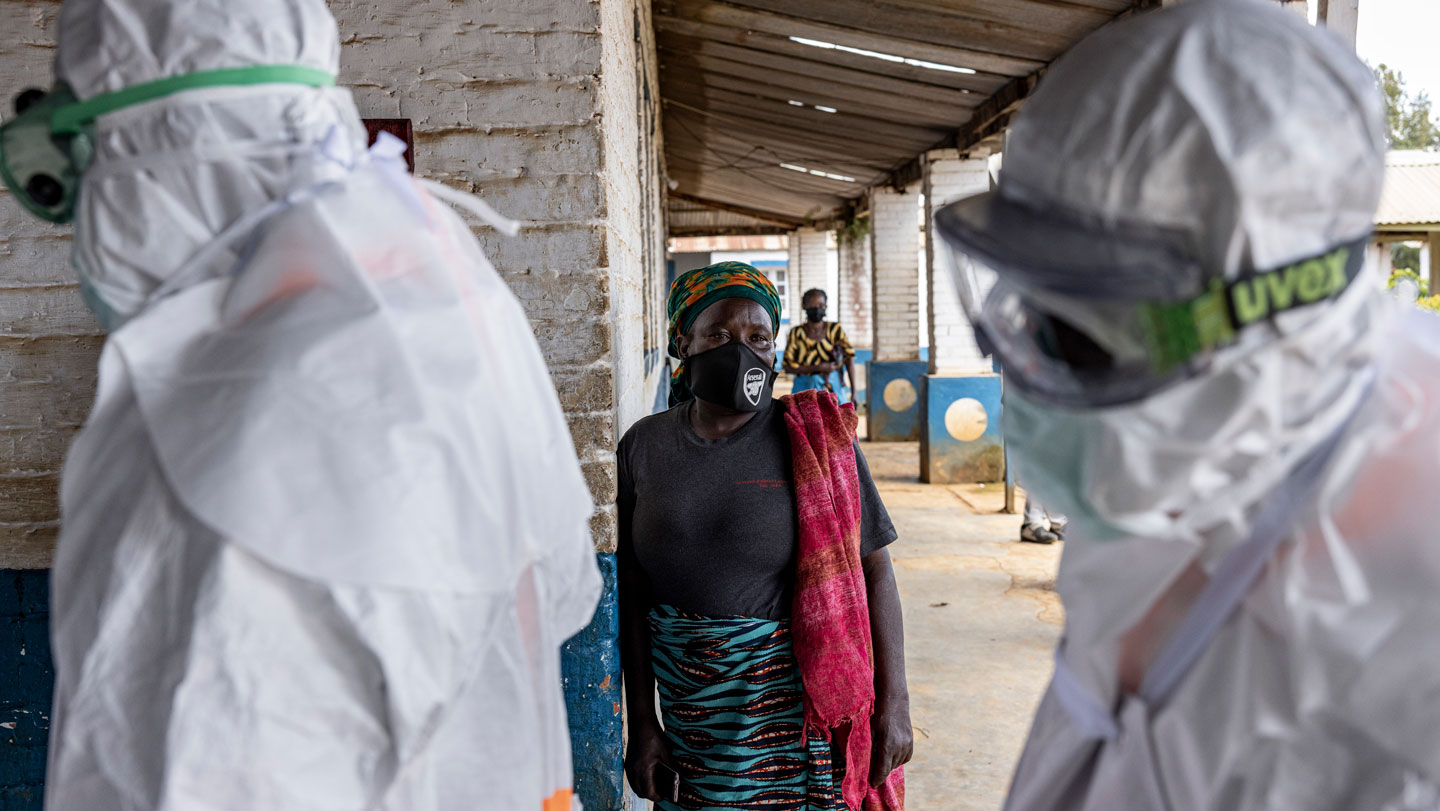
In the absence of high-tech vaccines and silver-bullet pharmaceuticals, the survival of thousands now rests on the shoulders of ordinary people utilizing the most basic, time-tested tools of public health. On the dusty paths of Mongbwalu and rural northern Congo, the high-stakes battle is being waged not with genetic sequences, but with plastic hand-washing stations, bars of soap, and human conversation. Humanitarian organizations like Oxfam have mobilized ground teams to establish grassroots “community protection committees,” utilizing the social capital of respected tribal elders, local women’s advocates, and passionate youth leaders to bypass distrust and deliver life-saving information. Because the early symptoms of Ebola closely mimic those of common diseases like malaria or typhoid, these local committees are working tirelessly to teach families how to recognize the true warning signs, urging anyone showing symptoms to seek immediate isolation rather than hiding at home out of fear. The work is physically and emotionally draining; outreach teams must navigate difficult terrain, bad roads, and localized suspicion to establish clean water access and hand-washing stations in communities that have never had running water or private sanitation. Simultaneously, contact tracers are embarking on the grueling task of identifying every single individual who may have brushed against an infected person, monitoring them with daily check-ins for the agonizing twenty-one-day incubation period. To prevent the virus from spreading through the highly infectious bodily fluids of the deceased, workers are also engaging in the delicate, culturally sensitive task of safe and dignified burials—a practice that requires local consensus and tremendous empathy to honor the dead without endangering the living.
As the sheer scale of the threat has become undeniable, international aid agencies and foreign governments have begun a frantic, logistical scramble to patch the massive holes in the Congo’s defensive line. The United States government has announced the activation of twenty-three million dollars in emergency funding, earmarking resources to rapidly build up laboratory capacities, enhance active disease surveillance along porous borders, and support the operations of up to fifty community treatment centers. Meanwhile, the World Health Organization has managed to airlift over eleven metric tons of essential medical cargo directly into the heart of the affected regions, delivering crucial items like massive isolation tents, personal protective equipment, and water purification systems to clinics that were previously running on empty. Yet, as these massive planes land and global statistics are compiled in distant capital cities, the actual struggle for survival remains intensely local and intimate. Epidemiologists on the front lines, such as Luke Nyakarahuka of the Uganda Virus Research Center, emphasize that in the absence of a cure, basic supportive care—aggressive rehydration, treating secondary infections, and managing pain—remains the single absolute deciding factor in whether a patient walks out of an isolation tent alive or is carried out in a body bag. Inside these dimly lit canvas wards, dedicated nurses and doctors, sweating profusely under layers of heavy plastic protective gear, manually administer intravenous fluids and offer words of encouragement through fogged-up visors, demonstrating that human compassion and basic clinical nursing are the ultimate shields against despair.
While frontline workers fight to keep patients alive day by day, a parallel, high-stakes race is unfolding in the laboratories and conference rooms of the global scientific establishment. International scientific coalitions, including representatives from the WHO and the Africa Centres for Disease Control and Prevention, recently convened emergency meetings to address the gaping void in medical countermeasures for the Bundibugyo strain. The hard, sobering truth hanging over these discussions is that developing, testing, and manufacturing a viable vaccine will take a minimum of six to nine months—a timeline that offers little immediate relief to those currently fighting for their breath in northern Congo. Experts like Vasee Moorthy emphasize that the ultimate goal must be a highly stable, single-dose vaccine specifically tailored to the Bundibugyo strain, as multi-dose regimens are nearly impossible to successfully administer amidst the logistical chaos of active conflict zones. The current crisis serves as a painful, moral reminder of the dangers of a reactive global health model that only funds medical solutions for diseases when they present an immediate threat to wealthier nations, leaving poorer regions vulnerable to neglected tropical pathogens. Yet, amidst the fear and institutional scramble, there remains a flicker of defiant hope that this crisis will finally galvanize permanent, equitable changes in how the world prepares for infectious threats. As vaccine researcher Helen Rees noted with a mixture of hope and realism, only time will tell if these collaborative efforts are on the right track, but for the millions of people living in the shadow of this rare and dangerous virus, defeat is simply not an option.