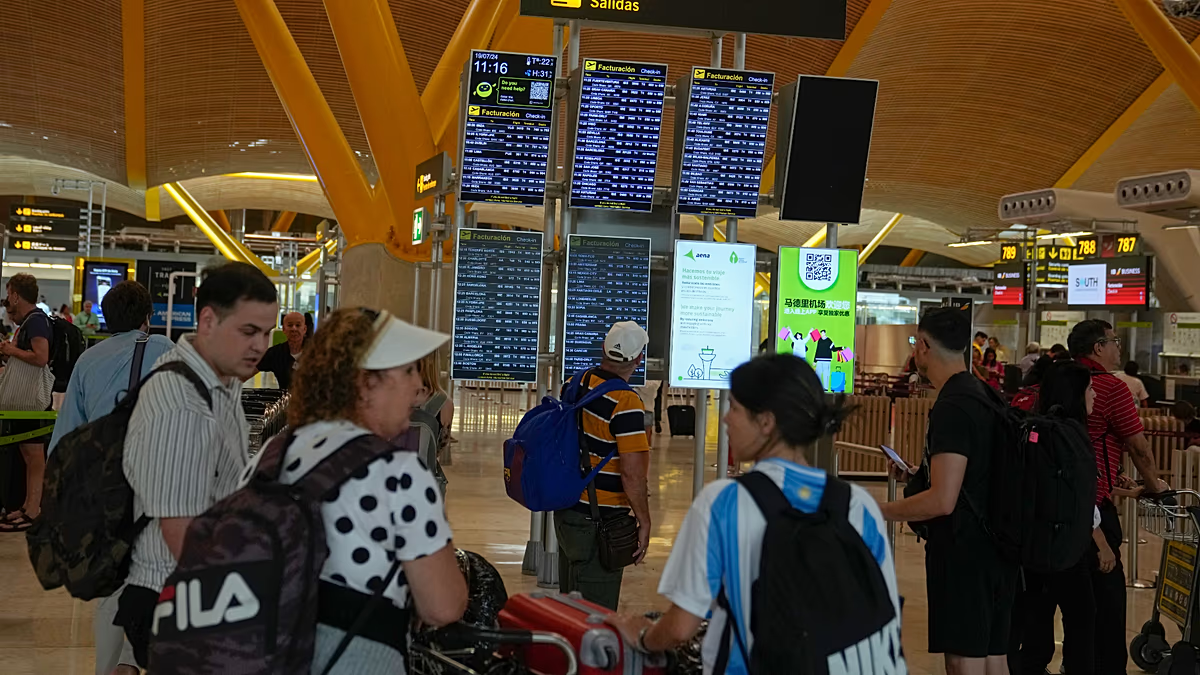






As the global economy shifts and airline ticket prices climb to daunting new heights, the way we wander across the world is undergoing a profound and necessary evolution. The glittering allure of cross-continental flights, tropical getaways, and far-flung exotic destinations is starting to lose its luster when compared to the crushing weight of high airline fares, baggage surcharges, and the sheer logistical stress of long-haul transits. In response to these financial pressures, a fresh and wonderfully vibrant travel trend is sweeping across Europe for the summer of 2026: the short-haul city break. Holidaymakers are increasingly kissing goodbye to exhausting, bank-draining flights and instead embracing the elegant simplicity of quick, easy, and highly accessible European escapes that lie just a short hop away. But even within the cozy, familiar confines of our neighboring borders, the financial landscape can be tricky to navigate, as some cities can easily drain a checking account in a single weekend while others offer incredibly generous value. To help travelers stretch their currency without sacrificing the pure joy of discovery, the UK’s Post Office Travel Money has released its highly anticipated and largest-ever City Costs Barometer. This annual report acts as an invaluable guide for the modern, budget-conscious explorer, carefully unpacking the real-world expenses of fifty different European cities. It addresses a fundamental human truth of travel—that we do not just want to survive on a trip; we want to live, taste, and experience it. By putting the practical costs of arrival, dining, culture, and sleep under a microscopic lens, the barometer illuminates the vast travel disparities across the continent. It provides a crystal-clear, honest snapshot of what a dream weekend away will actually cost, transforming the vague, looming anxieties of holiday budgeting into an empowering tool for smart, stress-free adventures that nourish the soul.
To paint an accurate, reliable, and highly relatable picture of a typical tourist’s weekend, the barometer did not look at abstract economic statistics or obscure corporate tax rates; instead, it analyzed the tangible, everyday elements that truly define our travel experiences on the ground. The study calculated the total cost of twelve essential tourist items for two people traveling together, reflecting the authentic day-to-day spending patterns of real visitors. These are the very ingredients of a perfect getaway: the aromatic morning cup of hot coffee at a bustling sidewalk café, a spirit-lifting bottle of local beer while people-watching in a sun-drenched square, a refreshing can of Coca-Cola or Pepsi after a long walk through historic streets, and a smooth glass of house wine to toast to new memories. The report also factored in the cost of a delicious, three-course evening meal for two, complete with house wine to wash down local culinary flavors. Beyond gastronomy, transport and cultural exploration are critical to the spirit of a city break, so the calculations included return airport transfers by bus or train, a 48-hour municipal travel card, a hop-on hop-off sightseeing bus tour, and entry tickets to a top heritage site, a world-class museum, and a prestigious local art gallery. Finally, the anchor of any trip—two nights of cozy accommodation in a comfortable, three-star hotel—was factored into the equation. The report points out that a city’s raw ranking is secondary to how prices actually feel on the ground and how you choose to spend your days. While small, unexpected fluctuations in accommodation prices can radically alter the overall cost of a quick trip, knowing these patterns allows travelers to plan wisely. In a budget-friendly city, you can yield to spontaneous impulses, say yes to that extra glass of wine, or wander into a surprise gallery. In more expensive destinations, a little foresight and structured planning can protect your wallet, proving that a magical holiday is always within reach if you understand the local financial playground.
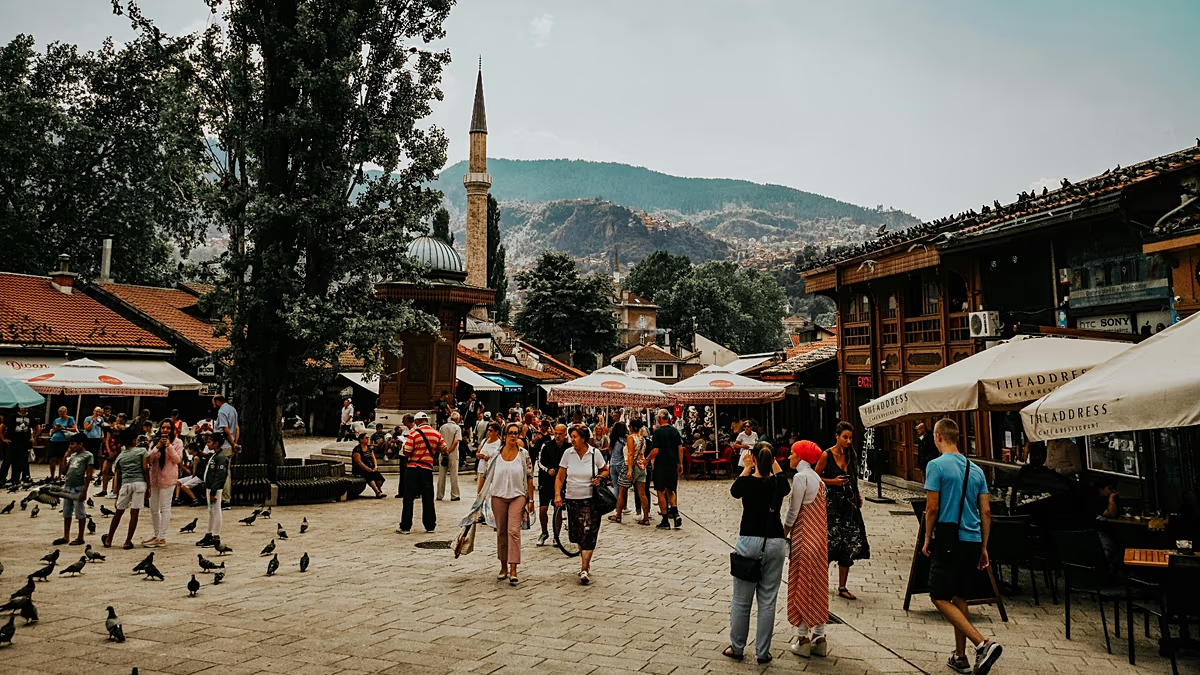
For those seeking the sweet, liberating feeling of exploring a city without constantly checking their online bank app, Eastern Europe stands as an undisputed champion, dominating the best-value list by claiming eight of the top ten spots. Stepping into the sunlight as the absolute cheapest European city break for 2026 is Sarajevo, the enchanting capital of Bosnia and Herzegovina. This marks the very first time Sarajevo has claimed the crown, offering its complete basket of twelve essential travel experiences for a mere £248 (approximately €287). Nestled in a valley surrounded by dramatic mountains, Sarajevo is a gorgeous tapestry where East meets West, rich in history, culinary magic, and warm hospitality, made even sweeter by incredibly low accommodation and transit prices. Hot on its heels is Bucharest, Romania, coming in at a highly affordable £258 (€299). Known historically as the “Little Paris of the East,” Bucharest is perfect for culture seekers who want grand, Belle Époque architecture, a bustling old town with vibrant cafes, and outstanding local culinary traditions without the French price tag. Climbing the ranks of popular tourist choices is Tirana, the vibrantly colorful capital of Albania, which sits comfortably in third place at £263 (€304.50). Tirana offers a sunny Mediterranean climate, immensely friendly locals, and a fascinating mix of Ottoman, Italian, and Soviet-era history that has been transformed into bold galleries and public art spaces. Meanwhile, Belgrade in Serbia charges ahead in fourth place at £265 (€307), offering visitors spectacular bohemian neighborhoods like Skadarlija, an electric riverside party scene, and majestic medieval fortresses that cost next to nothing to enjoy. Rounding out this magnificent top five is Trenčín in Slovakia, a fairytale-like town costing just £272 (€315). For travelers who prefer a slower, more intimate pace of life, Trenčín offers lush mountain backdrops, a stunning hilltop castle, quiet cobblestone alleys, and remarkably low everyday prices, making it the perfect hidden alternative to the continent’s crowded and noisy mega-capitals.
Looking past the top five, the remaining spots in the cheapest top ten reveal an array of fascinating destinations that prove budget travel does not mean compromising on charm, history, or coastal beauty. In sixth place sits Riga, the charming capital of Latvia, where a weekend of Art Nouveau architecture and Baltic history costs a modest £278 (€322). Surprisingly, France—a nation usually associated with premium holiday price tags—makes an impressive double appearance in the top ten, shattering the myth that French romance is always wildly expensive. In seventh place, the vibrant northern city of Lille offers gorgeous Flemish-influenced brick architecture, world-class art, and mouth-watering waffles for only £289 (€334), showcasing how delightful a train getaway near the Belgian border can be. Sharing the seventh-place tie is Lithuania’s capital, Vilnius, also priced at £289 (€334), celebrated for its sprawling baroque old town, quirky self-proclaimed artistic republics like Užupis, and cozy, budget-friendly taverns serving comforting potato dishes. France strikes again in ninth place with Strasbourg at £319 (€369), where visitors can stroll along fairytale timbered canals and indulge in rich Alsatian cuisine without paying the premium of neighboring German cities. Finally, taking the tenth spot is Podgorica, the understated capital of Montenegro, which costs a gentle £332 (€384.50), offering a gateway to rugged mountains, local vineyards, and historic stone bridges. What these destinations share is a rare quality of financial freedom; they allow travelers to focus wholly on the sensory journey rather than the transaction. In these cities, eating out is a casual pleasure, local transit is highly accessible, and heritage sites are welcoming rather than prohibitive. They invite us to slow down, stay an extra night, buy a round for new local friends, and thoroughly lose ourselves in the local way of life without the lingering dread of a massive credit card bill.
On the other side of the financial spectrum lie the premium heavyweights of Europe, where a weekend getaway demands a thorough budget strategy and a sturdy wallet. Oslo, the ultra-modern and pristine capital of Norway, holds the title of the most expensive city break for 2026, with the standard twelve-item tourist bouquet reaching an eye-watering £734 (€850)—nearly three times the cost of a weekend in Sarajevo! Oslo’s jaw-dropping fjords, cutting-edge gallery architecture, and world-class museums are undeniable, but visitors must prepare for steep prices on everything from a casual craft beer to a simple morning coffee. Joining Oslo in this high-altitude pricing layer is Copenhagen, Denmark, coming in as the second most expensive destination at £671 (€777), where high-end design, Michelin-starred Nordic cuisine, and cozy lifestyle trends come with a hefty Danish krona surcharge. Scotland’s majestic capital, Edinburgh, places third at £668 (€773.50), driven largely by the soaring costs of accommodation and dining amidst its legendary historic streets, especially during peak festival and summer seasons when global crowds flood the cobblestones of the Royal Mile to catch a glimpse of the iconic Edinburgh Castle. In fourth place, Switzerland’s scenic lakeside hub of Geneva clocks in at £644 (€746), reflecting the country’s notoriously strong Swiss franc, premium standard of living, and an international diplomatic crowd who expect nothing less than perfection from their dining and luxury watch shops. Rounding out the top five most expensive cities is Spain’s beloved coastal masterpiece, Barcelona, costing £641 (€742). Over the years, Barcelona’s massive global popularity and intense tourism interest have driven hotel rates and tourist dining prices upward, meaning a stroll past Antoni Gaudí’s architectural wonders now requires a highly organized financial game plan. In these glittering capitals, accommodation and high-end dining are the primary cost drivers, forcing travelers to think ahead, book early, and choose their splurges with calculated care.
The remaining entries in the top ten most expensive list continue to highlight classic, beloved Western European destinations that require mindful spending and careful planning. Ireland makes a double appearance on the high-cost list with its vibrant, friendly capital of Dublin in sixth place at £611 (€707) and the colorful southern culinary hub of Cork in eighth place at £602 (€697). Both Irish cities continue to feel the heavy pressure of high hotel demand, limited accommodation options, and thriving local pub and restaurant scenes that attract travelers from every corner of the globe. Sandwiched between them in seventh place is Amsterdam, Netherlands, at £609 (€705), where historic canal-side boutique hotels and world-famous museums like the Rijksmuseum command premium rates due to strict tourist caps, environmental efforts, and a strong local economy. Tied in ninth place are the majestic, romantic water channels of Venice, Italy, and the regal, sun-soaked plazas of Madrid, Spain, both costing £580 (€672) for the barometer’s standard holiday package. Venice continues to struggle with high maintenance costs, delicate historic infrastructure, and immense global tourism pressure, while Madrid has rapidly evolved into a premiere luxury destination featuring a booming upscale hospitality market and Michelin-starred culinary spots. Ultimately, these stark price differences tell us a beautiful, deeply reassuring story about travel in 2026: there is no single right way to experience Europe, and every financial budget can unlock a deeply rewarding, soul-enriching human adventure. Whether you choose the spontaneous, carefree streets of Sarajevo, the artistic charm of Lille, or the carefully choreographed luxury of Oslo, the true magic of travel lies not in how much money you spend, but in the connections you make, the sights you see, and the everlasting memories you collect. By using these insights to align your personal travel dreams with your actual financial comfort zone, you can step onto your next flight or train with confidence, dropping your mainland worries and readying yourself to savor every single moment of your well-deserved European getaway.