





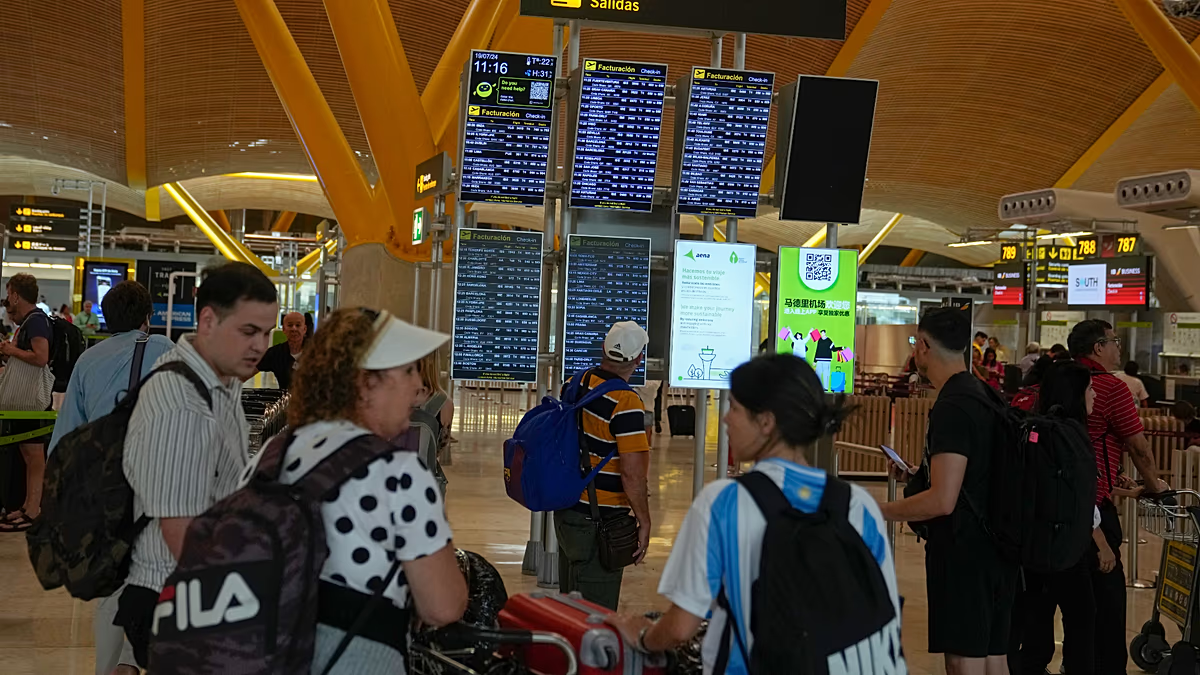
The warmth of August is traditionally a time when millions of Europeans embark on long-awaited summer holidays, seeking respite on the sun-drenched beaches of the Mediterranean, the historic streets of ancient cities, and enjoying a well-deserved break from the grind of daily life. However, this summer, the dream of effortless, carefree travel has been abruptly shattered by a fierce and unexpected diplomatic showdown between Rome and Madrid, turning what should have been a season of relaxation into a logistical nightmare. The friction ignited when the Italian government, led by Prime Minister Giorgia Meloni, steadfastly refused to back down from an ultimatum issued by the Spanish cabinet, which had demanded that Italy immediately lift the newly reinstated border controls it had unilaterally placed on arrivals from Spanish territories on the first of August. When Rome stood its ground, Madrid swiftly retaliated, signaling a dramatic end to the seamless, borderless transit that travelers within the European Union have come to expect as a fundamental right of their shared continental citizenship. From Saturday morning, travelers embarking on journeys from Italy to Spain suddenly found themselves subject to the exact same stringent, gatekeeper-like security checks that Rome had imposed a week prior. This swift tit-for-tat retaliation has transformed what should have been a period of joy and relaxation into an arena of political grandstanding, leaving everyday citizens trapped in the crossfire of bureaucratic warfare. For families, solo backpackers, and expatriates who had meticulously planned their summer getaways months in advance, this sudden diplomatic rupture feels less like a simple administrative adjustment and more like an unwelcome, highly stressful intrusion into their personal lives, serving as a stark and sobering reminder of how quickly geopolitical posturing can dismantle the hard-won conveniences of modern European unity and the freedom of movement.
The logistical landscape of this sudden dispute is defined by a rigid timeline of escalating measures that promises weeks of prolonged uncertainty for travelers caught in the middle. Spain’s retaliatory border checks officially went into effect at midnight on Saturday, August 8th, and are scheduled to remain stubbornly in place until at least September 7th, covering the entirety of the high-summer vacation window and the return of travelers as the school season approaches. Meanwhile, the Italian government has doubled down on its position, reiterating that its suspension of the cherished Schengen Agreement—which normally guarantees free movement across most of Europe—will remain actively enforced until at least August 15th, with no guarantee that it won’t be extended further as the political climate cools. This means that for a significant and highly disruptive period, a complete reciprocal border barrier will exist between two of Southern Europe’s most deeply integrated nations. The decision to temporarily tear up the Schengen playbook during the absolute peak of the tourism season has sent shockwaves through the travel industry, with airlines, travel agencies, and ferry operators scrambling to adapt to the sudden rules. National authorities in Madrid have voiced sharp complaints, pointing out that Spanish citizens had already been subjected to frustrating delays, invasive questioning, and general confusion upon arriving at Italian ports of entry over the past week. By mirroring these restrictions, Spain argues it is merely protecting its sovereign interests and responding in kind to a unilateral disruption. Yet, the physical reality of this political standoff is measured not in diplomatic cables or official press releases, but in the long, slow-moving queues forming at highway borders, ferry terminals, and airport boarding gates, casting a shadow of anxiety over the millions of journeys scheduled during these critical summer weeks when people simply want to rest.
The human consequence of this sudden policy reversal is most visible at major transit hubs, where the atmosphere has shifted from holiday excitement to palpable tension, fatigue, and confusion. Busy airports like Madrid-Barajas and Barcelona-El Prat, which routinely process tens of thousands of travelers daily, are now frontline zones for these unexpected document checks, turning routine arrivals into a slow process of scrutiny. Instead of breezing through baggage claims or heading straight to their holiday destinations, passengers arriving from Italy find themselves funneled into lengthy lines, unsure of what documents they will be asked to produce or how long they will be delayed. The disruptions are not confined to the air; those traveling by sea face similar bottlenecks at major maritime ports, where border officials are conducting checks during embarkation and disembarkation, slowing down the boarding of massive car ferries and disrupting ferry timetables. Even travelers attempting to bypass these transit hubs by driving from Italy to Spain face a gauntlet of delays; upon crossing through France, they are liable to be stopped by authorities at the French-Spanish border crossings, transforming what is usually a scenic, stress-free road trip into a nerve-wracking exercise in compliance. For many, these delays mean missed connecting flights, ruined hotel reservations, and lost hours of precious vacation time that can never be recovered. The psychological toll is immense, as travelers are forced to navigate an environment where rules seem to change overnight, leaving them feeling less like valued guests and more like suspects undergoing scrutiny, simply for wanting to cross a border that was, just days ago, completely invisible and effortless to traverse. This serves as a stark reminder of how fragile international systems are when political tides shift suddenly.
Navigating the complex web of paperwork required to clear these newly erected checkpoints is proving to be a logistical minefield for unsuspecting travelers who assumed their standard documents would suffice. The Spanish government has clarified that all individuals arriving from Italy—whether by air, sea, or land—must be prepared to present valid proof of identity immediately upon request. For citizens of the European Union, this means presenting a valid national identity card or passport, while non-EU nationals face even stricter scrutiny, requiring them to produce valid visas or residence permits alongside their passports. Crucially, a recent bureaucratic shift has added an extra layer of peril for Italian citizens: as of August 3rd, 2026, traditional paper identity cards are officially no longer recognized as valid travel documents for international journeys. Italian travelers must now possess the newer Electronic Identity Card (CIE) or a valid passport to gain entry into Spain. This minor detail, easily overlooked during the rush of packing, has already resulted in heartbreak at departure gates, where unaware travelers carrying older paper IDs have been turned away, their holiday dreams canceled on the spot without any recourse or refund. The shift to digital-only identification highlights a growing divide between modern administrative demands and the practical realities of everyday citizens, many of whom may not have had the time, money, or resources to update their documents in time. The sudden enforcement of these regulations serves as a stark warning to anyone planning to travel: double-check the fine print of your documentation, ensure everything is fully digitized and up to date, and prepare for a level of bureaucratic scrutiny that has not been seen in Western Europe for a generation. It is no longer enough to simply pack your bags; you must also be an expert in contemporary European border policy.
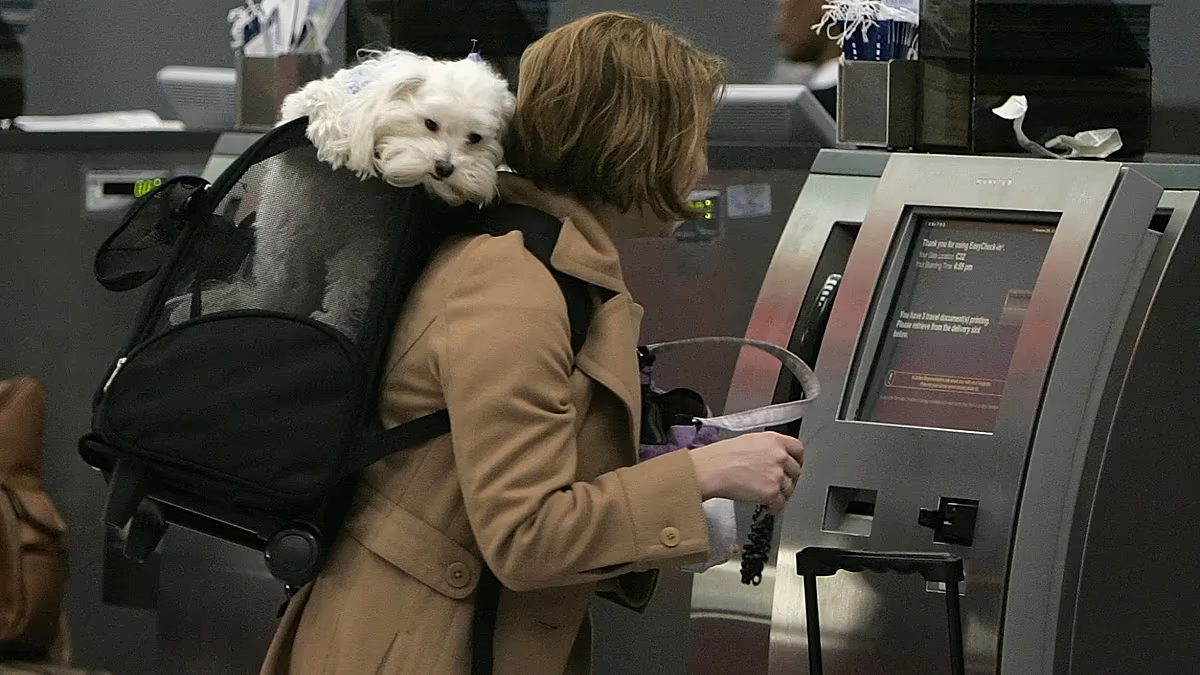
The burden of these sudden regulatory hurdles falls particularly heavily on families traveling with young children and beloved pets, who already face the inherent stresses of packing, scheduling, and keeping everyone calm during transit. Parents must now be hyper-vigilant about ensuring that even the youngest minors possess their own individual, up-to-date identification documents, as family-based passport registrations are a thing of the past. In Italy, these youth documents carry strict, age-dependent validity periods—three years for children under the age of three, and five years for minors aged three to eighteen—making it incredibly easy for a busy parent to accidentally travel with an expired document. Additionally, strict child protection laws dictate that minors under the age of fourteen are absolutely prohibited from traveling unaccompanied, adding another layer of legal compliance that border officials are actively monitoring. For those who consider their domestic animals to be part of the family, traveling with a dog or cat now requires navigating a separate, complex veterinary protocol. To enter Spain from Italy, pets must be accompanied by an official European Union pet passport, which can only be issued by an authorized veterinarian. This passport must verify that the animal is microchipped for clear identification and has received a valid, up-to-date rabies vaccination prior to travel. This means that a simple family vacation now requires weeks of medical and bureaucratic preparation, turning what should be a spontaneous summer escape into a highly coordinated logistical operation where one missing stamp or outdated vaccine can result in a beloved family pet being quarantined or turned away at the border. The anxiety of potentially being separated from a pet or having a child denied boarding adds an immense emotional weight to what should be a happy time, leaving parents feeling overwhelmed by the sheer volume of paperwork required to cross a single border.
Ultimately, this sudden escalation of border checks between Rome and Madrid exposes a deeper, more troubling vulnerability within the modern European experiment. The Schengen Agreement was designed to be a symbol of a unified, borderless continent where citizens could live, work, and travel without the physical barriers of the past, fostering a shared sense of European identity and mutual trust. When national governments resort to using these borders as political bargaining chips during diplomatic disputes, they chip away at that very foundation of unity, forcing citizens to feel the tangible weight of nationalism once again. This current crisis is not just about missed flights or long queues at Barcelona’s airport; it is about the fragile nature of the freedoms that Europeans have come to take for granted. As families sit in sweltering border traffic or wait anxiously at security gates, there is a growing realization that the borders we thought had vanished forever are only ever a political disagreement away from being rebuilt. It serves as a powerful reminder that true integration requires constant diplomatic nurturing, compromise, and a shared commitment to keeping the pathways of connection open rather than closing them for political leverage. As travelers navigate this challenging summer season, the hope remains that cooler heads will prevail in both Rome and Madrid, and that leaders will recognize that the true cost of political posturing is always paid by the citizens they serve, who only desire peace and freedom. Until then, the people traveling between Italy and Spain will continue to show patience and resilience, carrying their electronic IDs and pet passports, hoping for a swift return to the borderless Europe they know and love, where unity is prioritized over political division, and where the freedom to travel remains a bridge, not a barrier.