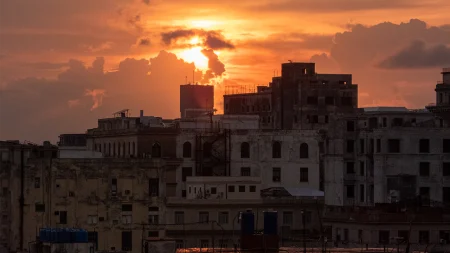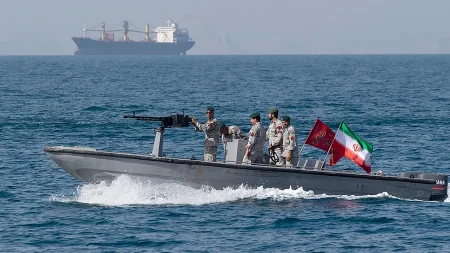





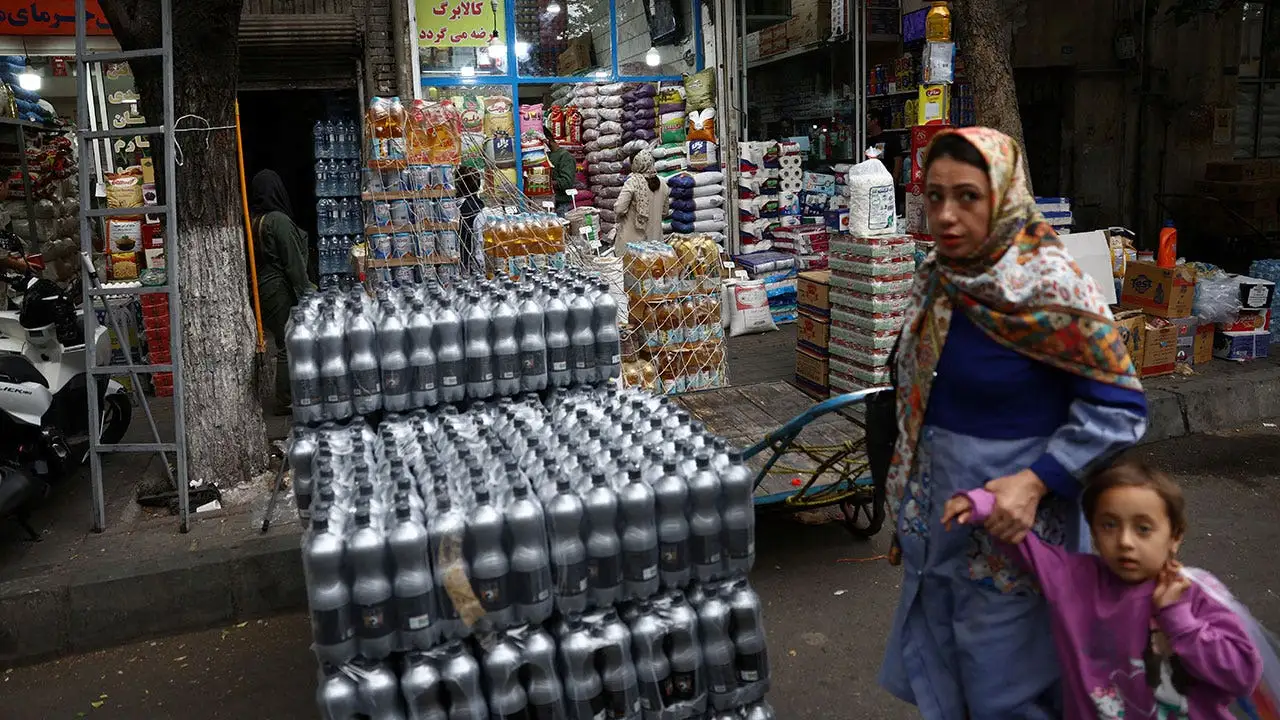
In a notable shift of geopolitical strategy, the United States is pivoting away from immediate, large-scale military escalation in favor of a quiet, relentless campaign of economic attrition designed to bring the Iranian regime to its knees. President Donald Trump has signaled a preference for letting compounding financial distress do the heavy lifting, characterizing the current American posture as “low-keying it” while closely monitoring the devastating inflation and cash shortages gripping Tehran. Rather than engaging in direct military confrontation, the administration is leveraging a highly effective naval blockade on the Strait of Hormuz to choke off Iran’s remaining financial lifelines. Yet, far away from the halls of power in Washington, this high-stakes game of economic chess is extracting a devastating human toll on the streets of Tehran and beyond. In a heartbreaking reflection of this crisis, local reports describe a society pushed to the brink of survival, where ordinary citizens are reduced to shoplifting basic necessities like bread, cheese, and meat, or quietly consuming packaged foods inside supermarkets because they can no longer afford to pay for them. As the value of the Iranian rial plummets to historic lows, turning the national currency into what critics describe as virtually worthless paper, the daily life of the average Iranian has become a grueling struggle against systemic poverty, highlighting the profound human suffering that lies beneath the surface of global political maneuvers.
To achieve this state of economic paralysis, the United States Treasury Department has unleashed an aggressive financial warfare campaign appropriately dubbed “Economic Fury.” This multi-layered initiative is designed to systematically dismantle every conceivable revenue stream available to the Islamic Republic, ranging from its traditional oil exports to highly sophisticated modern financial networks. By targeting Iran’s elusive shadow banking systems, weapon procurement operations, and even its illicit cryptocurrency transactions, the Treasury has successfully blocked tens of billions of dollars from entering the regime’s coffers. A crucial element of this strangulation campaign has been the aggressive targeting of Iran’s “shadow fleet,” with the Office of Foreign Assets Control (OFAC) sanctioning more than one hundred vessels used to smuggle oil across global waters. American officials argue that this pressure has successfully decimated the regime’s ability to fund its regional proxies and pay its own military forces, leaving Tehran increasingly desperate for cash. While the administration maintains that it remains open to a diplomatic solution and does not wish to see a nuclear-armed Iran, it has made it abundantly clear that the economic vise will continue to tighten until the regime agrees to negotiate a comprehensive new deal, leaving Iran with a stark choice between total economic collapse or diplomatic capitulation.
However, the catastrophic state of Iran’s economy raises a fundamental and deeply complex question: is this ruinous financial crisis purely the result of external American pressure, or is it the inevitable consequence of decades of internal corruption, structural mismanagement, and ideological spending by the ruling regime itself? Experts like Miad Maleki, a former Treasury Department sanctions official and senior fellow at the Foundation for Defense of Democracies, argue that while U.S. sanctions have undoubtedly accelerated Iran’s economic downward spiral, the underlying vulnerabilities were entirely self-inflicted. For over half a century, the Islamic Republic has consistently prioritized a militant revolutionary ideology over the welfare of its own citizens, funneling the nation’s vast oil wealth into proxy conflicts, missile development, and nuclear brinkmanship. This systemic diversion of resources is starkly illustrated by the regime’s historical budget allocations; between 1993 and 2006, the military’s share of total government spending ballooned from 16 percent to a staggering 52 percent, while funding for critical public services like education, healthcare, and social welfare experienced a precipitous and tragic decline. By systematically starving public infrastructure to feed its military apparatus, the regime left its domestic economy highly fragile, ensuring that when international sanctions finally struck, the impact would be absorbed not by the ruling elite, but by vulnerable, ordinary citizens.
This internal imbalance is further exacerbated by the sprawling, monopolistic economic empire controlled by the Islamic Revolutionary Guard Corps (IRGC), which has successfully consolidated its grip over the country’s most lucrative industries. Originally established as a ideological military force, the IRGC has evolved into an dominant economic entity, largely through its massive engineering and construction arm, Khatam al-Anbiya. Founded in the wake of the Iran-Iraq War, this conglomerate has monopolized major infrastructure, energy, and construction projects, transforming the IRGC into a self-sustaining financial powerhouse that operates largely outside of public accountability. This vast, opaque network is supported by a massive “gray budget”—estimated to add anywhere from 50 to 100 percent to the IRGC’s official military outlays—which allows the elite military class to amass wealth and fund its regional operations independently of the official national budget. This level of economic control means that the very forces driving Iran’s aggressive foreign policy are largely insulated from the financial hardships plaguing the rest of the country, creating a stark class divide where the ruling military elite continues to prosper while the general public bears the full brunt of national bankruptcy.
The irony of this economic strangulation is that the sanctions themselves have inadvertently created a highly lucrative black-market “franchise” for the very elites they were designed to punish. Morad Tahbaz, an Iranian-American conservationist who spent nearly six years as a political hostage in Tehran’s notorious Evin Prison, offers a unique and sobering perspective on this dynamic, explaining that the restriction of formal international banking channels has forced all trade into an unregulated, gray-market economy. Because legitimate financial transactions are blocked, the smuggling of oil, consumer goods, and currency has become an incredibly profitable monopoly controlled entirely by regime insiders and IRGC-linked networks. Consequently, the powerful factions who profit immensely from these illicit, high-margin smuggling operations have developed a powerful vested interest in maintaining the status quo of international isolation, as a return to normal, transparent global trade would dismantle their lucrative monopolies and strip them of their domestic influence. This economic reality has fueled intense, quiet power struggles within the various factions of the Iranian government, highlighting a bitter truth: those who hold the power to negotiate a resolution to the conflict are often the very individuals who stand to lose the most financially if the sanctions are ever lifted.
Ultimately, this ongoing geopolitical stalemate leaves the innocent population of Iran trapped in an agonizing double-bind, caught between the crushing weight of international sanctions and the predatory greed of their own government. While the United States Treasury maintains that it enforces strict humanitarian carve-outs—such as General License 8A, which theoretically permits the transaction of essential medicines, agricultural products, and medical devices—the practical reality on the ground is far more grim. International banks and foreign corporations, terrified of violating complex American sanctions and facing massive financial penalties, routinely refuse to facilitate even legally permitted humanitarian trade, leaving ordinary Iranians facing severe shortages of life-saving medical supplies and basic nutritional needs. As Washington continues to squeeze what remains of the Iranian economy in hopes of forcing a diplomatic breakthrough, the daily life of the Iranian people continues to erode into a quiet tragedy of survival. The ultimate success of this economic warfare campaign remains deeply uncertain, but its human cost is painfully clear: a proud, historic nation is being slowly hollowed out, its citizens paying the ultimate price for an ideological conflict they did not choose and a regime that has long since abandoned its responsibility to serve them.