





The night before sixty-eight-year-old Robert Goings lay down in an MRI machine for a radical brain procedure, his bedroom in Lebanon, Oregon, became a sleepless track of constant physical movement. He paced the floor hour after hour, driven not by nervousness, but by a cruel physiological reality: the moment he stopped moving, his body erupted into agonizing muscle cramps and violent tremors. Goings had spent decades watching his life shrink under the shadow of Parkinson’s disease, a progressive neurodegenerative condition that eventually forced him into early retirement at age sixty-two from his cherished career as a draftsman and civil engineering technician when his hands could no longer draw clean, precise lines. Normally, these debilitating symptoms were kept somewhat at bay by a daily cocktail of dopamine-replacing medications, but to prepare for the next morning’s treatment, doctors at Oregon Health and Science University (OHSU) in Portland required him to halt his prescriptions entirely. With his symptoms fully unmasked and screaming at maximum volume, Goings endured a long, challenging night of relentless cramping in both his legs and arms, supported only by his devoted wife, Diana, who watched him walk with a heavy, anxious heart. This physical suffering was further compounded by the subtle, creeping social isolation that so often accompanies such a visible diagnosis; Goings recalls how easy it is to withdraw from the world once you realize your uncontrolled shaking is a public spectacle that invites unwanted stares and whispers. In his youth, Goings had trained as a brave United States Navy diver, navigating the pitch-black, mud-churned waters of Pearl Harbor inside a heavy, blacked-out Mark V diving helmet where panic meant death and survival depended entirely on tactile focus and steady nerves. This hard-won mental discipline would prove absolutely essential the next morning on November fifth as he prepared to place his head into a specialized medical frame, facing a critical procedure that promised to alter his brain to reclaim his physical autonomy.
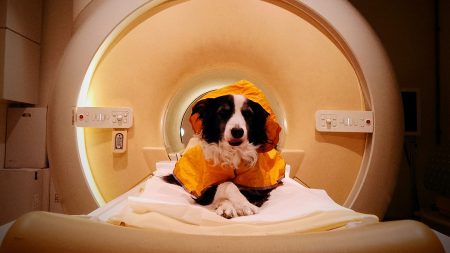
On the morning of his surgery, Goings entered the high-tech suite at OHSU to undergo high-intensity focused ultrasound, a revolutionary, incision-free form of brain surgery that is quickly gaining traction among patients seeking relief from severe movement disorders. Before he was slid into the massive magnetic resonance imaging (MRI) machine, medical clinicians shaved his head completely and secured his skull within a rigid, tight-fitting metal frame held in place by specialized screws protruding into his skin to prevent even a millimeter of movement. Next, a flexible water-filled bladder was carefully fitted on top of his head like a modern diving helmet, serving the dual purpose of conducting acoustic energy directly into his skull while circulating cool water to prevent his scalp from overheating during the treatment. This remarkably non-invasive technique uses a specialized helmet to project exactly 1,024 separate, high-energy ultrasound beams—the identical acoustic waves used to capture routine prenatal sonograms—deep inside the brain’s internal architecture, where they intersect at a single, incredibly precise target point. Rather than cutting through bone, introducing surgical instruments, or utilizing general anesthesia, natural acoustic energy creates high temperatures at the point of intersection, safely burning away a tiny, highly dysfunctional cluster of neural tissue. Throughout the hour-long process, neurosurgeons like Dr. Daniel Cleary slid Goings back and forth in the MRI tube, adjusting the energy and testing his physiological responses by having him perform fine-motor tasks while fully conscious. This allowed the clinical team to confirm they had located the optimal therapeutic target before heating the tissue to the threshold required to make a permanent lesion, making this real-time feedback loop one of the safest, most personalized, and most profoundly immediate treatment methods available in modern neurosurgery today. Because the patient remains awake, they describe symptoms and sensations in real time, creating a collaborative clinical bridge between the surgeon’s monitors and the patient’s own subjective physical reality.
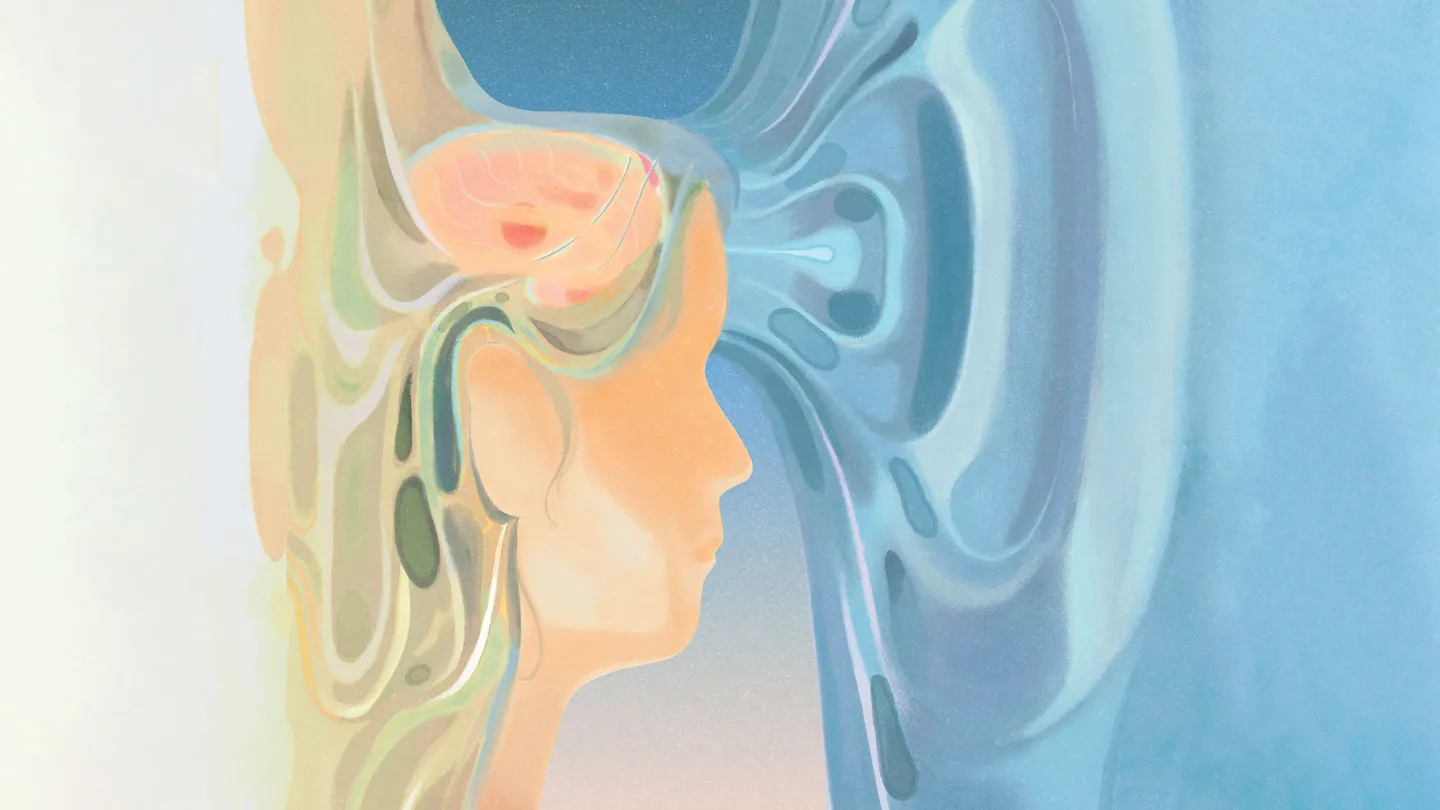
To understand the profound impact of this acoustic thermal ablation, one must look at the circuit that governs movement. Parkinson’s disease is characterized by the progressive death of dopamine-producing cells nestled deep within a region of the midbrain known as the substantia nigra. Dopamine serves as the primary chemical messenger that allows the brain to coordinate voluntary muscles, and without it, patients must rely on medications like levodopa and carbidopa to artificially restore this neural balance. While these chemical treatments offer immense early relief, their effectiveness inevitably degrades over time, often requiring higher, more frequent dosages that induce a secondary suite of debilitating side effects, most notably involuntary, jerky bodily movements called dyskinesia. For patients whose disease has progressed beyond the reach of pharmaceutical control, deep brain stimulation (DBS)—which involves surgically implanting permanent electrodes and a battery-powered pulse generator resembling a cardiac pacemaker—has long been the gold-standard intervention, yet many patients are ineligible due to poor overall physical health or a deep-seated aversion to having foreign hardware residing inside their skulls. Focused ultrasound neatly sidesteps these obstacles by manipulating the brain’s complex system of motor circuits, which function like a delicate balance between active “gas pedals” and protective “brakes.” In a healthy person, these pathways work in perfect harmony, but Parkinson’s disrupts this balance, applying excessive braking pressure that freezes muscles, causes rigidity, and triggers chaotic tremors. By using ultrasound to destroy specific, hyperactive nodes in these circuits, surgeons clip the faulty brakes to restore physical fluid state. Neurologists target two primary brain areas: the ventral intermediate nucleus of the thalamus (VIM), which acts as a major relay station for tremors routing from the cerebellum, and the newly FDA-approved target, the pallidothalamic tract (PTT), which can dramatically alleviate physical stiffness, debilitating slowness, dyskinesia, and the severe, agonizing muscle tension that plagues late-stage patients.
The immediate, life-altering success of these procedures has brought veteran medical staff, patients, and their families to tears of joy and disbelief. Mid-way through his treatment, when clinicians temporarily disabled a small pocket of tissue to test its impact, Goings emerged from the MRI tube with a huge grin, telling his surgeon, “You got the right spot.” When the permanent lesion was completed and he was finally wheeled into a quiet recovery room, he held out his right hand for his wife to see, and it remained perfectly still for the first time in years; the transformation was so complete that on their drive home through a blinding rainstorm, he felt so rejuvenated that he took the wheel himself. Similarly, sixty-eight-year-old Gary Gilson, a former surgical assistant from Hillsboro, Oregon, who used to shake so violently before his procedure that technicians had to secure him with weights, experienced an instantaneous cessation of his tremors, which was followed by the near-total disappearance of the chronic, agonizing muscle rigidity on his right side. For Linda Grant, a patient from the mountain town of Sisters, Oregon, whose body was exhausted from trying to suppress its own tremors, the procedure was nothing short of miraculous; after drawing steady spirals on a tablet, she successfully drank from a cup without a straw, a basic childhood task that had previously been completely impossible. This profound restoration of stillness is echoing across households; one nurse coordinator, Christine Larsen, recalls a post-operative follow-up where a patient’s wife confessed she woke up in a panic thinking her husband had passed away, simply because she was no longer sleeping next to a body in perpetual, violent motion. Handing a patient a glass of water after decades of violent spilling is a sacred moment for these clinics, as it represents the immediate restoration of long-lost human dignity, independent living, and profound self-reliance.
Despite these stories of sudden liberation, medical pioneers caution that high-intensity focused ultrasound is still in its relative infancy and is far from a magic cure. It helps symptoms but cannot halt the progressive march of Parkinson’s disease, which is driven by the abnormal clumping of a protein called alpha-synuclein that slowly spreads throughout the brain, gradually disrupting systems that govern sense of smell, digestion, and cognitive functioning. Though data in the Journal of Neurosurgery shows that these acoustic lesions can successfully suppress essential tremors for at least five years, researchers still do not fully know how long the relief will endure for Parkinson’s patients, who are dealing with a much more complex, widespread neurodegenerative process. Chemical imbalances and cellular death continue in other areas, meaning patients must still manage non-motor symptoms while adjusting to their newly restored physical capabilities. Furthermore, the surgery is not entirely without immediate side effects; some patients, including Linda Grant, experience temporary post-operative balance issues and mild instability that require several weeks or months of dedicated physical therapy to overcome. There are also steep systemic hurdles to widespread adoption, as the highly specialized technology is currently confined to a handful of large, elite academic medical centers across the globe. There are far too few neurosurgeons trained in this delicate art, and many commercial health insurance providers remain hesitant to cover the high costs associated with such a novel procedure, prompting Parkinson’s advocates to collect rigorous data to prove its long-term cost-efficiency. Neurologists like Dr. Delaram Safarpour are tirelessly gathering clinical outcome data from patients at OHSU to draft peer-reviewed scientific papers that clearly demonstrate the massive improvements in quality of life, using empirical evidence as their primary weapon to fight back against insurance denials and expand public access for families who desperately need this alternative to invasive surgery.
Ultimately, the emergence of this non-invasive therapy has dramatically illuminated the horizon for millions of people worldwide living under the weight of a Parkinson’s diagnosis, offering a beacon of hope that was virtually unimaginable just a decade ago. These clinical triumphs illustrate a profound truth about the human spirit: when given even a small chance to reclaim their physical dignity, patients seize it with immense beauty and courage, moving forward to cultivate richly active lives that were once thought lost forever. With his newfound physical freedom and a total absence of regrets, Robert Goings is keeping busy at his home in Oregon, spending his days handling the physically demanding task of chopping firewood, carrying heavy logs, and taking long, rambling walks through the Pacific Northwest forests with his energetic and incredibly loyal dog, Scooter. Meanwhile, Gary Gilson is eagerly planning a dream vacation to Europe with his wife, mapping out a long-awaited itinerary through cities in England, Germany, and the Netherlands, as well as proudly purchasing a new recreational camper to explore scenic highways at their own leisure, ready to experience the world without the burden of constant shaking. While the scientific community continues its relentless quest to find a biological cure that can halt neurodegeneration at its source, this acoustic technology acts as an invaluable bridge, allowing people to safely and comfortably navigate their daily lives in peaceful quietude. By replacing chaotic shaking with steady, silent capability, high-intensity focused ultrasound does not merely alter the faulty circuits of the human brain; it breathes vibrant life back into the human experience, restoring the simple, beautiful quiet of a still hand and a restful night, proving that even in the face of progressive illness, science and human determination can still triumph, restoring the basic joys of existence.