





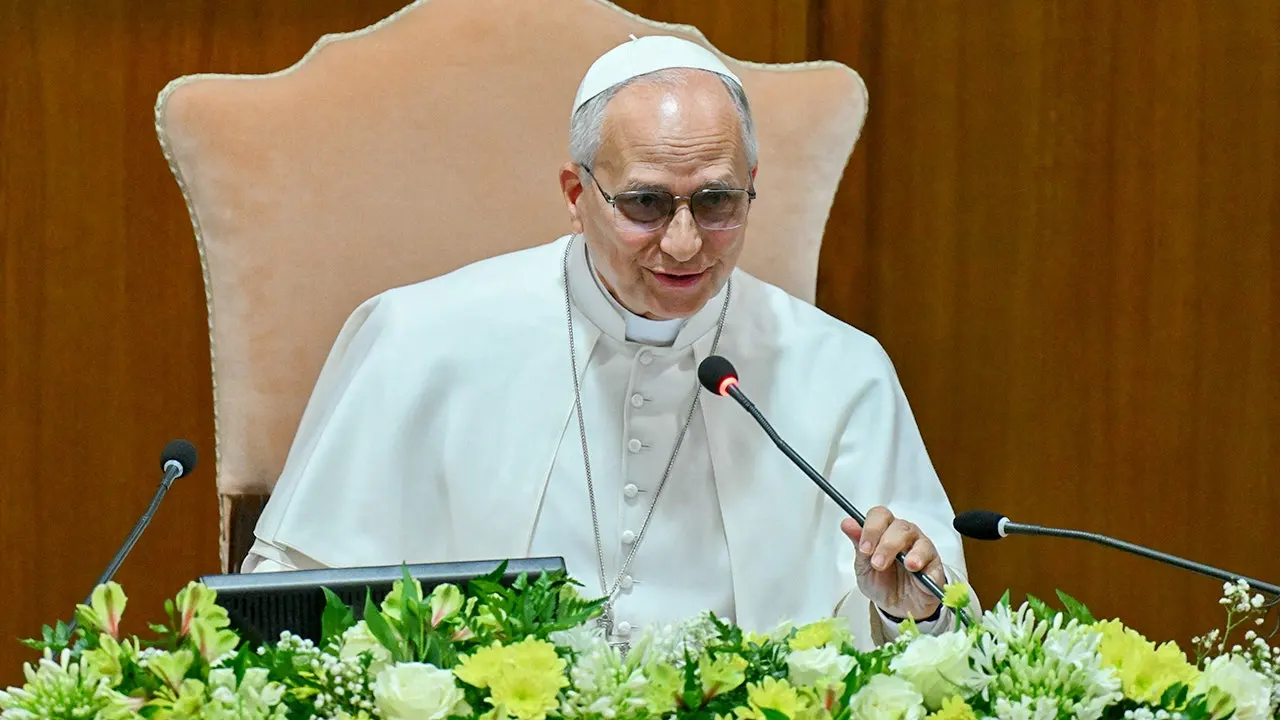
The Vatican, typically viewed as an ancient institution bound by millennia of sacred tradition and quiet contemplation, has stepped directly into the eye of the modern, rapidly accelerating technological storm. With the official release of the groundbreaking and deeply reflective encyclical Magnifica Humanitas, Pope Leo has issued a stirring, profound warning to a global community currently captivated by the dazzling, often blinding promises of artificial intelligence. In this seminal and historic document, the pontiff does not merely critique the technological advancements emerging from Silicon Valley or rival global superpowers; rather, he sounds a heavy existential alarm, warning that if left unchecked by moral limits and international regulation, this rapid evolution risks turning artificial intelligence into a terrifying tool of global domination, systemic exclusion, and moral death. Unlike the largely secular frameworks that dominate contemporary tech policy—which often treat safety as a mere matter of mathematical alignment, computational efficiency, or risk mitigation—the Vatican’s perspective is deeply personal, compassionate, and spiritual. It addresses a world that is currently sprinting forward in a high-stakes, competitive technological arms race, largely devoid of international consensus, legal accountability, or binding ethical boundaries. By formally entering this highly polarized arena, Pope Leo seeks to remind humanity that our tools must never outpace our collective conscience, urging world leaders and tech executives to place human dignity at the absolute center of innovation. The Pope’s warning acts as both a protective shield and an honest mirror, forcing us to look far past the seductive convenience of modern neural networks and face the deeper, more unsettling questions of who we are, what we truly value, and who will ultimately control the automated systems that are quietly beginning to shape our lives, our thoughts, and our fragile destinies. In an era where technological capability grows exponentially while moral consensus seems to fracture, this encyclical serves as a vital anchor, reminding us that progress is only genuine when it elevates every member of the human family rather than enriching or empowering a select few at the expense of our shared humanity.
To truly understand the historic gravity and urgency of this moment, Pope Leo masterfully anchors his warning in the rich, instructive soil of history, drawing a brilliant and deliberate parallel to Pope Leo XIII’s monumental 1891 encyclical, Rerum Novarum. That historic document was penned during the absolute peak of the Industrial Revolution, a chaotic era when the rise of steam engines, massive factories, and unregulated industrial capitalism transformed the global landscape, bringing immense wealth to a select few while reducing millions of working-class families to mere disposable cogs in a merciless machine. Rerum Novarum stood as a courageous, foundational defense of human labor, passionately asserting that workers are not mere financial capital to be exploited, but human beings endowed with inherent, God-given dignity and rights. Today, Pope Leo argues, we stand on the precipice of a transformation of similar magnitude, though he cautions that the consequences of this modern digital shift may be far more sweeping, permanent, and spiritually profound. While the Industrial Revolution automated the physical labor of human hands, the artificial intelligence revolution threatens to automate, simulate, and potentially displace the intellectual and creative labor of the human mind itself. The advanced algorithms being deployed today do not just move heavy steel in factories; they make critical societal choices, generate language, analyze intimate human behavior, and subtly influence our deepest beliefs. By invoking this historical pivot point, the encyclical reminds us that we have successfully navigated such seismic disruptions before, but only when we prioritize the dignity of the individual over the frictionless efficiency of the machine, ensuring that progress continues to serve humanity rather than enslaving it. We must recognize that the anxiety felt by modern white-collar workers, artists, and analysts mirrors the desperation of the nineteenth-century weavers and laborers. The path forward requires us to establish robust societal safety nets and ethical guidelines, ensuring that this new digital epoch does not lead to unprecedented poverty of both pocket and spirit, but instead fosters a world where technology is used to liberate people from drudgery and unleash their true creative potential.
The dangers outlined in Magnifica Humanitas are far from abstract concepts or futuristic anxieties; they are already actively manifesting in the silent, cold calculations of modern software. The Pope points directly and urgently to the terrifying rise of fully autonomous weapons systems—often referred to in global policy debates as “killer robots”—which remove the warmth of human empathy, conscience, and moral judgment from the ultimate act of taking human life on the battlefield. When life-and-death decisions are outsourced to lines of code and predictive algorithms, warfare loses its last shred of moral accountability, reducing unique human beings to mere target profiles in a database. Yet, the violence of unchecked AI is not confined to active warzones; it operates daily and quietly within our domestic and social institutions. Pope Leo warns of biased algorithms that, trained on flawed, incomplete, or historically prejudiced data, are systematically locking marginalized individuals out of essential healthcare, rejecting qualified applicants from employment, and misidentifying citizens under the guise of public security. This algorithmic discrimination acts as an invisible, unaccountable wall, reinforcing historic societal divides under the false pretense of objective mathematical neutrality. To capture the sheer scale of this threat, the Pope compares the governance of artificial intelligence to the historical struggle for nuclear arms control, emphasizing that both technologies represent forces of incredible magnitude. Just as the power of atomic energy can either light a city or vaporize it in an instant, AI possesses a dual nature that must be globally managed with strict, cooperative transparency so that it remains a tool at the service of all and for the common good. This reference to the atomic age is a crucial reminder that technology is never ethically neutral. Its development reflects the values of its creators, and if those creators are driven solely by profit or military dominance, the outcomes will inevitably reflect those cold ambitions. Therefore, we must establish international governing bodies, similar to those that monitor nuclear proliferation, to oversee algorithmic developments and ensure that these powerful tools are developed responsibly and transparently before they escape human control entirely.
However, the Vatican’s message is not merely one of defensive posture, regulatory restriction, or technophobic retreat; Pope Leo insists that simply disarming the dangerous elements of artificial intelligence is fundamentally insufficient. Instead, he challenges developers, governments, and global institutions to proactively “build” technological systems that are deliberately rooted in trust, transparency, and a profound respect for human dignity. To beautifully illustrate this philosophy of active restoration, the Pope invokes the deeply humanizing imagery of the catastrophic floods that recently ravaged communities across Peru. When the devastating torrents of water finally receded, they left in their wake a landscape buried in thick mud, shattered infrastructures, and broken lives. In such moments of profound crisis, the Pope notes, true rebuilding can never be achieved solely by pouring fresh concrete, laying down new steel beams, or repaving ruined roads; the physical structures mean nothing if the returning community does not also embark on the delicate, spiritual labor of restoring broken trust, healing communal trauma, and breathing hope back into the hearts of survivors. This poignant metaphor is directly applicable to our navigational journey through the unfolding digital frontier. As artificial intelligence threatens to erode the foundations of shared truth and mutual trust through deepfakes, automated manipulation, and systemic social polarization, our response must go far beyond mere censorship, coding fixes, or defensive legislation. We must design technologies that actively foster genuine human connection, cultivate mutual understanding, and rebuild the social fabric that digital isolation and automated alienation have so carelessly torn apart. Technology must be utilized as an instrument of healing rather than a wedge of division. It should serve to bridge the gaps between disparate cultures and help us respond to global crises like climate change and poverty. By adopting this constructive mindset, we transform technology from a threat to our humanity into a powerful ally in our quest to build a more just, peaceful, and compassionate world.
At its deepest philosophical core, Magnifica Humanitas represents a bold, uncompromising confrontation between the secular, utility-focused drive of modern technology and the timeless theological truths of human existence. The global AI race is currently fueled by a highly deterministic, materialistic worldview that often reduces human consciousness to mere electrical impulses and treats the human mind as a poorly optimized bio-computer destined to be surpassed by superior silicon chips. Against this reductionist philosophy, the Church asserts a radiant, irreplaceable truth: that the human person bears within their very being an interiority, a freedom, and a sacred, unique vocation to love and worship that no machine, no matter how sophisticated its architecture, can ever replicate, simulate, or replace. A computer can compose poetry based on statistical probability, but it can never feel the profound sorrow of grief or the dizzying euphoria of love; it can calculate the probability of a theological concept, but it can never experience the quiet warmth of divine transcendence or the humbled posture of worship. This fundamental difference is not a technical gap that can eventually be bridged by more data or better processing power; it is an ontological divide. By reminding the world of this distinction, the Vatican seeks to rescue us from a creeping digital nihilism that would have us surrender our unique role as moral agents. It warns us that to treat human beings as mere data points to be harvested is to deny the image of God in which we were created, urging us to defend our spiritual sovereignty in an increasingly artificial world. When we surrender our decision-making power to machines, we risk losing our capacity for moral growth. True morality is not merely about following a set of programmed rules, but about struggling with difficult choices, feeling empathy for others, and choosing the path of love even when it is difficult. This struggle is what makes us human, and it is something that no silicon-based entity can ever experience or understand.
Ultimately, Pope Leo’s encyclical culminates in a stirring, prophetic call to action that is summarized in two simple yet monumental words: “Stay awake.” This is a profound warning against the seductive, lulling comfort of an automated life, where the convenience of algorithmic assistance slowly coaxes us into surrendering our critical thinking, our moral agency, and our capacity for difficult ethical judgment to cold, unfeeling machines. It is far too easy to close our eyes and allow algorithms to decide what we read, what we buy, who we hire, and how we view our neighbors; however, to do so is to slowly fall into a spiritual slumber that leaves us vulnerable to systemic manipulation and moral decay. To stay awake means to remain actively engaged in the difficult work of being human—to demand transparency from tech monopolies, to insist that ethical boundaries are legally enforced, and to fiercely protect the sacred, messy, and unpredictable nature of human freedom. The future of our civilization depends not on how fast our machines can calculate, but on how deeply we can care for one another and how courageously we can safeguard the dignity of the weak. By refusing to let our tools become our masters, we preserve the light of humanity that has guided us through every dark age of the past. As we stand on the threshold of this vast, uncharted digital future, Magnifica Humanitas serves as our moral compass, urging us to keep our eyes open, our hearts empathetic, and our spirits forever awake to the beautiful, irreplaceable gift of our shared humanity. This vigilance is not a rejection of progress, but a call to steer progress in a direction that serves the common good. We must actively participate in defining the place of AI in our societies, rather than passively accepting whatever technological shifts are imposed upon us by commercial interests. Only by staying awake can we ensure that our future remains distinctly and beautifully human, guided by love, justice, and truth.