






For millions of people living with chronic illnesses, daily life is governed by a relentless routine of alarms, pill organizers, and sterile needles. Managing long-term conditions like autoimmune diseases, severe allergies, or metabolic disorders requires constant vigilance, and the psychological and physical burden of self-administering synthetic drugs on a daily basis can be exhausting. It is this grueling human struggle that drives the work of Makedonka Mitreva, a molecular geneticist at the Washington University School of Medicine in St. Louis. Mitreva envisions a future where patients are liberated from the medicine cabinet entirely, posing a radical question: what if instead of constantly taking pills or self-injecting, we carried a self-sustaining, biological pharmacy inside our own bodies? In an astonishing leap toward making this sci-fi concept a reality, a study published on June 3 in Nature Communications reveals that scientists have successfully used CRISPR-based gene editing to transform hookworms—historically feared intestinal parasites—into precise, living factories capable of producing and secreting life-saving therapeutic antibodies directly into the bloodstream of a host.
To understand how a parasite could become a patient’s greatest ally, one must look at the deep history of human evolution and the quirky biology of host-parasite relationships. For eons, hookworms and humans have engaged in an intimate evolutionary dance; the worms have learned that in order to survive, they must keep their human hosts alive and reasonably healthy. To prevent our immune systems from attacking them, these parasites have evolved incredibly sophisticated molecular mechanisms to quiet the body’s natural defenses, gently dialing down aggressive inflammatory responses so they can quietly make their homes in our intestines. Over the past few decades, scientists have observed that patients naturally infected with certain mild helminths often experience a paradoxical benefit: a dramatic reduction in severe allergies, asthma, and inflammatory bowel diseases. This phenomenon, which forms the basis of helminthic therapy, suggests that our modern, hyper-sterile environments have left our immune systems bored and hyperactive, and that a controlled population of about fifty hookworms could act as a gentle regulator. By bioengineering these worms to produce specific drugs, researchers are not fighting the body’s natural defenses; instead, they are partnering with a creature that is already perfectly adapted to navigate them.
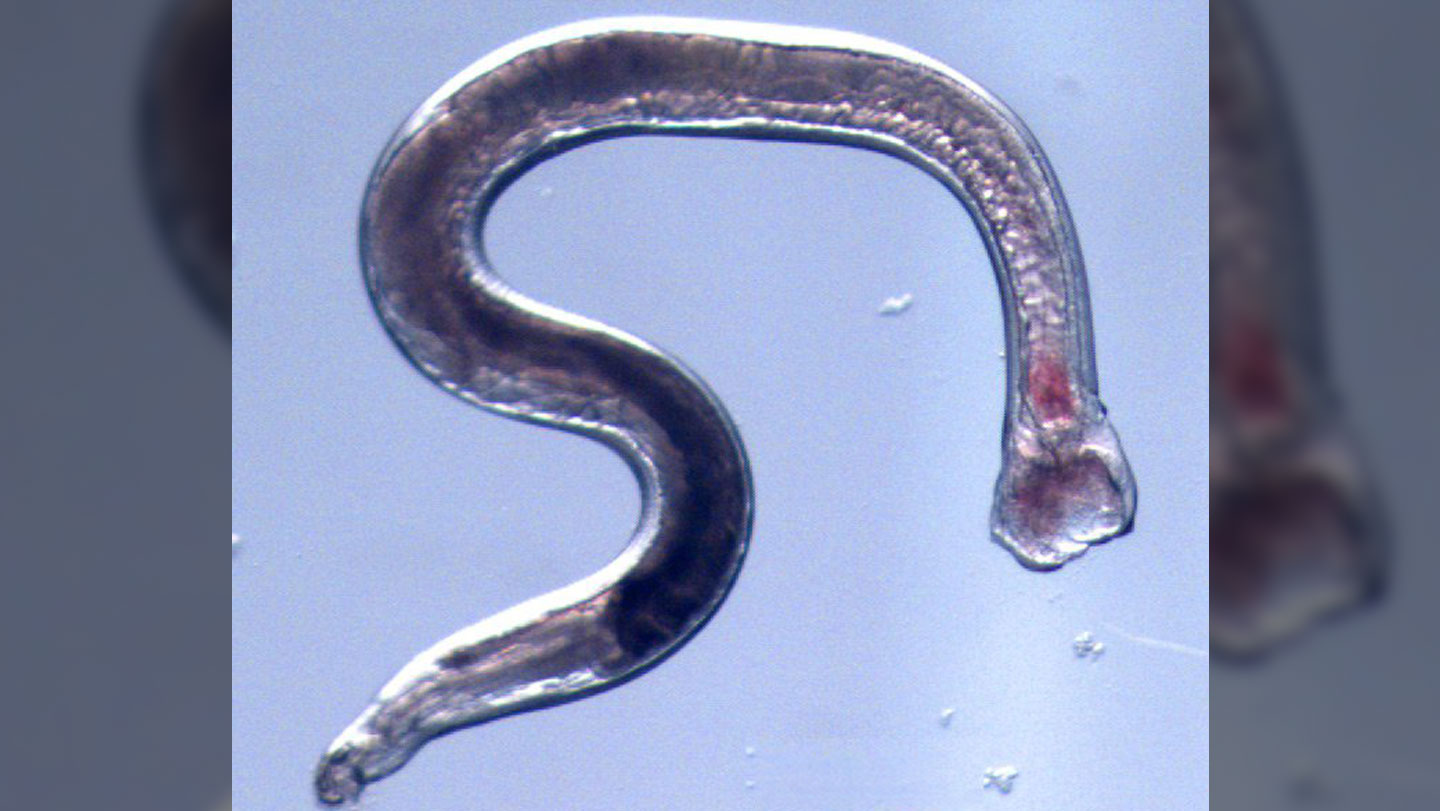
However, transforming a wild hookworm into a customized pharmaceutical dispensary required overcoming a formidable gauntlet of physical and genetic battles. Adult hookworms are evolutionary masterpieces of survival, wrapped in a thick, highly resilient proteinaceous outer shell called a cuticle. This armor-like skin protects them from the hostile environment of the mammalian gut, shielding them from highly acidic digestive juices, aggressive enzymes, and the constant physical shearing of muscle contractions. This natural defense system, while remarkable for the worm, made it exceptionally difficult for scientists to inject gene-editing tools or foreign DNA into mature parasites. To bypass this barrier, Mitreva and her research team had to target the organism at its most vulnerable, microscopic stage. They harvested the delicate eggs of the hookworm species Ancylostoma ceylanicum and subjected them to electroporation—a high-tech process where precise, rapid electronic pulses are used to poke temporary, microscopic holes in cell membranes. This split-second window of vulnerability allowed the team to successfully slip in their genetic payload, including the CRISPR/Cas9 molecular scissors, to permanently rewrite the worm’s developing genetic blueprint.
The ultimate test for this newly engineered biological platform was a daring and high-stakes challenge: producing an antidote to tetrodotoxin. Tetrodotoxin is a notoriously lethal neurotoxin found in pufferfish and other marine life for which there is currently no known medical antidote; it selectively blocks critical sodium channels in the nervous system, leading to rapid paralysis and suffocation. Because of its devastating speed and potency, agencies like the U.S. Defense Advanced Research Projects Agency (DARPA) funded the study to explore innovative biological countermeasures against its potential use as a biochemical weapon. To test the efficacy of their gene-edited creations, Mitreva’s team colonized hamsters with either unmodified hookworms or the newly engineered, antibody-producing variants. When they analyzed the rodents’ blood, they found hard, undeniable proof of a medical breakthrough: functional antibody fragments synthesized by the gut-dwelling worms had successfully passed through the intestinal wall and into the animals’ bloodstreams. In test-tube laboratory assays, the worm-derived antibodies managed to neutralize roughly 20 percent of the deadly toxin, demonstrating that an engineered parasite could successfully synthesize and export complex medical proteins into a living host.
Despite the excitement surrounding this major proof-of-concept milestone, the global scientific community is maintaining a realistic perspective, recognizing that many rigorous steps remain before this technology can be safely tested in humans. Cornelis Hokke, an expert in parasitic infectious diseases at Leiden University Medical Center who was not involved in the project, pointed out that while a 20 percent neutralization rate in a test tube is a monumental scientific achievement, it is still a long way from saving a living creature from actual, real-world pufferfish poisoning. Because tetrodotoxin is so aggressively lethal, even a small remaining fraction of the active poison can be fatal, meaning the worms would need to produce far higher, more potent concentrations of antibodies to offer complete protection. Additionally, as UCLA parasitologist Elissa Hallem points out, scientists must find a way to make these engineered traits inheritable. Currently, when the modified hookworms reproduce, their offspring do not reliably inherit the synthetic gene edits. For this to work as a true, set-it-and-forget-it chronic treatment, the genetic code must be seamlessly integrated into the hookworm’s germline, ensuring that a single, initial therapeutic colonization can sustain a stable, self-perpetuating drug dispensary over many generations of worms.
Nevertheless, this breakthrough marks a profound and beautiful paradigm shift in how we view the natural world, moving the concept of living medicines, in the words of Hokke, “from science fiction to science.” If Mitreva and her colleagues can successfully optimize the dose of therapeutic molecules these tiny tenants secrete, the humanitarian and clinical benefits could be extraordinary. In developing countries, where maintaining sterile clinics and cold-storage networks for fragile, temperature-sensitive medicines like insulin or arthritis biologics is a constant logistical nightmare, a one-time oral dose of engineered hookworm eggs could provide a lifetime of steady, localized therapy. It challenges the deep-seated human instinct to view all parasites as enemies to be eradicated, reframing them instead as Potential biological partners. As synthetic biology marches forward, we may soon find that the key to managing our most complex, modern health struggles lies not in sterile factories of glass and steel, but in a quiet, ancient symbiosis cultivated deep within our own bodies.