

There are few experiences more unsettling than the moment a bug buzzes too close to your ear and then, before you can swat it away, you feel a faint skittering deep inside the canal. Panic sets in. You tilt your head, shake it, maybe even consider sticking something in there to evict the intruder. But according to David Hu, a bioengineer at the Georgia Institute of Technology, your body has already prepared a defense. That sticky, brownish substance we tend to think of as a nuisance—earwax—may actually be a natural insect repellent. Hu’s team published this surprising finding on October 28 in the journal Soft Matter, and the results suggest that the goop in our ears is far more sophisticated than we ever imagined. Earwax, the researchers report, is not really waxy at all in the way we usually understand wax. Instead, it is a moisture-loving material that absorbs water, and that single property may be key to keeping moisture levels balanced in the ear and discouraging small arthropods from crawling inside. Stanislav Gorb, a functional morphologist at the University of Kiel in Germany who was not involved in the work, praised the study, calling earwax a “familiar biological material” that could represent “a sophisticated physical defense against small arthropods.” In other words, the stuff we often try to scrub away with cotton swabs might be one of the most underappreciated protective mechanisms in the human body.
For all its importance, earwax has never really gotten the scientific attention it deserves. Researchers have studied snot, spit, and even urine in great detail, but earwax remains something of a mystery. “It’s a big mystery why we even have it in our ears,” Hu says. To most people, earwax is simply an annoyance, a sticky substance that builds up, clogs earbuds and hearing aids, and sometimes interferes with our ability to hear clearly. But the fact that it can be inconvenient does not mean it is useless. Hu and his colleagues wanted to understand what earwax actually does and why the body produces it in the first place. Their analysis revealed that earwax is a complex material made up of about 60 percent dead skin cells, along with a mix of oils and moisture. It also contains tiny pores that Hu believes may be shaped like ink bottles. That unusual structure may allow earwax to absorb up to twice its weight in water, which would help prevent water from sloshing around in the ear canal. Interestingly, earwax has a huge range of consistencies, not unlike snot. Sometimes it is wet and sticky, sometimes dry and crumbly, and that variability may be part of its adaptive genius. The more scientists learn about this humble substance, the clearer it becomes that earwax is not just random gunk but a carefully engineered biological material with a purpose.
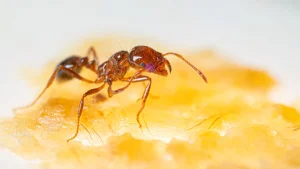
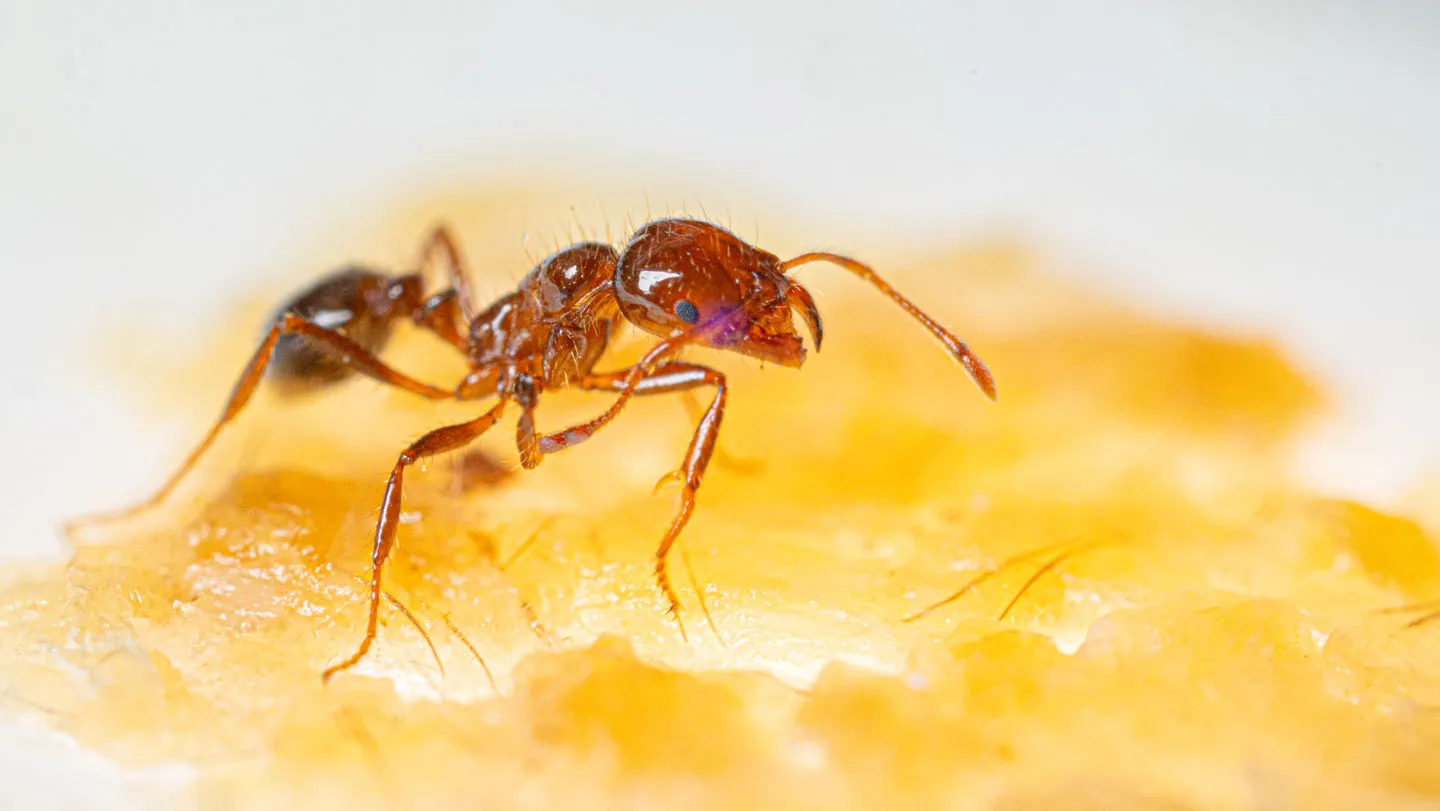
To test their ideas about earwax’s defensive powers, Hu and his colleagues conducted a series of experiments with fire ants, specifically Solenopsis invicta, an invasive species known for its aggressive behavior and ability to climb almost anything. They collected 36 earwax samples from a variety of animals, including pigs, sheep, dogs, cows, rabbits, and humans, and analyzed both the mechanical and chemical properties of the substance. Then they observed how fire ants reacted to both natural earwax and a synthetic version created in the lab. The results were striking. Ants that can scale kitchen cabinets and invade countertops with ease floundered when they tried to cross a thin layer of earwax. It was not just that the ants could not get a grip; the earwax actively interfered with their ability to climb. Hu thinks the earwax sucks moisture from the ants’ feet, and that moisture is normally what helps them cling to surfaces. Without it, their tiny claws fail. But that is not all. Earwax also sticks to the ants’ bodies, and the insects responded by grooming frantically, trying to clean themselves. “It’s both sticky and slippery,” Hu says. That combination is particularly effective: slippery enough to make climbing difficult, sticky enough to trap and distract. Videos and observations from the study reportedly showed ants slipping right off glass slides coated with a thin layer of earwax, unable to make any meaningful progress.
The secret to earwax’s success seems to lie in its chemistry and structure, but also in the way it changes over time. Under normal conditions, earwax gradually dries out and becomes crumbly after about ten weeks. As it dries, a layer of cells lining the ear canal pushes it outward in a kind of slow-moving conveyor belt. This conveyor belt is the ear’s self-cleaning mechanism, carrying old, dried earwax out of the ear so that fresh, potent earwax can take its place. The system is elegant because it maintains just the right thickness of earwax to keep insects at bay. Hu emphasizes that earwax is most effective when it is thin. “It’s most potent when it’s thin,” he explains. “Too much, and the ants can use their tiny claws to grab hold and climb in.” In other words, a thick buildup of earwax might actually make things easier for an invading bug, because it gives the insect something solid to grip. The ear’s conveyor belt ensures that the wax stays at an optimal level—thin enough to be a slippery, sticky barrier, but not so thin that it disappears entirely. This delicate balance is a reminder that even seemingly trivial bodily functions are often the result of millions of years of evolutionary refinement.
Of course, the discovery that earwax can repel ants does not mean we should start collecting it and bottling it as a commercial insect repellent. Hu is quick to admit that there is no practical way to turn earwax into a product. Each person has only about a grain of rice worth of earwax in each ear at any given time, and even if you gathered all the earwax on Earth, it would still be an incredibly rare substance. But the lessons from earwax could still be valuable. Hu notes that companies are already trying to develop biodegradable and biofriendly ways to deal with insects, and earwax offers a blueprint for how a physical, non-toxic material can disrupt an insect’s ability to climb and attach. Gorb agrees, suggesting that earwax “could inspire a new generation of physical, nontoxic pest control surfaces.” Such surfaces might be used to protect stored food, agricultural products, and sensitive technology from insect damage without relying on chemical pesticides. Instead of poisoning insects, these materials would simply make it impossible for them to get a foothold. It is a clever concept, and one that could have significant environmental benefits if it ever becomes a reality. The idea that a substance most people find mildly disgusting could inspire sustainable pest control is a wonderful example of how nature often solves problems in ways we never expect.
In the end, earwax is a reminder not to underestimate the small, quiet workings of the human body. It is easy to view earwax as an inconvenience, something to be cleaned out and forgotten. But the same sticky substance that clogs our earbuds and forces us to visit the doctor when it builds up too much is also a carefully tuned defense system. It protects a sensitive opening in the skull, keeps moisture balanced, and discourages tiny creatures from making themselves at home where they do not belong. The research from Hu’s team adds a fascinating new layer to our understanding of this everyday biological material. Earwax is not just waste; it is a sophisticated, self-renewing shield that works without our even noticing. The next time you find yourself mildly annoyed by a bit of wax in your ear, it might be worth pausing to appreciate what it does for you. And the next time you hear about a bug flying into someone’s ear, you can take a small amount of comfort in knowing that evolution has given us a quiet, sticky, slippery line of defense. It may not be the most glamorous superhero, but earwax is, in its own humble way, an extraordinary protector—one that scientists are only just beginning to understand.