


At first, it looked like the bottom was falling out. As the first election returns flickered across television screens and financial terminals, the numbers did not match the quiet confidence that had settled over investors in the preceding days. In Tokyo, then Sydney, then Frankfurt, then London, and finally New York, the mood turned tense, and the world’s markets seemed to hold their breath. The red that appeared on trading boards was not just a color; it was a feeling. Anxiety had become visible, scrolling in real time. People who had spent months building portfolios, hedging against every imaginable result, suddenly found themselves staring at a future that no model had fully anticipated. The initial reaction was not really a judgment on any candidate or party. It was something far more human: the instinctive flinch before the mind catches up with the body, the kind of reflex that makes a person jump at a loud noise or pull their hand back from a hot surface. When an electoral map changes shape faster than pundits can explain it, traders do what all people do when they are startled. They retreat. They sell. They seek refuge. The phrase “risk-off” began to circulate, and although it is a technical term, it captured something deeply personal. It described a mood, a collective tightening of the chest, a sense that the ground had moved in a way no spreadsheet could capture. Global markets fell because uncertainty had become suddenly, painfully tangible. But that, it turned out, was only the beginning of the story, not the ending. The first headlines looked dire, and there were real moments when experienced investors felt their mouths go dry. Yet even as the first wave of selling rippled outward, a quieter countercurrent was forming. The world was watching, and more importantly, it was waiting. The panic was loud, but the assessment of what it all actually meant was about to begin.
And then, just as suddenly as it had fallen, the market began to recover. The early shock gave way to a different kind of energy, one driven not by fear but by calculation. As more results came in and the full shape of the new political landscape became clearer, investors began to realize that the situation was not the catastrophe they had briefly imagined. It was simply a new reality, and markets, being remarkably adaptable creatures, began to look for the opportunities inside it. Later trading sessions drifted higher, not because everyone was happy, but because the fog of ambiguity had begun to lift. Everyone had spent so long fearing the worst that any concrete answer, even one they had not expected, felt almost like relief. It is a strange truth of financial life that markets hate uncertainty far more than they hate bad news. A clear loss can be processed; a vague unknown cannot. So when the balance of power in Washington snapped into focus, the collective exhale was almost audible. Investors in New York glanced at their screens and saw something they recognized again. The world had not ended. The rules had merely changed. There was a new government taking shape, a new coalition of power in the capital, and with it a fresh set of assumptions to test. There would be winners and losers, no doubt, but that is always true. The abrupt turn from red to green was not about approval or hope in any simple sense. It was about the return of a familiar activity: making educated guesses. The human mind is desperate for story, for narrative, for a way to make sense of things. For a few hours, no one could tell the story. Then, slowly, the pieces came together. The story had a beginning, a middle, and a future. The market traded higher because people could finally imagine what that future might look like.
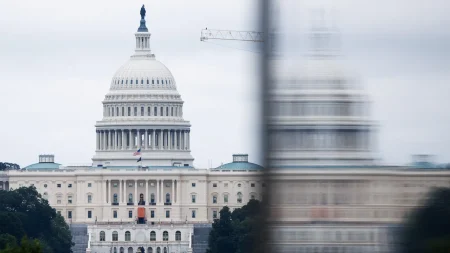
Of course, the real question was what a sharply shifted balance of power would actually do to policy. In Washington, power is not an abstract force; it translates into tax codes, spending bills, regulations, trade agreements, and a thousand other decisions that shape the daily lives of citizens and companies. Investors understood this better than anyone. They were not celebrating some vague political victory. They were recalculating. The new configuration of power meant that certain policies, long discussed but never quite possible, were suddenly closer to becoming law. For the people who ran companies, the focus turned quickly to the details. Would there be cuts to corporate taxes? Easier approval for energy projects? A new approach to infrastructure spending? Which industries would benefit, and which would suddenly find themselves paying for someone else’s agenda? These are not abstract questions for politicians to debate in the abstract. They are deeply human questions. They affect whether a factory in Ohio keeps its doors open, whether a startup in California can raise its next round of funding, whether a family in Texas feels confident enough to buy a home. When the balance of power shifts sharply, every person in the economy becomes, whether they know it or not, a speculative investor. Their jobs, their pensions, their mortgages, and their savings are all tied to decisions made in Washington. So when traders looked past the initial panic and began buying again, they were not being irrational. They were doing what people always do when the future becomes legible: they started to plan. The uncertainty that had paralyzed them was replaced by a set of assumptions, some hopeful and some cautious. Markets are not omniscient. They are simply a crowd of people trying to get ahead of tomorrow. And once tomorrow became something they could imagine, they decided to move forward.
For the rest of the world, the shift in Washington was felt in currencies, commodity prices, and supply chains. Global markets do not exist in isolation. They are tied together by trade, by foreign investment, by the simple fact that the sun never sets on commerce. A morning in Asia is an evening in America, and a decision made in Washington can echo across oceans within minutes. That is why the initial fall had been so broad. Every country had something to lose from American instability, because American political decisions shape global interest rates, the flow of capital, and the price of everything from oil to semiconductors. When the new balance of power became apparent, investors around the world did not simply return to business as usual. They began to recalculate their relationships with the United States. Some saw opportunity. Others braced for difficulty. A country that turns sharper toward protectionism, for example, may be good for one exporter and terrible for another. A country that suddenly feels more friendly to fossil fuels will change the fortunes of energy producers everywhere. A country that commits to fiscal stimulus can lift global growth, but it can also generate inflation that forces central banks to react. These are not dry policy debates. They are forces that determine whether a farmer in Vietnam can sell enough rice, whether an autoworker in Germany worries about tariffs, whether a pensioner in Japan can rely on the income from a dollar-denominated bond. The human reality is that no one is untouched. The phrase “global markets” hides millions of individual faces, each with their own hopes and fears. When the markets fell and then rose, it was not some abstract entity moving. It was millions of people, all around the world, collectively holding their breath and then slowly exhaling. They did not all come to the same conclusion. But they all understood one thing: Washington had changed, and the world would have to adjust. The question was simply who would adjust well, and who would do poorly. That question is always human, and it is always answered over time, not in a single night.
In the days and weeks that followed, the financial press would try to explain the whiplash with tidy narratives. Some would say the market was relieved that the political landscape was finally clear. Others would say it was greedy, hoping for tax cuts and deregulation. The truth, as always, was more complicated and more human. Markets are not machines that calculate dispassionately. They are conversations between people who are afraid of losing what they have and people who see a chance to get more. Both fear and ambition are perfectly human instincts, and both were on full display that night. The initial drop was driven by fear. The later rally was driven by a mixture of hope, greed, calculation, and the powerful human need to find a way forward. Investors are not cold-blooded automatons. They are mothers and fathers, grandparents and recent graduates, people who worry about tuition, medical bills, retirement, and leaving something behind for their children. When they buy and sell, they are not merely moving numbers on a screen. They are casting votes on what kind of future they believe is coming. A fall in the market is a collective fear that the future will be worse than the present. A rise is a tentative, often fragile belief that the future might still be all right. The fact that the market changed its mind in a single evening is not a sign of capriciousness. It is a sign that human beings can be overwhelmed by shock and then slowly, gradually, recover their balance. We make ourselves ready for one kind of world, and when another world appears, we are confused and afraid. Then, after a little time, we begin to see the possibilities in the new world. We remember that we have survived changes before. We remember that the sun will rise, that jobs will exist, that children will grow. The market’s recovery, in that sense, was not really about Washington at all. It was about the resilience of ordinary people who have learned, over a lifetime of obstacles, to keep moving forward even when they cannot control what happens around them.
Looking back, the night was a reminder that markets have always been a mirror of human psychology. Every candle on a chart, every percentage point of gain or loss, represents a moment when someone chose to act, driven by something deeper than data. Greed, fear, relief, regret, hope, and fatigue all flow through the world’s financial system, and on dramatic nights they flow together all at once. The shift in the balance of power in Washington was not just a political event. It was an emotional event. It changed the way millions of people felt about the future. And because the future is the only thing anyone truly owns, it changed the way they behaved. The initial selloff was a response to broken expectations. People had prepared for one kind of world, and when the first results did not fit, they felt a primal urge to protect themselves. The subsequent rally was a response to clarity. Once the new shape of the system became visible, people could begin to imagine how they would live inside it. That is not the same as liking it. It is simply the act of accepting reality and deciding to make the best of it. In that way, the financial world revealed something universal. We all want certainty. We all want to know what is coming. When the world surprises us, we tremble. But then, if we are lucky, we remember that we have been surprised before, and we have made it through. The markets fell because the people in them were human. They rose because being human also means finding reasons to keep going, even when the road ahead is unfamiliar. There are no final victories in the market, only pauses between one question and the next. But on that night, the pause was enough. It allowed the world to catch its breath, to look around at the changed landscape, and to make a deeply human choice: to step forward together, more cautious and less certain, but still moving.