


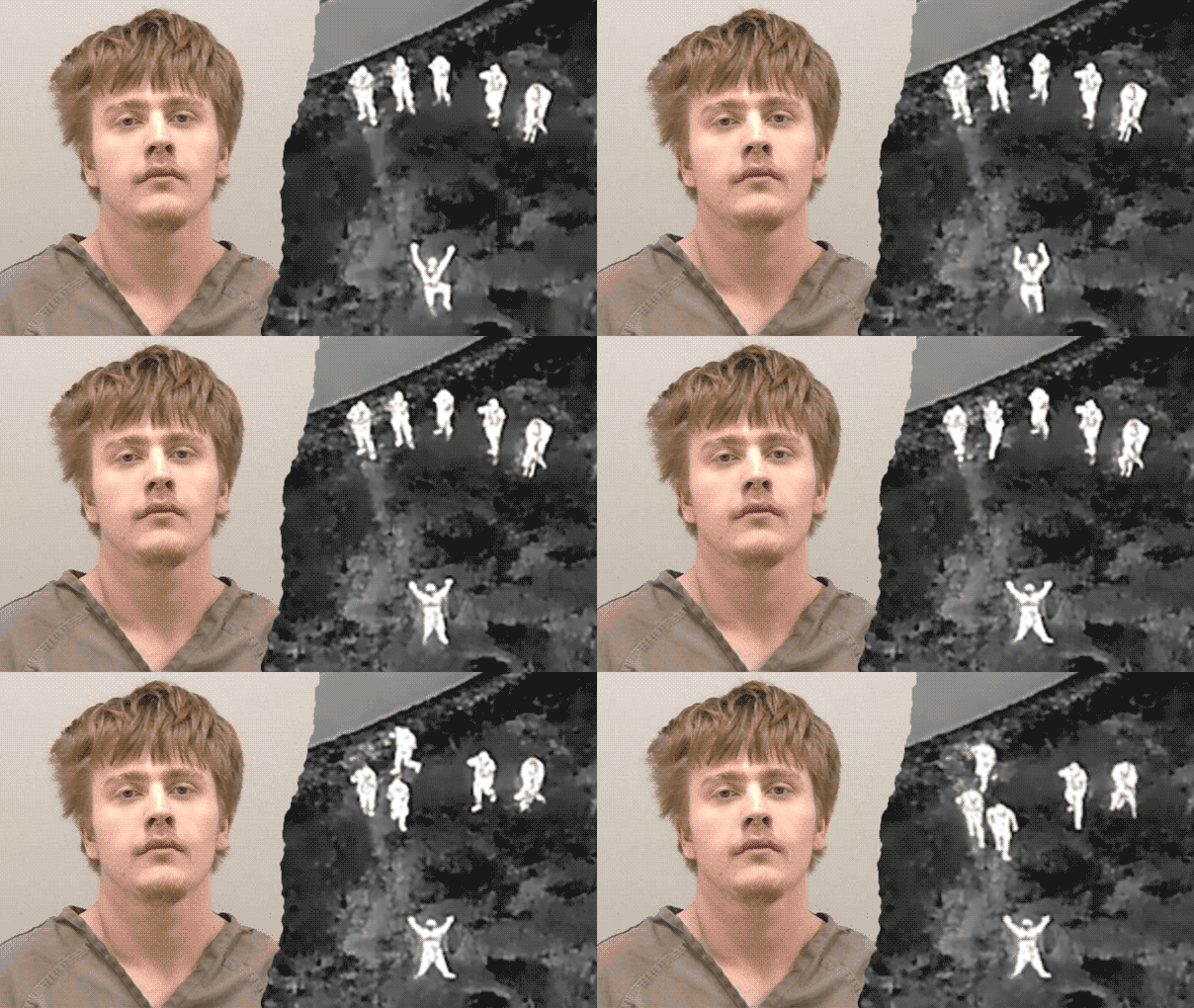
What began as a routine traffic stop on a quiet Colorado evening spiraled into a terrifying high-speed chase, a sprawling manhunt, and ultimately a prison sentence for a 24-year-old repeat offender who, according to local prosecutors, should never have been on the street in the first place. Zakary Dean Hirschfield, of Centennial, Colorado, pleaded guilty to felony eluding of a peace officer after leading deputies on a dangerous January pursuit through Douglas County. He was sentenced to five years in the Colorado Department of Corrections. The Douglas County Sheriff’s Office released video of the chase, showing the nighttime escape, the weaving through traffic, and the tense moments of capture. But for District Attorney George Brauchler, the case is less about the dramatic footage and more about the missed opportunities before it ever happened. “This case highlights the ripple effects of decisions made by other law enforcement agencies who had opportunities to lock this guy up before this dangerous episode,” Brauchler said. It is a stark reminder that a single decision in the criminal justice system can echo far beyond a courtroom, sometimes directly into the path of an officer’s flashlight on a dark residential street.
The terrifying sequence began when a Douglas County sheriff’s deputy pulled Hirschfield over for speeding in Castle Pines, a normally quiet suburb where traffic stops are routine. What happened next was anything but. Video from the stop shows a deputy standing beside Hirschfield’s vehicle, speaking with him, when the car suddenly lurches forward. The deputy is forced to jump out of the way as the vehicle accelerates away, narrowly avoiding being struck. In that instant, a routine encounter became a life-or-death situation. The deputy’s radio call captures the shock and urgency in his voice as he reports that the driver had tried to hit him. Meanwhile, inside the fleeing car, a female passenger could be heard screaming as Hirschfield tore through the night. She would later tell deputies that she repeatedly begged him to stop, but her pleas were ignored. Instead, Hirschfield pushed the vehicle to speeds exceeding 100 miles per hour, blasting through Highlands Ranch and Littleton, crossing medians, and driving against oncoming traffic. The pursuit footage shows emergency lights flashing through busy nighttime intersections as other motorists scatter, their ordinary commutes suddenly interrupted by a reckless driver who seemed willing to risk everything—including their lives—to get away. The chase ended only when Hirschfield slammed into another vehicle, a collision that could have been catastrophic for innocent drivers nearby.
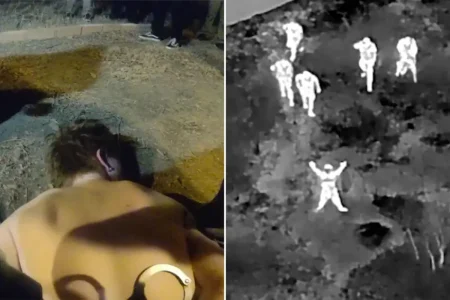
When the wrecked car came to a stop, Hirschfield made a decision that turned the chase into a manhunt: he abandoned the vehicle and the terrified passenger, leaving her behind with the wreckage, and ran into the darkness. Deputies quickly established a perimeter and called in reinforcements. Dozens of officers, specialized units, drones, and a K9 team scoured a Littleton neighborhood as helicopters and thermal imaging cameras scanned the ground from above. The released video includes drone footage of a heat signature moving through trees and brush, a lone figure trying desperately to stay hidden while an invisible eye tracked every step. For about an hour, Hirschfield managed to elude the search party, but the net was closing. Eventually, deputies found him hiding beneath a raised porch, wearing nothing but his underwear—a bizarre and almost pathetic end to a night of reckless chaos. Body camera footage shows officers approaching the structure with flashlights, ordering him to show his hands, and then pulling the shirtless, trembling man out from under the porch and restraining him on the ground. A subsequent search of his vehicle uncovered cocaine and drug paraphernalia, adding another layer to the story. Sheriff Darren Weekly did not mince words: “Don’t run from our deputies. We will catch you and hold you accountable. This defendant learned that the hard way and is now headed to prison. Putting our deputies and the public at risk will not be tolerated in Douglas County.”
But for many observers, the most frustrating part of the case is not the chase itself—it is the series of decisions that allowed Hirschfield to be behind the wheel that night. Court records reveal a troubling pattern of leniency and missed warning signs. In November 2024, an Arapahoe County judge sentenced Hirschfield to probation and community service after a plea agreement on a conviction for attempted distribution of fentanyl. Fentanyl is a deadly drug that has devastated communities across the country, yet Hirschfield was given a chance to remain free. That chance did not last long. His probation was revoked less than three months later, but instead of being sent to prison, he was placed back on probation in June 2025. Then, on August 19, 2025, another motion to revoke his probation was filed—the very same day he was released without having to post cash bail in Jefferson County on a new felony robbery charge. Five months later, he was speeding through Castle Pines, dragging an innocent passenger into a nightmare. District Attorney Brauchler’s criticism of the system is sharp and pointed. He is not blaming the deputies who made the stop; he is blaming the earlier judges, prosecutors, and agencies who had repeated chances to keep Hirschfield locked up and failed to do so. The phrase “ripple effects” is telling: every soft sentence, every revoked probation that is reinstated, every release without bail sends a message, and sometimes that message is received by someone willing to drive the wrong way down a busy road at 100 miles per hour.
For Deputy District Attorney Zach Idris, the case is a reminder that dangerous behavior has real consequences. “This defendant put countless lives at risk that evening,” Idris said. “Thanks to the efforts of the Sheriff’s Office, Hirschfield will now spend several years in the Department of Corrections, where he will have plenty of time to think about his reckless actions that put him there.” The five-year sentence is not just a punishment for eluding; it is a recognition of the terrifying risk that Hirschfield created. He could have killed the deputy who pulled him over. He could have killed the passenger who screamed and begged him to stop. He could have killed a family driving home from dinner. He could have killed himself. Instead, he will sit in a prison cell, stripped of the freedom he so recklessly abused. The video released by the sheriff’s office serves as both evidence and warning: this is what happens when someone with a history of drug crimes and violence decides that a traffic stop is just another obstacle to outrun. It is a chilling look at how quickly ordinary life can turn into a life-or-death situation, and how the actions of one individual can ripple outward, affecting deputies, drivers, passengers, and entire communities.
In the end, Brauchler closed with a blunt and memorable warning to anyone who might find themselves in Hirschfield’s shoes: “Commit your crimes somewhere more forgiving, or heck, maybe don’t commit them at all.” The comment is dry, but the message is clear. There is nothing glamorous about hiding under a porch in your underwear, shivering in the dark while drones buzz overhead and dogs bark in the distance. There is nothing noble about abandoning a frightened passenger to face the aftermath alone. And there is nothing just about a system that keeps giving chances to someone who keeps throwing them away. This case is a story of many failures—a man who refused to stop, a system that refused to hold him, and a community that paid the price in fear and danger. But it is also a story of persistence. The deputies who chased him, the drone operators who tracked him, the K9 team that found him, and the prosecutors who put him away all did their jobs with professionalism and determination. For them, the outcome is not a cause for celebration but a quiet sense of relief. The streets are safer tonight because a repeat offender is off them. The only question is why it took so long, and how many more warnings will be ignored before the next Zakary Hirschfield decides that a traffic stop is just another challenge to beat.