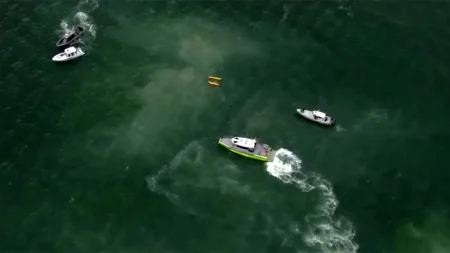



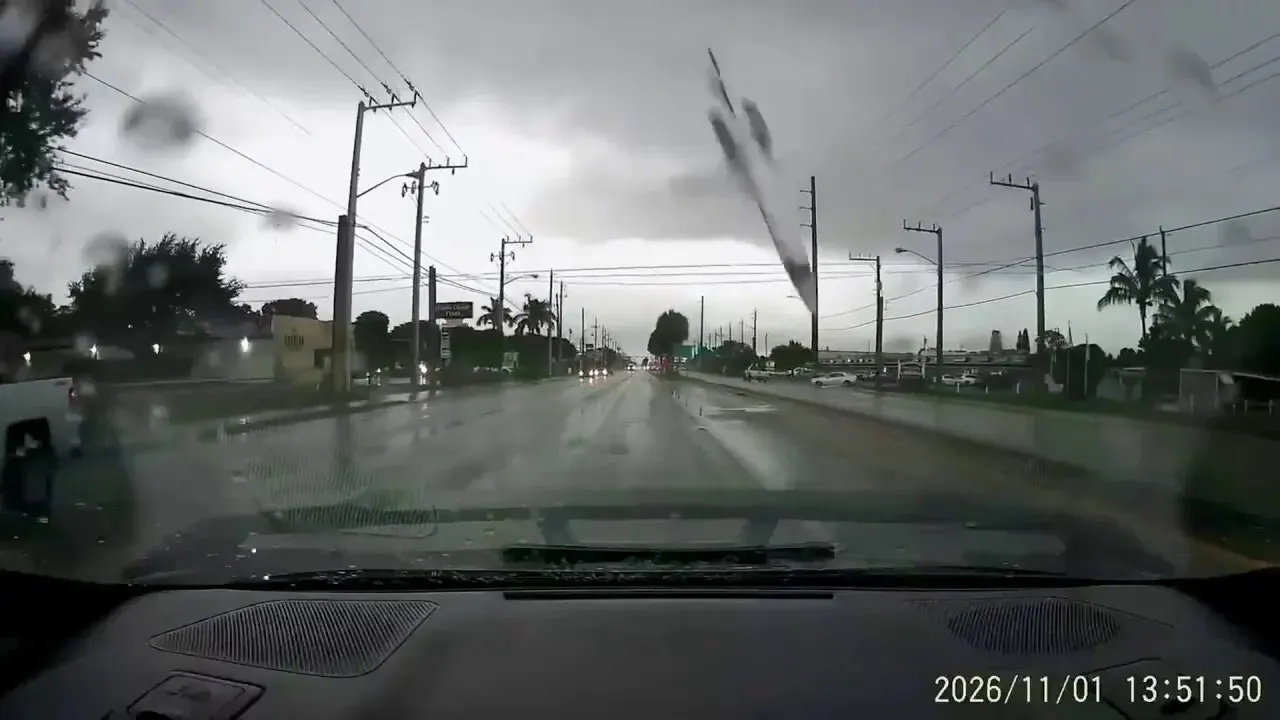
Federal investigators are painstakingly piecing together the final moments of a Learjet 60 that crashed in Palm Beach County, Florida, on Sunday afternoon, killing all nine people aboard. The flight began innocently enough — a private jet leaving Austin-Bergstrom International Airport at about 10:37 a.m., bound for the sun-soaked shores of North Eleuthera Airport in the Bahamas. Families, friends, a working crew, and a young nanny were likely looking forward to a getaway, a business trip, or a chance to celebrate. But just before 1 p.m., the aircraft plummeted from the sky, leaving a devastating scene in a Florida field and a community searching for answers. In the days since, the National Transportation Safety Board has been working methodically, treating the crash site like a crime scene and every piece of twisted metal like a clue. The first major discovery has already reframed the investigation: a crucial control surface known as the left tail elevator was found not in one piece at the wreckage, but fractured into three separate components scattered across miles of land. One piece was recovered nearly four miles from the main impact site. That detail alone suggests something happened high in the air, long before the jet hit the ground. For the families of those killed, this news deepens the mystery of how a routine flight could turn so quickly into an unthinkable loss.
The left tail elevator is a critical part of any aircraft. It sits on the horizontal stabilizer and helps control the plane’s pitch — the up-and-down motion of the nose. Without it, a pilot’s ability to keep the jet level is severely compromised. NTSB board member Thomas B. Chapman described the finding as “very important piece of evidence,” and his words carry the weight of someone who knows how much is riding on this investigation. Chapman told reporters that pieces of the elevator were found anywhere from 1.3 to 3.8 miles away from the main wreckage, explaining that the part likely separated from the plane before the crash. This means the aircraft was already breaking apart while still in flight, raining debris over Palm Beach County before the fuselage came down. But finding the part is only the beginning. Investigators now face a difficult technical question: Did the elevator fail on its own, perhaps due to a structural defect or fatigue, and thereby send the plane out of control? Or did the forces acting on the aircraft — perhaps from severe turbulence or a sharp maneuver — tear the elevator off the plane? The answer will not come quickly. It will require weeks of laboratory analysis, computer modeling, and careful study of the metal’s fractures and stress marks. For now, the scattered wreckage paints a picture of fragmentation, but it does not yet reveal the how or the why.
Former NTSB investigator Greg Feith, who has spent decades analyzing air crashes, told Fox News that the evidence so far points strongly to an in-flight breakup. He noted a particularly telling pattern in the flight data: the airplane leveled off at around 8,000 feet for a very short period of time. That might have been one of the pilots fighting to regain control, trying to smooth out the aircraft’s descent and keep the wings level. In the desperation of that moment, Feith said, a pilot might have over-stressed the structure, pulling or pushing too hard on the controls and causing components like the tail elevator to come off. “You can see that the airplane leveled off at about 8,000 feet for a very short period of time,” he explained. “That may have been one of the pilots trying to control the airplane, level the airplane, and in doing so over-stretched the structure of the aircraft causing those parts to fail and come off.” The fact that the recovered pieces were found close to the main impact site also suggests the breakup happened at a relatively low altitude, leaving little time for anyone on board to respond. Feith’s analysis offers a tragic glimpse into the cockpit: a flight crew working desperately against forces beyond their control, every second a race against gravity. It is a far more human story than the cold coordinates of radar track. Behind the wreckage were two people — the captain and the co-pilot — who likely realized something was wrong and made choices that may have inadvertently contributed to the final, catastrophic sequence. Their voices, sadly, may never be heard.
The lives lost in the crash are what make this more than an engineering puzzle. Among the dead were Adam Robinson, a 45-year-old Austin tech entrepreneur, and his wife Helen Sharp, 40. Their two young children, four-year-old Emma and two-year-old Charlie, also died — images of a family that should have had decades ahead of them. The children’s nanny, Anita Maria Cetina, was killed as well, a reminder that even those who care for other people’s children are part of the same fragile human thread. Also among the victims were Rachael Reed and Charmi Fehr, a couple whose families have identified them, and two pilots: Captain Jeff Gregory, 55, and co-pilot Nathalia Gadelha Filgueiras, just 20 years old. Filgueiras was so young, likely at the start of a career she had worked hard to build. Gregory was an experienced aviator who probably saw the flight as routine until it wasn’t. For every name, there are grieving parents, siblings, friends, and coworkers. The tragedy has also stirred public curiosity because the crash happened in Palm Beach County, an area that includes Mar-a-Lago. Some online speculation quickly connected the crash to the former president’s residence, but the NTSB has stated emphatically that there is “no evidence” of any connection. In an age of instant theories and viral conjecture, investigators are reminding the public to wait for facts. For the families, those facts cannot bring back their loved ones, but they may help answer the agonizing question of what happened in the sky that Sunday.
Weather has already emerged as a major focus of the investigation. Federal investigators have identified weather conditions as a primary area of interest, after the flight crew reported icing and moderate turbulence at approximately 35,000 feet shortly before the aircraft began its rapid loss of altitude. Ice can be a silent threat to an aircraft, changing the shape of the wings and interfering with the smooth flow of air that keeps a plane aloft. Combined with moderate turbulence, it can create conditions that test even the most skilled pilots. The crew’s report, presumably transmitted through routine radio communication, may have been their last. Investigators will study historical weather data, radar imagery, and any satellite information that can reconstruct the conditions the jet was flying through. The jet was equipped with a cockpit voice recorder — a device that captures all sounds in the cockpit, including pilots’ conversation, alarms, and switches. That recorder, if found, could offer the most direct evidence of what the crew experienced and how they reacted. But investigators have not located it, and they cannot yet confirm it was even on board when the plane went down. That uncertainty adds another layer of heartbreak: the possibility remains that the final words from the cockpit, whatever they were, may never reach the families seeking closure. The search for the recorder continues, and some hope remains that it lies buried somewhere near the debris field, still intact despite the violence of the crash.
In the coming days, investigators hope to gain access to the crater where the main wreckage is buried. The site has been blocked off while utility crews work around it, but once cleared, the NTSB will begin the slow, meticulous work of excavating and cataloging every piece of the aircraft. This process, called a wreckage reconstruction, often involves laying out pieces in a hangar to see how the plane came apart and identify the sequence of failures. It’s tedious, technical work that rarely makes headlines but can eventually provide the answers so many are waiting for. For now, the investigation remains in its earliest stages, and even the NTSB has been careful not to draw conclusions. There will be more briefings, more data analysis, and eventually an official report that may take a year or more to complete. But in the meantime, the public has already been given a glimpse into the complexity of aviation accident investigation — and the deep humanity beneath it. A family’s vacation turned into a nightmare; a young co-pilot’s dream ended before it truly began; a community of grieving friends must somehow find ways to go on. As investigators study the shattered left tail elevator, the weather data, and the missing voice recorder, they are working not just to understand a mechanical failure, but to honor the nine lives lost. Every bit of evidence brings them one step closer to the truth — and one step closer to giving the families the understanding they deserve.