






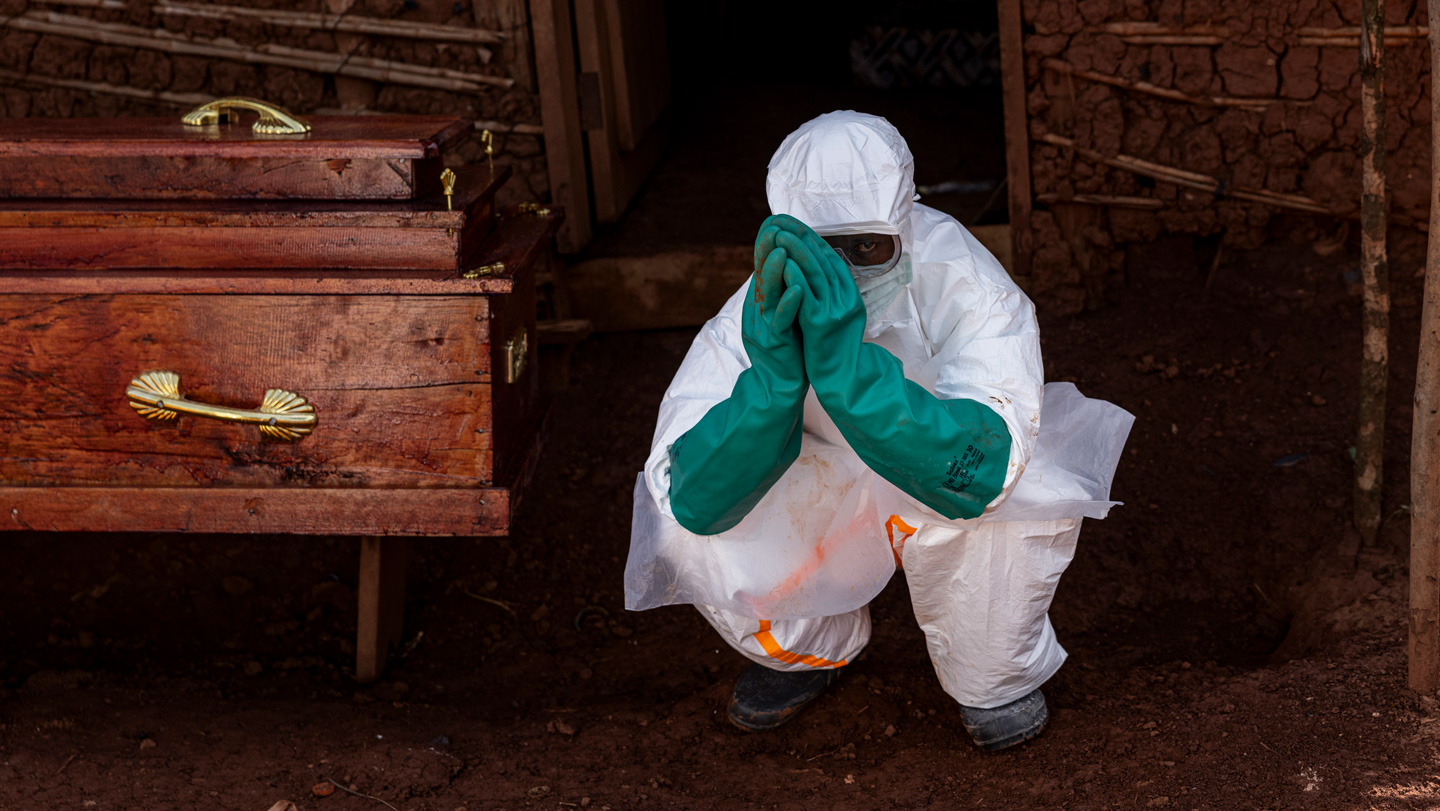
Deep in the eastern forests of the Democratic Republic of the Congo, a quiet but devastating crisis is unfolding as an outbreak of the rare Bundibugyo Ebola virus expands across a landscape already scarred by decades of conflict. For years, global health organizations and the Congolese government built up an impressive arsenal of vaccines and therapies to fight the deadly pathogen, but those defenses were designed to target the far more common Zaire strain. Facing the genetically distinct Bundibugyo virus, healthcare workers and scientists are finding themselves suddenly stripped of their most advanced biomedical shields, forced to watch helplessness as a lesser-known cousin of Ebola outpaces containment efforts. In towns and displaced persons camps throughout the Ituri province, the epicenter of the current emergency, families hang awareness banners and grieve the sick, while researchers thousands of miles away work around the clock, scrambling to understand a pathogen that has historically made only fleeting, mysterious appearances.
This biological adversary presents a different, highly deceptive clinical profile compared to the terrifyingly swift Zaire strain, which historically carries a mortality rate of up to ninety percent. Animal models and historical data suggest that Bundibugyo is less uniformly lethal, with human mortality rates hovering between thirty and fifty percent, yet its slower progression makes it uniquely challenging to control. While victims of the Zaire strain often succumb rapidly within a week of exposure, those infected with Bundibugyo struggle with severe fever, vomiting, and bleeding for up to two weeks before either recovering or passing away. This prolonged illness means infected individuals remain contagious for a much longer period, raising the statistical likelihood of transmission to caregivers and loved ones, particularly in communities where traditional, intimate funeral practices persist. Exacerbating this containment nightmare is the tragic reality that international aid cuts had previously gutted regional disease surveillance programs, allowing this outbreak to quietly spread across hundreds of undetected cases before a national alarm was finally raised.
On the front lines of the response, where over three hundred cases have already been confirmed, the immediate clinical reality is defined by basic, exhausting human care rather than high-tech miracle drugs. Healthcare providers like Dr. Krutika Kuppalli, who previously managed treatment centers during the catastrophic West African Ebola epidemic, emphasize that when specialized vaccines are absent, the difference between life and death comes down to the quality of supportive care. Nurses in sweltering protective gear manually administer intravenous fluids and manage electrolyte imbalances to combat severe dehydration, a grueling task made incredibly dangerous by the ongoing threat of regional violence. The biological blockades preventing the use of existing drugs are deeply structural; the molecular “wine-glass-shaped” glycoproteins that coat the surface of Bundibugyo are built differently from those of the Zaire strain, rendering stockpiled monoclonal antibodies clinically “blind” and unable to bind to or neutralize the invading virus.
While medical workers tend to the sick in chaotic clinics, environmental detectives are seeking to answer one of the most stubborn mysteries of the disease: where does the Bundibugyo virus hide when it is not actively taking human lives? Virologists suspect that the virus infrequently spills over into human populations because its natural host lives deep within the undisturbed African canopy, rarely crossing paths with human settlements. Genetic footprints point toward several species of forest-dwelling bats—including the striking hammer-headed bat and the Angolan free-tailed bat—which seem capable of carrying the virus in their systems without ever falling ill themselves. However, conducting the ecological fieldwork necessary to prove these theories and locate live viral reservoirs is a dangerous, nearly impossible feat in modern Ituri, where field researchers must navigate active militia territories and thick, uncharted jungles to gather samples.
Despite these immense hurdles, a profound sense of human ingenuity is fueling breakthroughs in global laboratories, where scientists are developing a new generation of versatile, “pan-Ebola” tools designed to protect against multiple viral strains at once. Researchers have successfully harvested broad-spectrum antibodies from survivors of past epidemics, combining them into an experimental cocktail known as MBP134 that has shown an extraordinary ability to save infected animals even in the incredibly advanced stages of the disease. In a bid to turn the tide of the current crisis, Congolese health officials have cleared the path to test this promising new therapy, alongside other cutting-edge antivirals and a modified, fast-tracked version of the highly successful Ervebo vaccine, in real-time clinical trials. Although the manufacturing and logistical pipelines mean these vaccines may take upwards of nine months to reach the general population—too late to halt the immediate peak of the current outbreak—the trial data gathered today will be instrumental in mapping out global defense strategies.
Ultimately, the struggle against the Bundibugyo virus in the Democratic Republic of the Congo is a reminder of the deep interconnectedness of global health security, demonstrating that a vulnerability in one remote corner of the world poses a challenge to us all. The scientific race occurring in labs across the globe is not merely an academic exercise; it is a moral effort to rectify the systemic inequities that leave vulnerable, conflict-ridden populations to battle deadly epidemics empty-handed. While researchers hope to emerge from this crisis with a robust suite of medical weaponry ready for the next spillover event, the immediate focus remains on supporting the brave local doctors and families currently carrying the heaviest burden of this outbreak. By combining rigorous, compassionate field medicine with long-term scientific investment, the global community can hope to transform a terrifying biological threat into a story of resilience, solidarity, and ultimately, triumph over disease.