





The shadow of dementia is one of the most quiet, yet devastating, challenges of modern public health, currently touching the lives of more than six million people in the United States alone and standing as the seventh leading cause of death worldwide. For families watching a beloved parent or spouse slip away, the experience is an agonizing progression of lost milestones, fading memories, and a gradual unraveling of a lifetime of identity. Yet, this heartbreak is often compounded by a deeply frustrating medical reality: the human brain is highly complex, and when cognitive decline begins, it is rarely driven by a single, isolated problem. Instead, what occurs under the microscope is often an overlapping storm of multiple neurodegenerative enemies. A patient might display the classical memory lapses of Alzheimer’s disease, while simultaneously harboring the subtle motor deficits of Parkinson’s, the personality shifts of frontotemporal dementia, or the vivid hallucinations associated with dementia with Lewy bodies. Because these diseases present highly overlapping symptoms in their early stages, diagnosing “mixed dementia” has historically been a monumental guessing game. For decades, clinicians have lacked the diagnostic tools necessary to reliably isolate these overlapping pathologies in living patients, leaving doctors to treat symptoms blindly and families trapped in a painful state of clinical limbo.
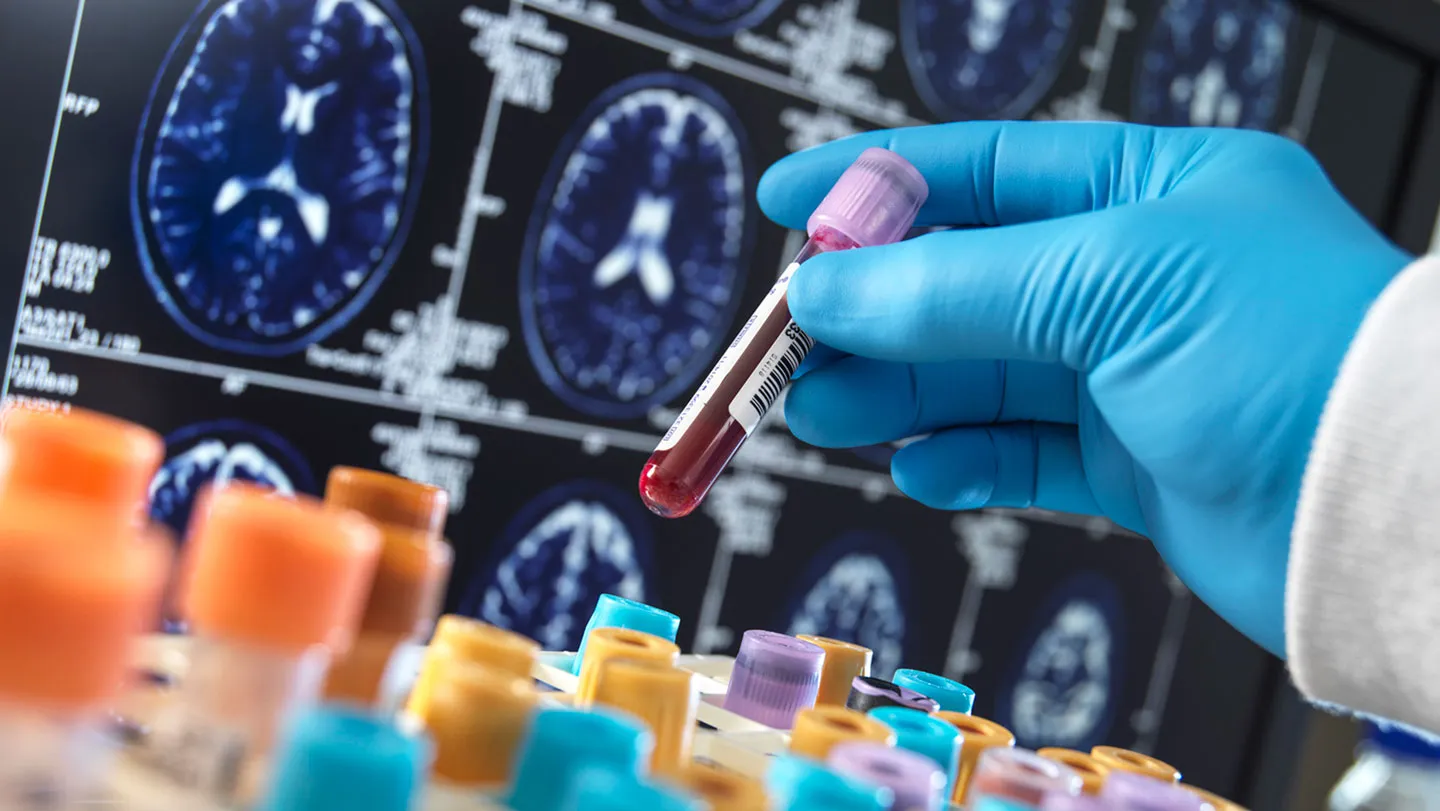
To address this clinical blind spot, researchers have developed an experimental new blood test that could fundamentally rewrite how we diagnose and understand brain diseases. Dubbed GPND-AI (the generalizable protein-based neurodegenerative disease artificial intelligence classifier), this innovative diagnostic test is designed to act as a molecular window into the living brain, bypassing invasive procedures in favor of a simple, routine blood draw. The test works by measuring the levels of fifteen specific proteins in the patient’s bloodstream to diagnose and differentiate between the four major neurodegenerative giants: Alzheimer’s, Parkinson’s, frontotemporal dementia, and dementia with Lewy bodies. Rather than delivering a simple, binary “yes or no” verdict, this test calculates the precise proportional influence of each disease, demonstrating an incredible 92.3 percent accuracy rate in identifying if a patient is suffering from more than one condition simultaneously. This multi-disease diagnostic capability represents a monumental leap forward from the current standard of care; while the U.S. Food and Drug Administration approved the first-ever blood test for Alzheimer’s last year, that test and its market competitors are strictly limited to identifying a single disease pathway. GPND-AI, by contrast, can reveal a deeply personalized map of a patient’s pathology, showing, for example, that an individual’s cognitive decline is driven seventy-five percent by Alzheimer’s-related proteins and twenty percent by Parkinson’s-related markers.
The scientific journey to construct this groundbreaking diagnostic tool required a historic marriage of clinical data and advanced machine learning, led by Carlos Cruchaga, a respected human genomicist at Washington University in St. Louis. Cruchaga and his research team began their work by compiling and analyzing vast, longitudinal medical records and blood samples from over three thousand patients who had visited two dedicated clinics specializing in cognitive disorders and movement pathologies. Dealing with such a massive volume of biological complexity required the help of artificial intelligence, which was trained to identify hidden, microscopic patterns across a broad initial panel of 123 distinct proteins. Through sophisticated algorithmic modeling, the AI successfully filtered through the noise to isolate the final fifteen key biomarkers that best predict the presence, type, and severity of neurodegeneration in the brain. Included in this elite fifteen-protein signature is p-tau217, a well-known protein that serves as the biological cornerstone of existing, single-focus Alzheimer’s blood tests, alongside other markers indicative of distinct neural damage. To rigorously verify their findings, the research team went a step further, comparing their blood test predictions against direct brain tissue autopsies from a separate group of deceased patients who had generously donated their bodies to the Banner Sun Health Research Institute in Arizona, proving that the chemical signals detected in the blood were an accurate, undeniable reflection of the physical pathology inside the brain itself.
The development of GPND-AI signals a critical paradigm shift toward the era of precision medicine in neurology, a field that has historically lagged behind oncological medicine in terms of personalized care. Different types of dementia are caused by entirely unique rogue proteins that damage distinct regions of the brain, meaning they require vastly different approaches to medical management, therapy, and family care planning. Carlos Cruchaga notes that because these neurodegenerative diseases are far more biologically intertwined and complex than previously assumed, researchers must study them collectively to fully understand the biology of any single one of them. For instance, prescribing a newly approved amyloid-clearing drug to an Alzheimer’s patient might provide little benefit—and could potentially introduce unnecessary risks—if their cognitive decline is heavily driven by undetected vascular damage or Lewy body pathology. Armed with a comprehensive, proportional chemical blueprint of a patient’s brain, medical professionals will finally have the insights needed to move past the era of trial-and-error medicine. Clinicians will be empowered to construct highly targeted, multi-drug therapies designed to address the unique, multi-layered biological profile of each individual patient, maximizing therapeutic success while minimizing harmful side effects.
Despite the immense promise of this diagnostic breakthrough, prominent voices in the medical community urge both clinicians and families to approach these advancements with a healthy dose of scientific pragmatism and holistic understanding. Dr. Davide Cappon, a neuropsychologist at Tufts Medical Center who was not directly engaged in the study, highlights that while GPND-AI represents a profound conceptual evolution in neurodegenerative diagnosis, blood biomarkers cannot completely replace a comprehensive, hands-on clinical evaluation. Identifying the molecular presence of disease-associated proteins in the circulatory system is undeniably valuable, but it does not tell the complete story of a patient’s daily functional capacity or quality of life. The brain’s actual performance is shaped by a complex web of overlapping variables, including cognitive reserve, physical exercise, sleep health, untreated depression, concurrent medications, and cerebrovascular disease. A patient with high levels of pathological proteins may continue to function remarkably well due to active cognitive resilience strategies, while another with lower protein levels might struggle due to lack of social engagement or sleep deprivation. Consequently, researchers emphasize that the blood test must serve as an addition to, rather than a replacement for, human-centered psychological evaluations, lifestyle interventions, and compassionate clinical care. Furthermore, the test must undergo broader, multi-center international trials involving highly diverse patient demographics to ensure the AI’s predictive algorithms function with the same high level of accuracy across all socioeconomic and ethnic populations.
Ultimately, the rise of GPND-AI serves as a powerful testament to the staggering speed at which modern neurological science is advancing, transforming once-impossible medical dreams into tangible, lifesaving clinical tools. Just a half-decade ago, the scientific consensus regarded the concept of diagnosing complex, overlapping neurodegenerative brain diseases through a simple blood draw as highly improbable, if not entirely impossible. Today, Cruchaga and his dedicated team are actively collaborating with major global pharmaceutical companies, working to introduce this fifteen-protein panel into upcoming clinical drug trials and beginning the rigorous regulatory journey toward obtaining official FDA approval. Transitioning this technology from the research laboratory to the community doctor’s office is the ultimate goal, promising a future where cognitive health is monitored and managed with the same preventative precision as heart disease or diabetes. Beyond the intricate math, high-level algorithms, and cutting-edge biotechnology, the true power of this breakthrough rests in its deep, human value. By lifting the heavy, terrifying fog of diagnostic uncertainty that has haunted families for generations, GPND-AI aims to provide patients with precious, actionable answers, granting them and their loved ones the clarity needed to face the future with dignity, control, and a renewed sense of hope.