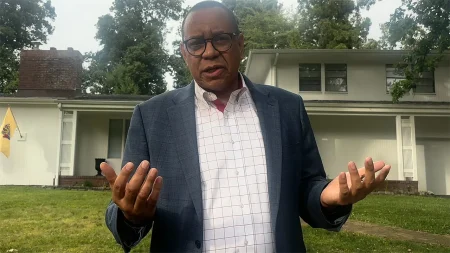







Picture the familiar stack of bills at the end of the month. The electric bill, the gas station receipts, maybe the heating bill if the season is turning. Now imagine every single one of those numbers climbing by a noticeable amount—not because of a sudden shortage or a spike in world markets, but because of a legal strategy playing out in courtrooms across the country. That is the warning behind a new report from the Heritage Foundation and the energy advocacy group Power The Future. The analysis, first obtained by Fox News Digital, claims that if the wave of climate-related lawsuits against oil and gas companies succeeds, the average American household could end up paying an extra $1,465 per year in energy costs. That figure is not pulled from thin air. It reflects a sweeping scenario in which more than 300 pending lawsuits, newly enacted state climate superfund laws, state legislative proposals, and a federal bill all end in favor of environmental plaintiffs. The two men behind the report—E.J. Antoni, the Heritage Foundation’s chief economist, and Daniel Turner, the founder of Power The Future—want Americans to understand that these courtroom battles are not abstract ideological contests. They are, in the most direct way possible, battles over who pays for the energy that heats homes, powers schools, fuels commutes, and keeps grocery stores stocked.
The way the math works is not complicated, even if the legal strategy behind it is. The report estimates that energy companies could face an additional $194 billion in annual costs if all of these lawsuits and legislative measures were somehow successful. And while it might be tempting to think that the burden would fall on wealthy executives or shareholders, the report argues the opposite: companies will not just quietly absorb these costs. They will charge more for their products. The numbers add up quickly. According to the report, gasoline could rise by roughly 41 cents per gallon, and residential electricity rates could climb by about 8.6 percent. For a family that drives a typical amount and uses air conditioning through the summer, that alone translates into hundreds of dollars in added expenses. But the spillover goes far beyond the obvious. When transportation fuel gets more expensive, the price of every single product transported by truck or train goes up too. The cost of groceries, clothing, building supplies, and medicine all carry a hidden energy price tag. Electricity is even more embedded in daily life. The same power that runs refrigerators, washing machines, and chargers for phones and laptops is the power that runs hospitals, water treatment plants, and warehouses. When the price of that power goes up by nearly nine percent, the damage is not limited to high utility bills. It pushes up the cost of almost everything else. Turner put it plainly: “Every single time a company is sued, yes, they pay some damages, but ultimately they will just charge people more for their product to recoup those losses.” The report may actually understate the problem, because some lawsuits do not specify the damages they are seeking. That leaves the potential court awards completely open-ended.
The legal landscape behind these findings is both enormous and, to most Americans, largely invisible. The report takes into account more than 300 pending lawsuits, three state-level climate superfund laws, 12 state legislative proposals, and one federal bill. Yet the entire issue has stayed under the radar in a way that Antoni and Turner find deeply concerning. At the center of it all is a case the Supreme Court is preparing to hear next month out of Boulder, Colorado. That case, Suncor Energy v. County Commissioners of Boulder County, could dramatically reshape the future of climate litigation. The core question is whether state and local governments can sue fossil fuel companies in state court for the alleged role of their products in climate change. If those lawsuits are allowed to go forward, it would open the door for jurisdictions across the country to sue energy producers for damages, and those damages would be measured not in terms of physical harm but in terms of future climate policy costs. The report also highlights New York’s Climate Change Superfund Act, which was blocked by a federal judge in August, and which mirrors a broader strategy: treat energy companies like polluters who can be charged retroactively for environmental damage, much like companies that contaminated a specific site are forced to pay for its cleanup. But climate is far more complicated than a contaminated piece of land. It is global, decades in the making, and impossible to trace to a single barrel of oil. Still, the lawsuits keep coming, and the costs keep multiplying.
For Antoni and Turner, the danger is not just intellectual. It is deeply personal for everyday Americans. “If those folks on the radical left wing who are anti-energy, if they get their way, your costs are going to go up,” Antoni told Fox News Digital. “Your household is going to pay a lot more. The energy is going to get much more expensive. You may think it’s bad now, but it will get significantly worse.” That warning carries a particular weight because energy prices are not a luxury concern. Low-income families and seniors on fixed incomes spend a far larger share of their budgets on heating, cooling, and transportation than the wealthy do. When energy prices rise, the burden falls hardest on those who can least absorb another unexpected cost. The report also argues that these lawsuits are a way for politicians to escape responsibility. Turner specifically warned that the superfund lawsuits “absolve elected leaders from doing the bad, boring part of governing, which is infrastructure and mitigation strategies.” In other words, instead of building flood barriers, upgrading drainage systems, improving emergency response, or maintaining roads and bridges, politicians can pose as forward-thinking climate warriors by suing energy companies. It looks bold and decisive. It creates a headline. But the hard, unglamorous work of preparing communities for extreme weather still needs to be done. The money for that work has to come from somewhere. If the court system forces energy companies to pay, the companies will pass those costs along. The real bill ends up on kitchen tables, not in press releases.
There is an important context here that the report’s authors are careful to acknowledge. Their estimate is not a prediction. It represents a “full-success scenario” in which every pending lawsuit, every superfund law, every legislative proposal, and the federal bill all end with the plaintiffs prevailing. That almost certainly will not happen. Some cases will be dismissed, some laws will be overturned, and some proposals will never pass. But Antoni argues the estimate is still a useful warning because it is conservative. Some lawsuits do not spell out exactly how much money they are seeking, which leaves the door open to awards far larger than the already significant $194 billion annual figure. The point is not that each one of these efforts will succeed. The point is that if even a portion of them do, the financial impact will be substantial. And because the issue has not captured the attention of ordinary Americans, the public is not demanding answers from candidates or lawmakers. This is the moment, Antoni says, to “start ringing the alarm bells now before these things actually come to pass and American families have to foot the bill for it.” The report sits in the middle of a larger political and cultural debate about climate change, energy policy, and the role of the courts. Some people will greet the findings as a necessary warning. Others will dismiss the numbers as politically motivated. But the underlying reality is hard to dispute: lawsuits cost money, companies pass on costs, and households are the ones who pay at the pump and on the power bill.
As the Supreme Court prepares to weigh in on the Boulder case, the outcome has the potential to change everything. A decision in favor of the energy companies would likely shut down many of these state and local lawsuits, reducing the threat of a massive new cost layer. A decision in favor of the county would unleash a flood of new litigation, precisely the scenario the report describes. And regardless of what the Supreme Court does, state-level climate superfund laws remain a separate front in the fight. The report is ultimately a warning about the hidden costs of climate activism, costs that are often ignored in heated political rhetoric. It asks Americans to look past the noble-sounding language around climate justice and accountability and to ask a simple, practical question: who will pay? The answer, according to this analysis, is the same people who always pay. Not the lawyers, not the politicians, not the corporate boards, but the families who wake up early to commute to work, who cook dinner in kitchens lit by electric bulbs, who run the furnace in the winter and the air conditioner in the summer, and who need the economy to function in order to make ends meet. The courtroom battle over climate change may take place in marble halls and legal briefs, but its real consequences will be felt in living rooms, grocery lines, and gas stations across the country. The question now is whether enough people will pay attention before those consequences become permanent.