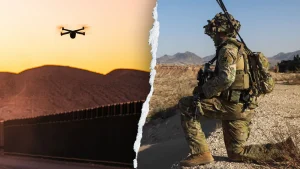






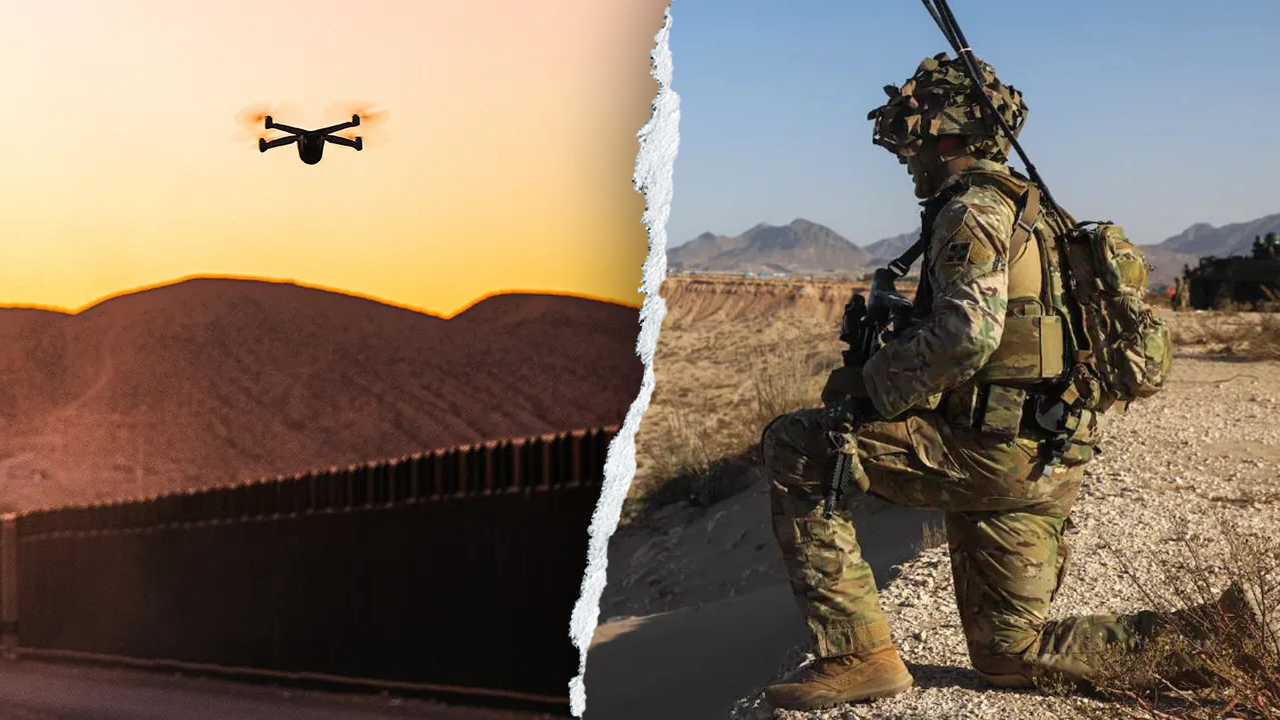
For years, the border between the United States and Mexico was patrolled the old-fashioned way: with agents on the ground, vehicles, and binoculars. But the game has changed. The Department of Homeland Security has issued an urgent warning after a startling surge in cartel drone activity along the southern border. In just over a month, more than 300 suspected cartel drones were detected. Of those, 75 were turned back, 15 were engaged, and one was captured. The numbers, coming from the Department of War, reflect a new reality: transnational criminal organizations are using unmanned aircraft to spy on American law enforcement and military personnel, mapping their movements and adapting their smuggling routes in real time. The escalation is not random. It is a coordinated response to increased U.S. pressure along the border, and it is being met with an equally determined counter-escalation. Fox News Digital previously reported that the War Department’s Joint Task Force – Southern Border took down approximately 100 suspected cartel drones in August alone. That means the total over the last several weeks is far higher than anything seen before, and officials are treating it as a serious challenge to national security. The drones are not just a nuisance; they are tools of reconnaissance for cartel operations, giving smugglers an eye in the sky to avoid detection and move people and drugs across the border. The response from Washington has been swift. The Department of War and DHS are expanding their use of drone detection and interception tools, and they are partnering with private companies to develop new counter-drone technology. In an unmistakable message posted on X, DHS declared, “Hostile surveillance of American personnel ends here.” The agency also addressed the cartels directly: “Your drones are failing, your tactics are being exposed, and you have no advantage. @CBP and @DeptofWar will keep taking them down.” It is a stark warning and a sign that the border has become a testing ground for a new kind of warfare, one that pits drone operators against counter-drone specialists in a high-stakes game of cat and mouse.
To understand what is happening, it helps to look at how cartels have adapted. For years, they relied on human lookouts, often young men on hillsides or in vehicles, watching Border Patrol agents and radioing their positions to smugglers below. That system still exists, but it is increasingly being replaced by something more efficient and harder to spot: drones. Jeffrey Stalnaker, deputy chief patrol agent for Border Patrol, explained in an interview with Fox News that cartels primarily use drones for reconnaissance during drug and human smuggling operations, not for hauling drugs themselves. The drones hover overhead, often at altitudes that make them difficult to see, and provide a live feed of U.S. agents’ locations and movements. “They’re watching when our soldiers and our agents are coming into the field, where they’re working,” Stalnaker said. That information allows cartels to plan exactly how and when to send individuals north from Mexico into the United States illegally, trying to slip them through gaps between ports of entry. This is not a small-scale operation. The sheer volume of drone sightings over the past month suggests a systematic effort to map U.S. operations in real time. For border agents, the drones are more than an annoyance; they represent an intelligence breach that could put lives at risk. If smugglers know where agents are, they can send migrants into more dangerous terrain or stage confrontations designed to distract and overwhelm law enforcement. The human cost is real. Every drone that escapes detection could mean another family led through the desert, another group of migrants packed into a truck, or another firefight in a remote canyon. That is why federal officials are so focused on pushing back. The statistics are impressive—75 drones turned back, 15 engaged, one captured—but they only tell part of the story. Behind each number is a tactical operation, a team of specialists working to defend American personnel and preserve the integrity of the border.
The fight against cartel drones is not static. Federal officials told Fox News that while U.S. anti-drone measures have succeeded so far, the cartels are rapidly evolving their tactics. Some cartel drones are known to be fitted for lethal purposes, though officials say they have not yet encountered such weapons at the border. That is cold comfort. The fact that cartels possess the capability and the willingness to weaponize drones—whether with explosives or other payloads—has shifted the calculus for border security. It is no longer just about detecting contraband; it is about protecting soldiers and agents from a new kind of aerial threat. To meet that threat, the U.S. military has been conducting exercises in the desert outside Yuma, Arizona, testing the latest anti-drone gear. The equipment ranges from counter-drone guns and unmanned aerial vehicles to innovative drone-capturing technology designed to intercept hostile aircraft without destroying them. These exercises are not abstract experiments. They are practical, mission-focused drills meant to prepare troops for the real-world scenarios unfolding along the border. Brigadier General Jason Rueschhoff, director of operations for U.S. Northern Command, described the urgency plainly: “We are developing capability at a pace that is keeping ahead of our enemy and that’s really important and that’s what happens here.” That pace is essential. The cartels have shown they can adapt quickly, learning from each loss and changing their tactics. When the military deploys a new counter-drone system, the cartels adjust their flying patterns, frequencies, and camouflage. It is an arms race, and the Americans intend to stay ahead. The exercises in Yuma are part of a broader strategy that combines technology, intelligence, and interagency cooperation. The success of that strategy depends not just on fancy gadgets but on the skill and judgment of the people operating them. From soldiers on the ground to analysts watching screens in command centers, the effort to counter cartel drones is a team operation, and everyone involved understands the stakes.
One of the most sensitive aspects of the counter-drone campaign is its relationship with Mexico. The border is a shared space, and actions taken on the U.S. side can have unintended consequences south of the line. Fox News Digital reported earlier this month that Joint Task Force – Southern Border has been carrying out drone takedowns using specialized counter-drone equipment provided and integrated by other military units. Each operation, according to a senior War Department official, is planned and closely coordinated with the Mexican military and border authorities. This coordination is vital. It prevents interference between forces operating on either side of the border and reduces the risk of an accidental incident that could escalate tensions between the two countries. It also recognizes the reality that cartel drones do not respect national boundaries. A drone detected in Arizona may have been launched from Sonora, and its operator may be hiding on the Mexican side. Stopping that drone requires cooperation, intelligence sharing, and a clear chain of command. The administration has been careful to frame this as a defensive operation, not an act of aggression. Senior administration officials praised President Donald Trump’s use of military force during a recent press call, saying, “The president directed, the Department of War executed, the first ever plan and strategy to use direct military force to defend the homeland from this threat.” That is a significant statement. It marks a departure from previous policies, in which the border was primarily a law enforcement mission. Now, the military is actively engaged in defending the homeland from cartel drones, and officials say the results have been dramatic. “The effects have been spectacular,” one official said, “and we’ve seen the largest and steepest reduction in U.S. casualties inflicted by the cartels in American history.” That claim is difficult to verify, but it reflects the administration’s confidence in its approach. By taking the fight to the drones, the U.S. is sending a clear signal that it will not allow criminal organizations to own the skies.
The broader context matters too. The drone surge comes at a time when border security is a defining political issue. President Trump’s administration has made aggressive action along the border a cornerstone of its agenda, from deploying troops to cracking down on immigration policies. The counter-drone campaign is part of that larger effort, and its supporters see it as a necessary response to a changing threat. Cartels are not the only groups using drones; the FBI has warned that battlefield-style drone attacks could reach the United States, saying it is “only a matter of time” before adversaries use weaponized drones on American soil. That warning adds urgency to the work being done at the border. If the U.S. can develop effective counter-drone tactics in the challenging environment of the southern border, those same techniques could be used to protect other vulnerable sites—stadiums, airports, military bases, and cities. The border is, in effect, a proving ground. The lessons learned in the desert outside Yuma and the skies above Arizona will shape how the U.S. defends against drones for years to come. But there is also a human side to this story that statistics and official statements can obscure. Border Patrol agents and soldiers are not just facing machines; they are facing increasingly sophisticated criminal networks with virtually unlimited resources. The drones they encounter are a symptom of a much larger enterprise built on human suffering. Every interdiction is a victory, but the war is far from over. The cartels are resilient, creative, and ruthless. They will keep trying new tactics, and the U.S. will have to keep adapting. In that sense, the drone threat is not a temporary problem; it is a permanent feature of modern border security. The challenge for officials is to stay ahead without losing sight of the larger mission: protecting the homeland and saving lives.
In the end, the message from the Department of Homeland Security and the Department of War is clear: the era of passive border patrol is over. Drones have turned the border into a dynamic, high-tech battlefield, and the U.S. is determined to win. The recent detection of more than 300 cartel drones in a single month is both a warning and an opportunity. It is a warning that the threat is real, sophisticated, and growing. It is an opportunity to demonstrate that American technology, strategy, and resolve can outmatch anything the cartels deploy. The numbers are encouraging—75 drones turned back, 15 engaged, one captured, plus the roughly 100 taken down in August—but they are also just a snapshot of an ongoing struggle. The cartels are watching, learning, and adapting. So are the American troops and agents on the ground. The exercises in Yuma, the private-sector partnerships, and the coordination with Mexican authorities all reflect a comprehensive effort to stay ahead of an adaptive enemy. For the people tasked with carrying out this mission, every day brings new challenges. They must decide when to intercept a drone, how to do it safely, and what to do with the intelligence it reveals. They must balance force with caution, knowing that a single mistake could trigger a diplomatic incident or a political firestorm. And they must do it all while knowing that lives are at stake. The cartels may have discovered a new way to spy on American personnel, but the response from the U.S. has been unmistakable: hostile surveillance will not be tolerated. As DHS put it on X, “Your drones are failing, your tactics are being exposed, and you have no advantage.” Whether that bravado is justified will depend on what happens in the weeks and months ahead. But one thing is certain: the southern border has become a place where the future of warfare is being written, one drone at a time.