





At its heart, the debate surrounding transgender athletes in youth sports is not merely a legal or political dispute; it is a deeply emotional clash between two fundamental human desires: the yearning of vulnerable children to belong, and the determination of female athletes to preserve the spaces they fought so hard to secure. This delicate tension erupted into the national spotlight following a monumental 6–3 Supreme Court decision in the cases of West Virginia v. B.P.J. and Little v. Hecox. By upholding state laws that require student-athletes to compete on teams corresponding with their biological sex at birth, the nation’s highest court established a legal precedent that reshaped the landscape of American youth athletics. Instantly, the ruling drew a sharp line across the country, igniting a fierce debate about empathy, fairness, and what it truly means to protect children.
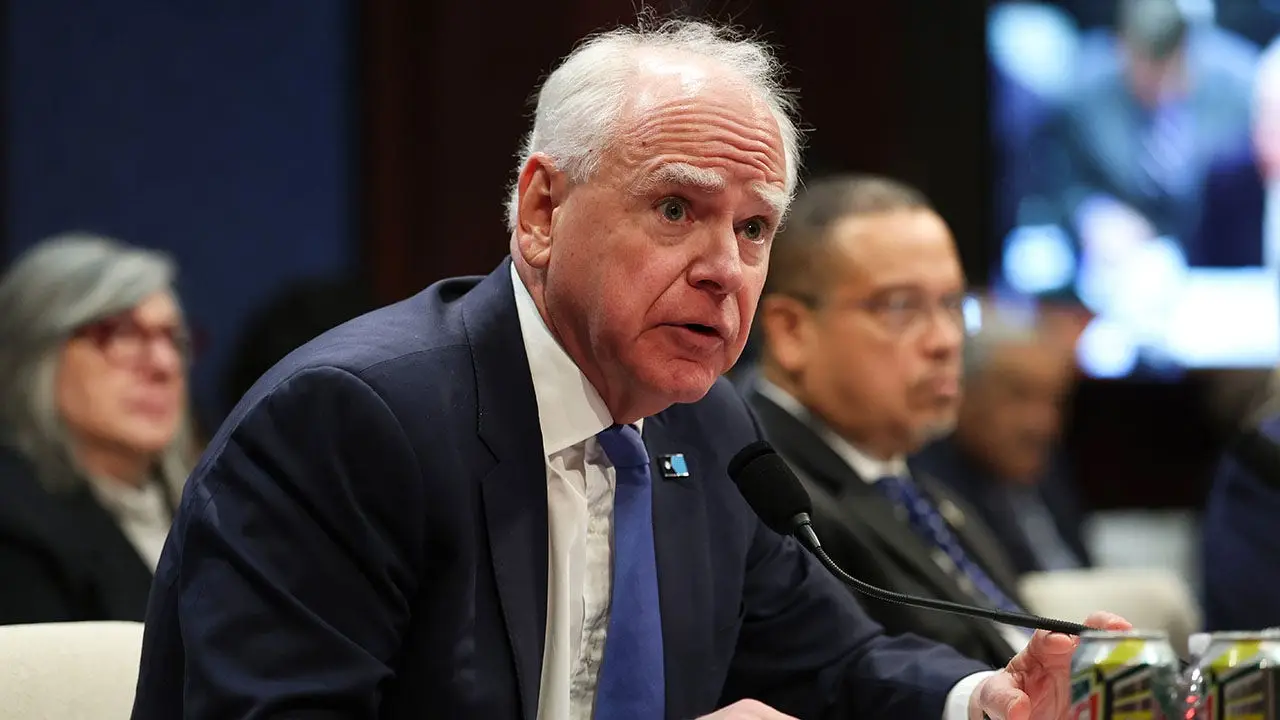
For Minnesota’s Democratic Governor Tim Walz, the ruling felt like a direct blow to the well-being of some of his state’s most vulnerable young residents. Utilizing his platform on social media, Walz, a former high school geography teacher and football coach, denounced the Supreme Court’s decision as “cruel,” asserting that Minnesota would remain a sanctuary of kindness and acceptance for transgender youth. Speaking to reporters later that day, Walz adopted a reflective, pragmatic tone, describing the ruling as a “mixed bag” because while it permitted other states to restrict transgender athletes, it also protected Minnesota’s right to remain welcoming. Drawing on his background in education, Walz lamented the political hyper-fixation on youth sports, arguing that it is ludicrous for adults who have never attended a local sporting event to obsess over stopping a child from participating in activities as simple as bowling. To Walz, the essence of childhood sports is inclusion and community, and he vowed that Minnesota would continue to treat its transgender youth with dignity, respect, and humanity.
However, Walz’s message of inclusion was met with a swift and fierce backlash from conservatives, many of whom argued that the governor’s definition of compassion completely ignored the lived experiences and physical safety of young women. Minnesota Republican State Senator Julia Coleman delivered a passionate counter-argument on social media, redefining what “cruel” truly looks like in the context of female athletics. Coleman pointed out the vulnerability of teenage girls, already navigating the awkward transition of adolescence, being forced to share intimate locker room spaces with biological males. She argued that true cruelty lies in allowing girls to face disproportionate physical risks on the playing field and watching them lose hard-earned collegiate scholarships and competitive opportunities to athletes with biological advantages. From this perspective, the governor’s stance was viewed not as kindness, but as a betrayal of female athletes, putting progressive ideology above the safety, privacy, and dreams of young women.
This sentiment of betrayal vibrated throughout the conservative landscape, where critics accused Walz of abandoning basic biology and the rule of law to appease his political base. Retired Minnesota State Patrol Lieutenant John Nagel, currently running for Congress in Minnesota’s 5th Congressional District, accused the governor of disregarding American laws and failing to stand up for women’s rights. Similarly, Renee Carlson, an attorney with True North Legal, raised the poignant question of which specific Minnesota girls deserved to lose their roster spots to biological male athletes. Conservative lawmakers like State Senator Michael Holmstrom argued that encouraging children to believe they can change their biological gender is itself a form of deception that ultimately leads to fractured lives and the systemic victimization of girls. To these critics, the issue was one of fundamental truth and physical reality, and they viewed the Supreme Court’s ruling as a necessary, common-sense defense of biological facts.
The Supreme Court’s ruling has effectively divided the United States into two distinct cultural and legal territories. With more than half of the states now legally empowered to ban transgender athletes from female sports, a young athlete’s rights and opportunities are largely determined by state lines. While states like West Virginia and Idaho have moved swiftly to enforce traditional binary structures in youth sports, twenty-three other states—including California, New York, Massachusetts, and Minnesota—continue to offer legal protections and inclusive environments for transgender participants. This geographic patchwork means that a transgender teenager in one state may find themselves celebrated and welcomed on the field, while a few miles away across a state border, another may find themselves legally barred from competing altogether. For families of both transgender youth and competitive cisgender female athletes, navigating this fragmented landscape has become a source of immense stress and uncertainty.
Ultimately, the ferocious debate on social media and in the halls of government can obscure the actual children at the center of this controversy. Behind the statements from politicians, the viral tweets, and the legal briefs are real teenagers who simply want to run, swim, play, and find their place in the world. As the nation grapples with this deep cultural divide, the challenge remains to find a path forward that honors both the biological reality of female sports and the human dignity of transgender individuals. Until a consensus is reached, the conversation will likely remain polarized, leaving communities to figure out how to balance the demands of competitive fairness with the universal need for empathy and belonging in youth athletics.