





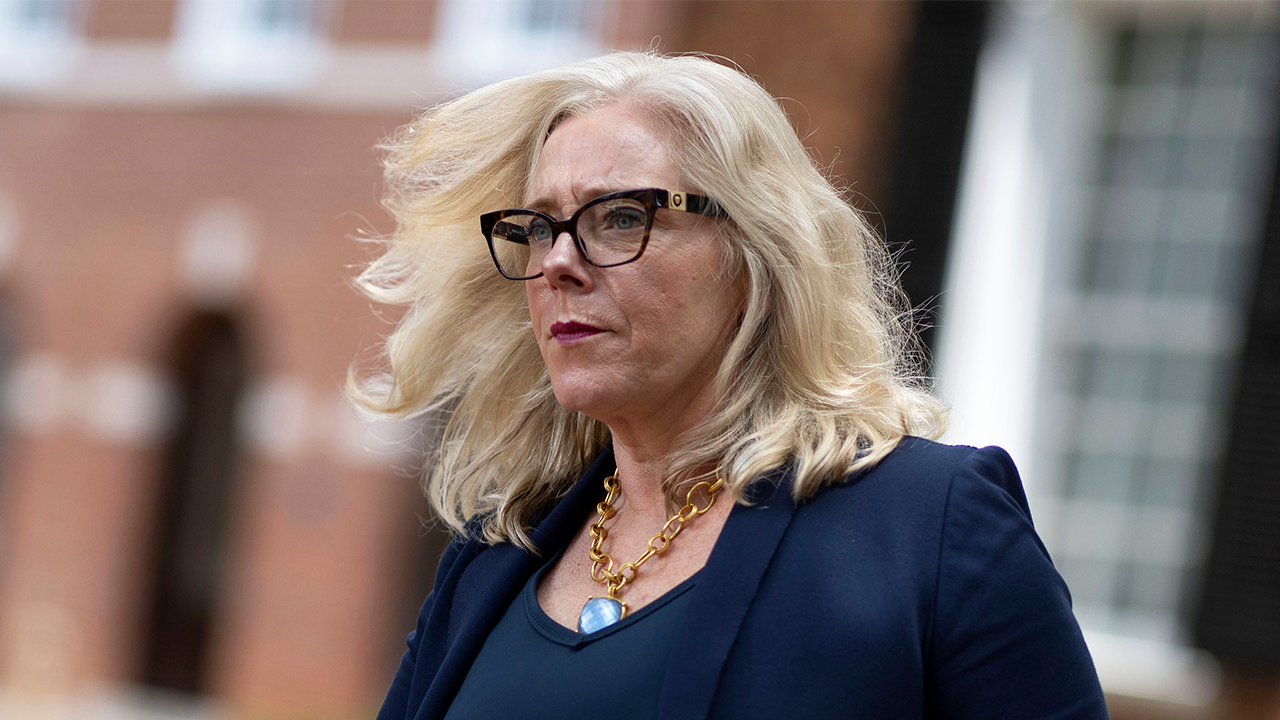
The quest for political office often forces candidates to walk a tightrope between their past convictions and the immediate expectations of the electorate, a reality vividly illustrated in Virginia’s First Congressional District. Shannon Taylor, the seasoned Henrico County Commonwealth’s Attorney and now the Democratic nominee for Congress, finds herself at the center of this delicate balancing act. On the campaign trail, she presents herself as a steadfast, pragmatic protector of the public, pointing to her fourteen-year tenure in which she prosecuted thousands of violent criminals, drug traffickers, and abusers. Yet, this traditional “tough-on-crime” narrative stands in stark, fascinating contrast to her historical role as an outspoken advocate for the progressive prosecution movement. This ideological dualism has ignited a fierce debate among voters who are increasingly torn between two competing American desires: the hunger for systemic criminal justice reform that addresses deep-seated racial and economic inequities, and the primal demand for physical safety and swift, punitive accountability. As Taylor campaigns to win over a traditionally Republican-leaning district, her political journey has become a compelling case study in how the high-minded theories of legal reform survive when tested by the messy, often tragic realities of human behavior and public anxiety.
This tension between progressive idealism and practical governance was evident from the very beginning of Taylor’s tenure in Henrico County. Upon taking office in 2012, she made the swift and highly controversial decision to dismiss seven experienced prosecutors, publicly declaring that the office needed to be restructured to reflect the demographic diversity of the community she had been elected to serve. This immediate housecleaning polarized the local legal community, raising persistent questions about whether professional competence and institutional knowledge were being sacrificed on the altar of identity politics. The friction reached a boiling point when Taylor attempted to appoint Misty Whitehead as a specialized police oversight prosecutor. Whitehead, a local attorney with a public history of vocal social media posts criticizing law enforcement and questioning systemic policing practices, was seen by many as a highly divisive choice. The controversy escalated into a dramatic public standoff when Henrico County Manager John Vithoulkas stepped in, declaring that while he could not legally dictate Taylor’s hiring decisions, he would absolutely refuse to authorize any local funds to supplement Whitehead’s salary. Taylor’s staunch defense of Whitehead, whom she characterized as merely offering “thoughtful analysis” of ongoing societal struggles, highlighted her deep commitment to reform-minded allies, even when it meant risking major institutional fractures and alienating the very law enforcement officers her office relied upon to build cases.
Taylor’s actions in Henrico County were not isolated incidents; rather, they were part of a broader, highly coordinated effort to redefine the role of the American prosecutor. In 2019, she threw her political weight behind Steve Descano’s progressive bid for Commonwealth’s Attorney in Fairfax County, endorsing him as a champion of shared “Democratic values” who would make the community both safe and just. This endorsement reflected a profound, humanistic belief shared by a new wave of legal reformers: that prosecutors should no longer act merely as punitive agents of the state, but as active ministers of justice who seek to dismantle the cycle of mass incarceration, address racial disparities, and foster community rehabilitation. This philosophical alliance aimed to transform the justice system from the inside out, replacing traditional tough-on-crime metrics with a focus on diversion programs, restorative justice, and a reduced reliance on incarceration. However, this visionary approach often underestimated the deep-seated public expectation that the justice system’s primary and non-negotiable duty is to protect citizens from immediate harm, setting the stage for a dramatic clash between abstract academic theories of social justice and the raw, unpredictable realities of violent crime.
The human cost of these theoretical experiments became tragically tangible in Fairfax County, casting a long and sobering shadow over the progressive prosecution movement and Taylor’s political alliance with Descano. The case of Abdul Jalloh, a thirty-two-year-old illegal immigrant from Sierra Leone, became a flashpoint for national outrage when he fatally stabbed an innocent Virginia resident at a suburban bus stop. Jalloh’s background revealed a staggering history of over thirty prior arrests, including charges of rape, malicious wounding, assault, larceny, and drug possession. Despite this clear pattern of escalating danger and violent behavior, Descano’s office had repeatedly dismissed or severely reduced the charges against him, allowing Jalloh to remain free on the streets. This devastating outcome eventually brought Descano before a congressional hearing, where lawmakers like North Carolina Representative Brad Knott fiercely condemned the prosecutor’s office for releasing dangerous predators back into unsuspecting neighborhoods. For many voters, this tragedy was not just an administrative failure, but a profound moral betrayal, illustrating the devastating real-world consequences that can occur when the justice system prioritizes the rehabilitation and lenient treatment of repeat offenders over the physical safety of the communities they terrorize.
The controversial intellectual framework behind these policies was laid bare in a joint 2021 letter to the Biden administration, co-signed by Taylor, Descano, and over one hundred other reform-minded prosecutors nationwide, which championed a radical restructuring of the American justice system. The document detailed “21 principles for the 21st-Century prosecutor,” boldly declaring that traditional, punitive law-and-order policies were fundamentally anathema to true justice. The blueprint advocated for the complete elimination of mandatory minimum sentences, the abolition of three-strikes laws, and urged prosecutors to actively consider a defendant’s immigration status during plea negotiations to shield them from deportation. Most controversially, the letter proposed a linguistic revolution within the courtroom, arguing against the use of traditional terms like “felon,” “inmate,” “rapist,” or “drug dealer,” which they claimed dehumanized individuals and created insurmountable barriers to their successful reintegration into society. While proponents viewed this as a compassionate, human-centric effort to treat offenders with dignity and break the cycle of recidivism, critics and victims’ advocacy groups reacted with visceral disgust, arguing that such semantic shifts were a deliberate attempt to sanitize criminal behavior, minimize the trauma of victims, and escape the moral weight of justice.
As Taylor transitions from her role as a local prosecutor to the Democratic nominee for Virginia’s First Congressional District, her record has become the defining battleground of her campaign against the Republican incumbent, Representative Rob Wittman. The Republican National Committee has launched a aggressive offensive, with spokesperson Emma Hall publicly branding Taylor a “DEI queen” who prioritized woke activism and identity politics over the safety of the citizens she was sworn to protect. This fierce political battle represents a fundamental, deeply human choice for the voters of Virginia: whether to embrace a candidate who has sought to reform a flawed justice system from within through empathy and systemic change, or to reject these progressive experiments in favor of a traditional, rigorous commitment to law enforcement and public safety. As the general election approaches, the race serves as a compelling microcosm of a larger national debate, asking voters to decide what true justice looks like, how a society should balance mercy with accountability, and who ultimately pays the price when those in power attempt to reshape the law in the name of progress.