





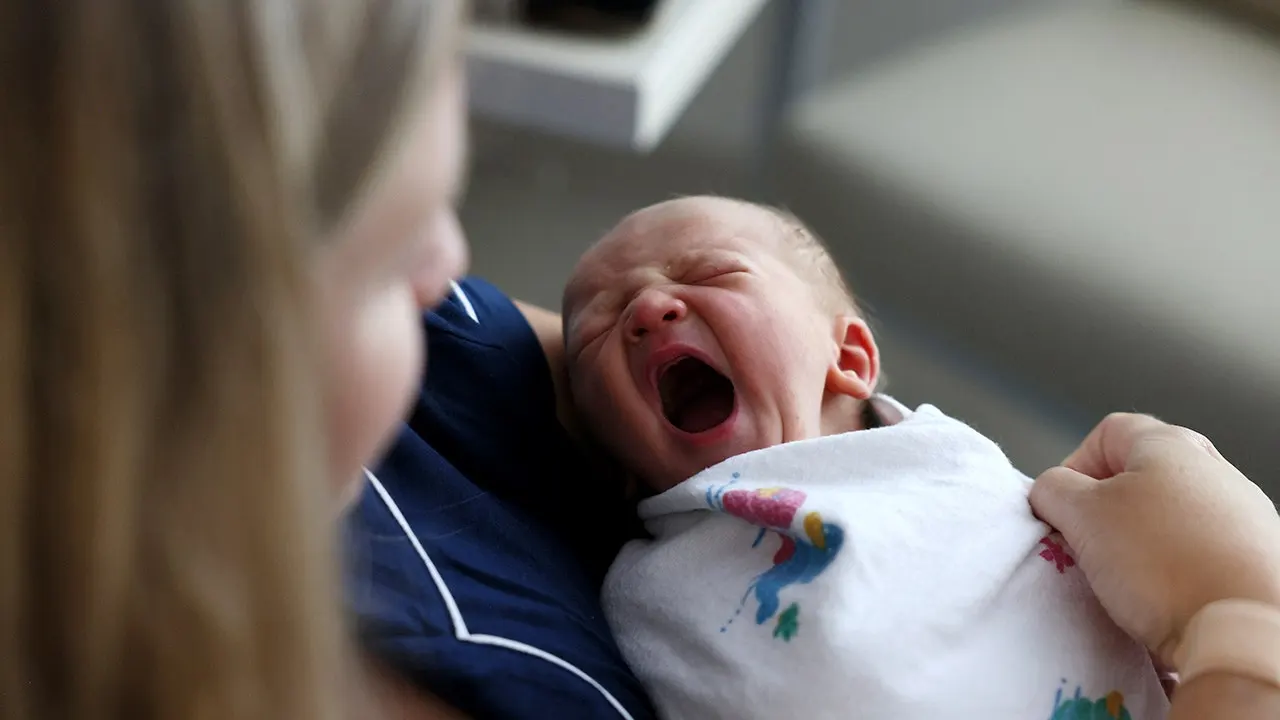
The quiet chaos of the first days after bringing a baby home is a universal human experience—a blur of sleepless nights, raw emotions, hormone crashes, and the terrifying weight of sudden, total responsibility. For many, this period is a delicate tightrope walk between overwhelming joy and profound exhaustion, often conducted in isolation. It is within this intimate and fragile space that Massachusetts Governor Maura Healey has chosen to plant a flag. In a move that has simultaneously comforted some and unnerved others, the state is dramatically expanding its “Welcome Family” program, a taxpayer-funded initiative that sends registered nurses directly into the homes of new parents within days or weeks of a birth. The governor’s vision is simple yet sweeping: no parent in Massachusetts should navigate the postpartum haze alone. During a recent appearance on Boston Public Radio, Healey articulated this ambition with striking clarity, stating that “everybody in the state, when you have a baby, you’re going to have a home visit within days, weeks and that will be an opportunity for a healthcare provider to make an assessment to see if you need some additional support and resources.” The announcement represents a significant philosophical leap in maternal healthcare, shifting the paradigm from reactive emergency care to proactive, in-home community support. However, as the state writes a check for $2 million to fund this expansion, it is igniting a fierce cultural and political debate about the proper boundaries between government support and private family life, a debate that feels particularly acute in the shadow of a recent, heartbreaking tragedy.
The financial investment is substantial, but the human intent behind it is even more profound. The $2 million dedicated to expanding the Welcome Family program is designed to ensure that a professional, compassionate presence walks through the door of every new parent. This is not a surveillance operation or a clinical audit; it is a “warm hand,” an offer of help at the exact moment when help is hardest to ask for. During these visits, nurses are trained to perform a holistic assessment: they check the physical healing of the mother, the basic health and feeding of the infant, and—crucially—they look deep into the eyes of the exhausted parent to gauge their mental state. They are looking for the subtle signs of postpartum depression, anxiety, or the more severe forms of psychosis that can cloud a new parent’s mind. Alongside this, Healey has proposed an additional $250,000 to bolster the Massachusetts Child Psychiatry Access Program for Moms (MCPAP for Moms), a vital resource that offers mental health support and consultation to the providers caring for pregnant and postpartum patients. This dual-pronged approach recognizes a hard truth: the physical act of giving birth is just the beginning, and the mental toll can often be the silent killer. By training healthcare providers to better identify the signs of postpartum mental health conditions and by placing nurses on the literal doorsteps of new families, the state is attempting to build a safety net so dense that no one falls through it. It is an acknowledgment that the “village” it takes to raise a child has largely vanished, and the state is stepping in to fill that void, offering a hand to hold in the middle of the night when the rest of the world is asleep.
The urgency of this initiative is not born in a vacuum; it has been sharpened by the harrowing specter of the Lindsay Clancy trial, which has haunted Massachusetts and the nation for over a year. Clancy, a former labor and delivery nurse, was accused of killing her three young children in January 2023. The case ended in a mistrial when the jury remained deadlocked, unable to reach a unanimous verdict on her mental state. Clancy’s defense did not deny the horrific act; instead, they painted a devastating portrait of a woman suffering from severe postpartum mental illness, a mind hijacked by psychosis and a system that failed to catch her descent. The trial forced the public to confront the terrifying reality that postpartum mental health is not just a “blues” that passes, but a spectrum of disorders that can, in the most tragic cases, lead to unimaginable violence. For the nurses who will now be walking into these homes, the Clancy case serves as a stark, somber reminder of what is at stake. Every time they knock on a door, they carry the weight of that tragedy, knowing that their job is to see what might be hidden behind a forced smile or a flippant “I’m fine.” The expansion of the Welcome Family program is, in many ways, a direct response to the public outcry that followed the trial—a desperate, collective plea to ensure that no parent suffers in silence, and that the signs of profound distress are caught before they spiral into catastrophe. The program is a promise that the state will be more vigilant, more present, and more compassionate, even if it means being more intrusive.
Yet, for every parent who sees this as a lifeline, there is a taxpayer who sees it as an encroachment. The announcement has sparked a fierce social media firestorm, reflecting a deep-seated American anxiety about government overreach. Critics have been quick to brand the program as “creepy” and “massive government overreach,” questioning the necessity of a state-mandated visit into the sanctity of a private home. One user succinctly captured this sentiment on X, writing, “Doctors and pediatricians are more than capable to conduct appropriate screenings for their patients. Say no to home visits.” This argument is grounded in a legitimate philosophical concern: where does the state’s responsibility to protect its citizens end, and where does an individual’s right to privacy begin? For these critics, the mandatory nature of the outreach—even if technically voluntary—feels like a foot in the door, a precursor to more invasive state control over family life. They worry about the data being collected, the assumptions being made, and the potential for a routine health check to morph into a child welfare investigation. However, the opposition is not entirely uniform. Comedian Bob Phillips offered a nuanced middle ground on X, noting, “More overreach. However, if it’s an offer, and not a mandate, it could be a good thing for some young families and single moms.” This distinction is crucial. The program is indeed voluntary, but the fear of a “mandate in disguise” persists. This backlash highlights a fundamental tension in the American psyche: we simultaneously crave community support and fear institutional intrusion, often rejecting the very safety nets we desperately need.
This local debate is merely a microcosm of a broader national conversation about how society should balance maternal mental health, taxpayer costs, and individual autonomy. On one hand, the data supporting home-visiting programs is overwhelmingly positive. Studies have consistently shown that such interventions reduce child abuse and neglect, improve parental mental health, increase employment and educational attainment among mothers, and ultimately save taxpayer money by preventing costly emergency room visits, foster care placements, and long-term social services. The return on investment is clear: a few hundred dollars spent on a home visit is infinitely cheaper than a lifetime of trauma and institutional care. Yet, the emotional and psychological barriers remain high. Many parents, particularly first-time mothers, feel a profound sense of shame and failure when they struggle, and the idea of a stranger—a representative of the government—witnessing their messy home, their crying baby, and their trembling hands can feel like a judgment rather than a rescue. The state is betting that the nurses, with their training and empathy, can overcome this resistance. They are betting that the offer of help, delivered with kindness rather than bureaucratic coldness, will be seen for what it is: an act of love from a collective community. The success of this program hinges entirely on the delivery. If a nurse walks in with a clipboard and a checklist, it will fail. If they walk in with a warm smile, a gentle tone, and a genuine desire to help, it might just save a life.
Ultimately, the expansion of the Welcome Family program is a bold experiment in collective compassion, a declaration that the state believes the health of a mother and her newborn is a public good, not just a private concern. The 2,000-word debate boils down to a simple, raw question: How much do we trust the government with the most intimate moments of our lives? Governor Healey is betting that the answer is “enough,” provided the trust is reciprocated with respect and care. The shadows of the Clancy case loom large, reminding us that the cost of staying out of a family’s business can be catastrophic. The critics are right to guard their privacy, but the parents silently drowning in postpartum depression need more than privacy; they need a lifeline. The beauty of this program, if executed correctly, is that it is neither a mandate nor a surveillance tool—it is a hand extended in the darkness. It acknowledges that raising a child is the hardest job in the world and that no one should have to do it alone. As the state rolls out this expansion, the real test will be whether the nurses can bridge the gap between policy and humanity, transforming a line item in a budget into a moment of genuine connection on a couch in a dimly lit living room. The debate over government overreach will continue, but the hope is that when a nurse knocks on that door, the only thing that matters is the look of relief on a mother’s face, knowing that someone—anyone—has come to help. And in that moment, the line between “government intrusion” and “community care” blurs into something that looks a lot like humanity.