





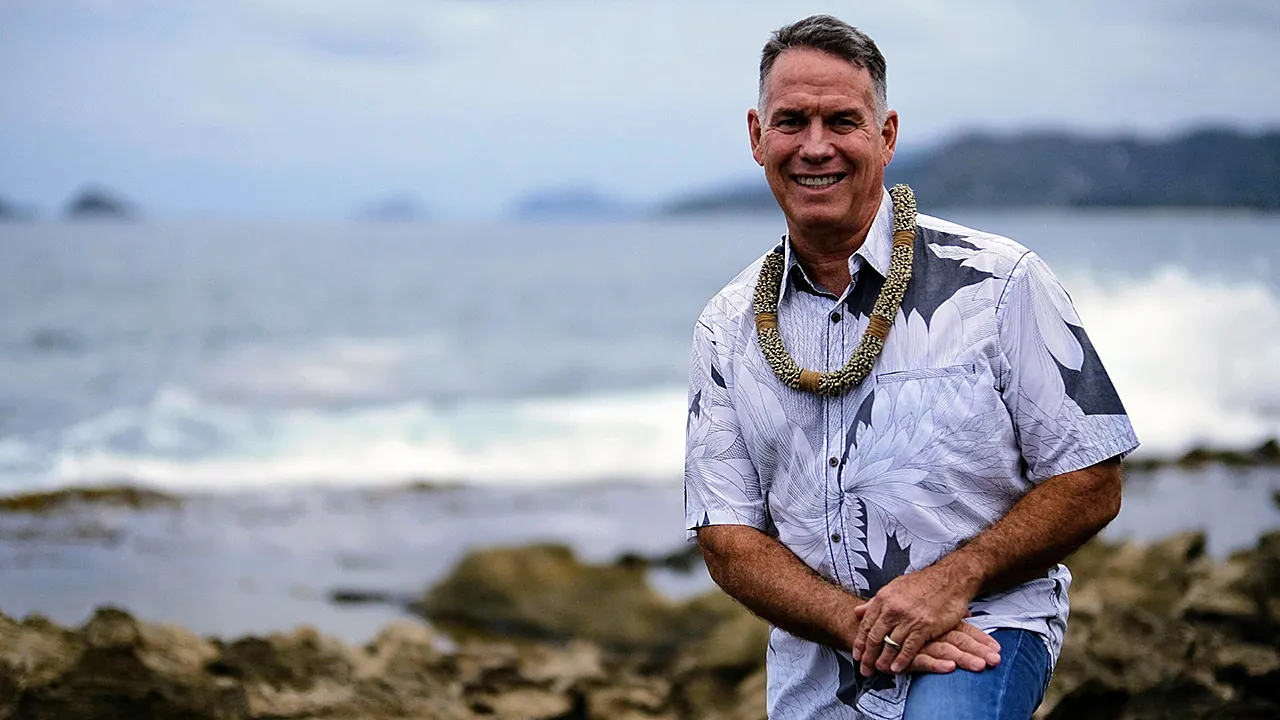
The journey of public service often begins with a quiet commitment to one’s community, but for Gary Cordery, a local contracting business owner from Hawaii, that path has led him directly into one of the most formidable political arenas in the United States. Following a hard-fought primary victory over fellow business owner Ken Fujiyama, Cordery officially secured the Republican nomination for the governorship of Hawaii, setting up a high-stakes November showdown against the incumbent Democratic Governor, Josh Green. To many political analysts and casual observers alike, this upcoming matchup represents a classic, lopsided battle between a well-entrenched political heavyweight and an energetic, grassroots challenger. The Cook Political Report, a highly respected non-partisan newsletter that analyzes national and state elections, currently rates the Hawaii gubernatorial contest as “Solid Democratic,” pointing to a Partisan Voting Index of D+13. This stark statistic reflects a deeply ingrained political reality on the islands, where the Democratic Party has held a firm, almost unbreakable grip on the state’s executive branch for decades. In fact, Hawaii has not seen a Republican occupy the governor’s mansion since Linda Lingle completed her second term in 2010, illustrating the steep historical hill that any GOP candidate must climb. For Cordery, stepping onto this stage is not merely a political endeavor; it is an act of profound dedication to a place he calls home, undertaken with the full, sober awareness of the structural obstacles that stand between him and the governor’s office. By framing his candidacy around his real-world experience as a builder, he hopes to offer a tangible alternative to voters who are tired of career politicians and are looking for practical, hands-on leadership to steer the state through its current challenges.
The disparity between the two campaigns is perhaps most starkly illustrated through their financial war chests, highlighting the immense structural advantages enjoyed by an incumbent in modern American politics. According to finance reports compiled by the Honolulu Civil Beat, Governor Josh Green has amassed an impressive campaign fund of approximately $3.5 million, a sum that allows for extensive television advertising, statewide organizing, and a highly sophisticated campaign apparatus that reaches every corner of the archipelago. By contrast, Cordery’s campaign has operated on a much more modest budget, raising around $313,000. In a state like Hawaii, where traveling between islands to meet voters requires significant capital and complex logistics, this financial gap represents a massive, almost insurmountable hurdle for a grassroots movement. Yet, the human element of politics is rarely defined by numbers alone, and Cordery is banking on the power of direct voter engagement and shared frustration to bridge the gap. While Governor Green enjoys a comfortable 56% approval rating among residents—buoyed by his visible role in navigating the state through complex public health crises and natural disasters—Cordery represents a segment of the Hawaiian populace that feels increasingly alienated by the status quo. For these voters, the financial asymmetry of the race only underscores their belief that the current political system has become disconnected from the everyday struggles of working-class families, transforming Cordery’s underdog run into a symbol of grassroots resistance against institutional dominance and corporate-funded campaigns.
At the heart of Cordery’s campaign is a deeply personal narrative rooted in family, community, and a shared sense of exhaustion among local residents who feel they are being priced out of their own paradise. Speaking as a husband, father, grandfather, and long-time business owner, Cordery views his candidacy not as a career move, but as a rescue mission for a state he believes is suffering under the weight of decades of administrative neglect and bureaucratic bloat. Hawaii is widely romanticized across the globe as an idyllic paradise of pristine beaches and lush landscapes, but beneath this postcard-perfect exterior lies a harsh daily reality for many of its permanent inhabitants. The islands have become increasingly difficult to afford, creating an environment of intense financial anxiety that forces native families to make the painful decision to leave their ancestral home for the mainland in search of a lower cost of living. In his conversations with local voters, Cordery has tapped into this collective grief and frustration, speaking passionately about the “tremendous stress and anxiety” that defines daily life for so many. His message is one of restoration: a promise to shift the government’s focus away from bureaucratic self-preservation and back toward the stewardship of Hawaii’s natural and human resources, thereby injecting a renewed sense of hope, transparency, and accountability into a system that many residents feel has abandoned them in favor of special interests.
Drawing directly from his professional background as a contractor, Cordery has put forward an ambitious and practical blueprint designed to tackle Hawaii’s most pressing crisis: the critical lack of affordable housing. The dream of homeownership has slipped out of reach for the vast majority of local working families, with starter homes in many communities priced well beyond the means of ordinary income earners, forcing multiple generations to crowd into single households. To combat this, Cordery has proposed a comprehensive plan to construct 15,000 new, fee-simple homes across the islands, targeting a price range of $400,000 to $600,000—a bracket that would offer a vital lifeline to teachers, healthcare workers, first responders, and young families. His strategy bypasses traditional bureaucratic roadblocks by advocating for the utilization of state-owned land specifically for residential development, while simultaneously streamlining the notoriously slow, expensive, and corrupt permitting process that often delays construction projects for years. By opening up more land for residential use and reducing the regulatory burdens that drive up building costs, Cordery believes the state can foster a thriving market of accessible housing without sacrificing the natural beauty of the islands. This plan is not just about building physical structures; it is about building a foundation for communities, ensuring that future generations of Hawaii’s children can afford to stay, grow, and build their own lives on the land of their ancestors.
Beyond housing, Cordery’s economic platform targets the immediate cost of living through aggressive tax reform and a fundamental restructuring of state government spending, which he argues has spun wildly out of control. One of his key proposals is the complete elimination of the state’s General Excise Tax (GET) on essential goods like food and medicine, a regressive tax that disproportionately burdens lower-income families who must spend a larger percentage of their earnings on basic survival. Additionally, he proposes a property tax freeze for homeowners upon retirement, aiming to protect senior citizens from being priced out of their homes by rising property valuations and gentrification. Cordery argues that Hawaii’s current financial struggles are not a result of a lack of revenue, but rather a profound failure of fiscal management. To illustrate this point, he frequently draws a sharp and eye-opening comparison between Hawaii and New Hampshire: both states share a similar population of approximately 1.4 million people, yet Hawaii operates on a staggering $20.5 billion budget compared to New Hampshire’s $7.75 billion. For Cordery, this massive discrepancy is clear evidence of systemic waste and inefficiency, leading him to pledge comprehensive audits of state agencies to root out corruption and mismanagement. He asserts that the state’s tax burden is out of control and that the true solution to Hawaii’s economic woes lies in disciplined business management rather than continuously taxing its citizens.
As the calendar marches toward November, the race for Hawaii’s governorship represents more than just a clash between two candidates or two political parties; it is a referendum on the direction and soul of the islands. Governor Josh Green stands as the champion of a proven, established order, offering voters stability, experience, and the continuity of a Democratic administration that has long defined the state’s political identity. Gary Cordery, on the other hand, stands as the voice of disruption, urging his fellow citizens to look past party labels and recognize that the current path is unsustainable. Regardless of the final tally on election night, Cordery’s campaign has already succeeded in forcing a vital conversation about accountability, government spending, and the urgent need to protect the working class of Hawaii. By grounding his campaign in his identity as a family man and local builder, he has humanized the political process, reminding voters that behind every statistic and budget line is a real family trying to survive in a rapidly changing world. Ultimately, the voters of Hawaii will decide whether to maintain their trust in the established leadership or embark on a new, uncharted journey of reform, leaving the final chapter of this historic underdog story to be written by the people themselves as they cast their ballots for the future of their beloved home.