


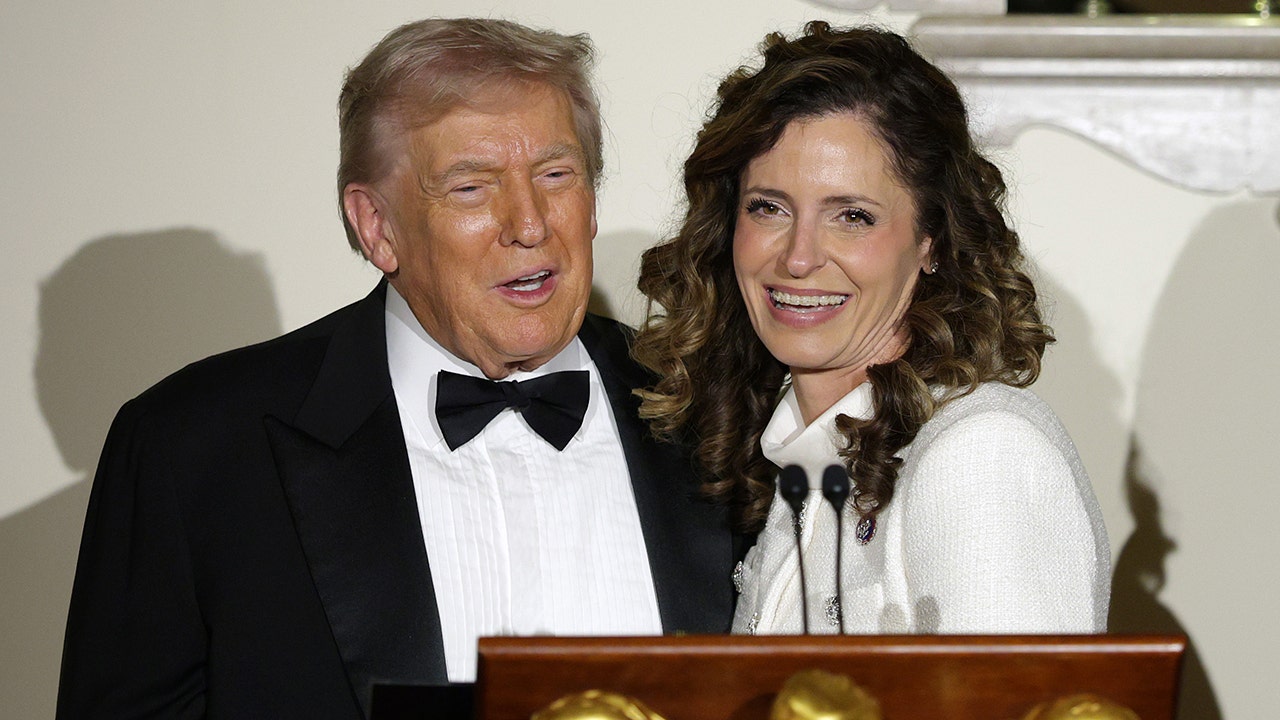
The human element of politics is rarely as striking as it is in the journey of Julia Letlow, whose political career began in the crucible of profound personal tragedy and has now ascended to the precipice of the United States Senate. In December of 2020, her husband, Luke Letlow, won election to the U.S. House of Representatives in Louisiana but tragically passed away from COVID-19 complications just five days before he was scheduled to take his oath of office. Thrust into a national spotlight while navigating immense personal grief, Julia made the courageous decision to run for and ultimately win her late husband’s congressional seat in a 2021 special election. Over the past three years, she has proven herself to be a highly effective and deeply resilient leader, cementing her status as a formidable force in Southern politics. On Saturday, she achieved a monumental milestone by securing the Republican nomination in Louisiana’s high-stakes Senate runoff election, handily defeating former state Treasurer and veteran politician John Fleming. This victory was a major win for Letlow, but it also functioned as a triumph for President Donald Trump, who had thrown his weight behind her candidacy before she even entered the race in January. By aligning her campaign with Trump’s political apparatus and securing the backing of Louisiana’s highly influential Governor, Jeff Landry, Letlow managed to connect with the state’s conservative base on a deeply personal and emotional level, showing that her political rise is fueled by both her moving story and her keen strategic alignment with the dominant wing of her party.
While Letlow’s triumph dominated the headlines, the election’s underlying narrative was defined by the definitive political exile of incumbent Republican Senator Bill Cassidy. Cassidy, a traditional conservative who had served two terms, became a prime target for the populist movement after he made the fateful decision to vote to convict Donald Trump during his second impeachment trial in 2021. For Trump and his millions of loyal supporters, this vote was viewed as an unforgivable betrayal, and the Louisiana primary became the ultimate venue for political retribution. In the first round of voting, Cassidy was legacy-defeated, finishing a distant third behind Letlow and Fleming, making him the first elected Republican senator to lose renomination since Indiana’s Richard Lugar in 2012. Conceding the race, Cassidy delivered a speech that was both a quiet defense of democratic norms and a subtle, parting swipe at the political style of the former president. He urged his supporters to accept the democratic process with grace, stating that when elections do not turn out as desired, leaders should not pout, whine, claim the election was stolen, or manufacture excuses. Trump, meanwhile, celebrated the end of Cassidy’s political career on Truth Social, declaring the result to be “great news” and expressing absolute delight that Cassidy was sent packing. This clash of personalities and values perfectly illustrates the ongoing civil war within the GOP, contrasting a traditional, institutionalist approach to governance with a new, highly competitive, and combative style of leadership.
The Louisiana primary is not an isolated incident but rather the latest demonstration of the brute force of Donald Trump’s endorsement power, which has spent the last two months systematically reshaping the Republican legislative landscape. Across the nation, in key primary battlegrounds from Indiana and Kentucky to Texas and Louisiana, Trump has successfully deployed his influence to oust incumbent politicians and establish a roster of loyalists poised to defend his agenda during his final two years in the White House. This strategy is a calculated attempt to construct a more unified, disciplined legislative front in Congress, ensuring that the legislative friction that characterized his first term is replaced by absolute alignment. For average voters, a Trump endorsement has become the ultimate shorthand for ideological purity and anti-establishment credibility, allowing candidates like Letlow to bypass traditional gatekeepers and secure decisive victories. Moving forward into the general election, Letlow is positioned as the heavy favorite to win the Senate seat in November, where she will face either farmer Jamie Davis or Navy veteran Gary Crockett, who are currently locked in their own intense Democratic Party runoff. Her path forward is a testament to how the modern Republican party operates, where the path to power is paved through personal loyalty to a singular figure and a shared commitment to a populist platform.
Yet, despite this string of high-profile victories, the primary season has also revealed fascinating internal friction points and structural limitations within the broader conservative coalition. The absolute dominance of the Trump endorsement machine was unexpectedly interrupted in Iowa, where his last-minute support of veteran Congressman Randy Feenstra was not enough to save him from a primary defeat against newcomer Zach Lahn. Lahn’s successful insurgency was fueled by a coalition of grassroots conservative forces, including the political wing of the “Make America Healthy Again” (MAHA) movement—which is closely aligned with Trump’s Health Secretary, Robert F. Kennedy Jr.—and Turning Point USA, the highly influential conservative organization co-founded by the late Charlie Kirk. This unexpected outcome highlights a growing complexity within the MAGA universe, demonstrating that populist voters are no longer a monolith and will occasionally defy Trump’s direct instructions if they believe a rival candidate represents a more authentic, anti-establishment alternative. However, Trump quickly recovered his footing in South Carolina, where his endorsement of Lieutenant Governor Pam Evette helped her secure a first-place finish, and his support of veteran Senator Lindsey Graham helped Graham overcome a crowded field of isolationist challengers to secure a majority and avoid a costly runoff. This mixed bag of results shows that while Trump’s endorsement remains the most powerful currency in Republican politics, its efficacy can occasionally be complicated by local dynamics and competing centers of gravity within the populist movement.
This complex interplay between national loyalty and local political realities was vividly on display in the Deep South, where critical runoff elections in Alabama and Georgia served as major tests of the MAGA movement’s strength. In Alabama’s solidly red Senate runoff, Representative Barry Moore, a staunch member of the House Freedom Caucus and a longtime Trump loyalist, captured a comfortable victory over rival Jared Hudson, a former Navy SEAL sniper who had earned the backing of several high-profile conservative figures. Meanwhile, in the critical swing state of Georgia, Trump’s eleventh-hour endorsement proved to be the deciding factor in the Republican Senate runoff, propelling Representative Mike Collins to a decisive victory over former college football coach Derek Dooley, who had the backing of Georgia’s popular conservative Governor, Brian Kemp. This victory sets up a monumental general election clash between Collins and incumbent Democratic Senator Jon Ossoff in a race that will likely determine which party controls the Senate. However, Georgia also delivered a rare setback for the Trump-backed slate when Lieutenant Governor Burt Jones was defeated in the gubernatorial runoff by billionaire businessman Rick Jackson, who successfully ran as a political outsider and spent over $100 million of his own money to self-fund his campaign. This result highlights that while Trump’s endorsement is incredibly potent, it can still be neutralized by candidates possessing limitless personal wealth and a compelling outsider brand.
Ultimately, these recent primary showdowns, including Anthony Constantino’s victory in upstate New York and Alan Wilson’s landslide win in South Carolina’s gubernatorial race, reveal a Republican Party that has completed a profound and historic transformation. The old guard of the GOP—characterized by institutional norms, free-market orthodoxy, and traditional legislative decorum—has been systematically dismantled and replaced by a highly energized, populist, and loyalist coalition. For the average American voter, this realignment represents a fundamental shift in how political power is negotiated and exercised in the United States, with personal loyalty, shared narrative, and aggressive cultural advocacy taking precedence over traditional policy debates. As candidates like Julia Letlow prepare to transition from the campaign trail to the halls of Congress, they carry with them the hopes of a movement that is eager to redefine the future of American governance. This transition is not merely about who wins elections, but about how a political party chooses to define its soul, showing that in the modern era of American politics, the old rules no longer apply, and a new era of populist leadership has firmly taken root.