


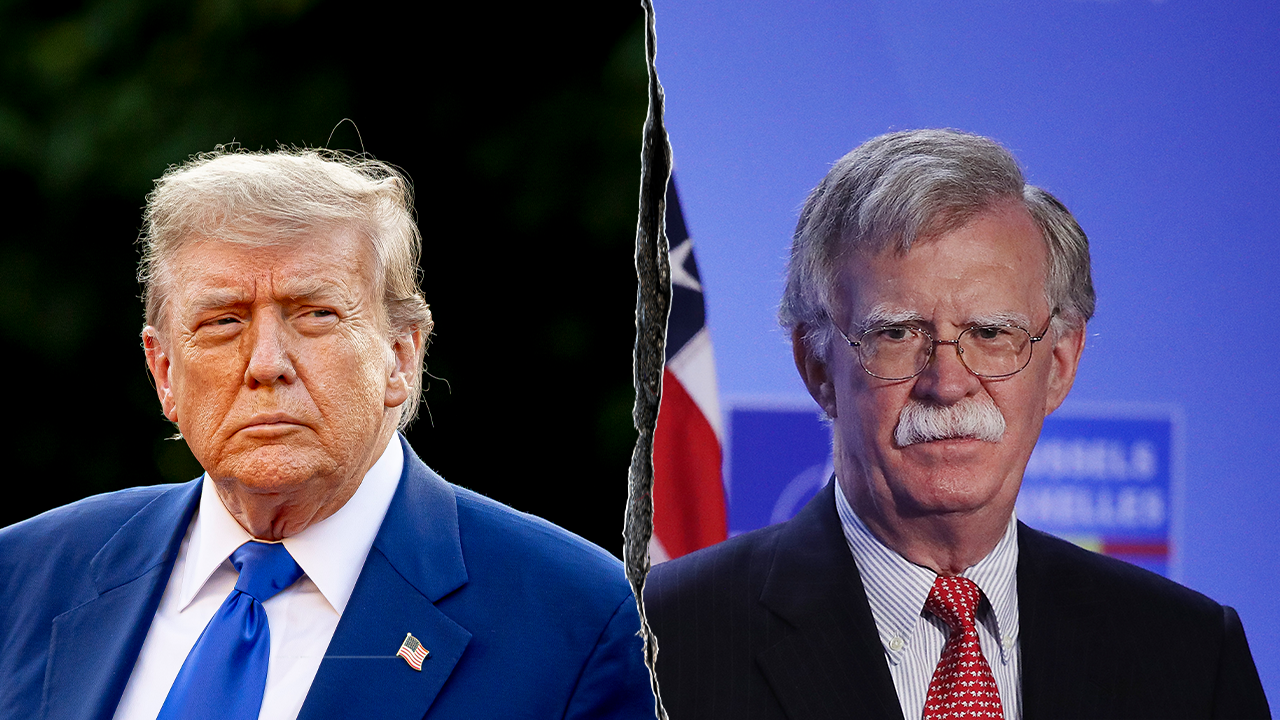
The courtroom of the U.S. District Court in Greenbelt, Maryland, became the stage for a tragic and humbling fall from grace for one of Washington’s most enduring and recognizable foreign policy figures. John Bolton, the 77-year-old former National Security Adviser known for his starkly hawkish views and trademark white mustache, stood before a federal judge to plead guilty to a single count of unauthorized possession of a national defense document. This legal surrender was the culmination of a dramatic fall that stripped away the remnants of a career built over decades in the upper echelons of American diplomacy and defense. The plea deal, which will see federal prosecutors dismiss the remaining 17 counts against him at his upcoming sentencing, marks a devastating end to a public life once defined by fierce devotion to the state. Instead of being remembered as an elder statesman who navigated the treacherous waters of international diplomacy, Bolton’s legacy has been permanently stained by a federal conviction for mishandling the very secrets he was trusted to protect. The immediate reaction from his former boss, Donald Trump, was swift, brutal, and entirely indicative of the toxic and deeply personal feud that has defined their relationship since Bolton’s public departure from the White House in 2019. Within hours of the plea, Trump used his platform on Truth Social to mock and humiliate his former aide, demonstrating that the passage of time had done nothing to soften the bitter animosity between the two men.
The human element of Bolton’s downfall lies in a deeply relatable, yet ultimately catastrophic, human impulse: the driving desire to document one’s place in history. According to federal prosecutors, Bolton did not sell secrets to foreign adversaries or engage in malicious espionage; rather, he kept over 1,000 pages of highly detailed, day-to-day personal diaries and notes during his turbulent tenure as Trump’s National Security Adviser. For an intensely analytical man witnessing the unprecedented, often chaotic decision-making process of the Trump presidency, recording these moments was a way to ground himself and preserve history for the future. However, his meticulous diary-writing crossed a dangerous legal line, containing highly sensitive intelligence related to covert action programs, human intelligence sources and methods, and active foreign military threats. Bolton’s vulnerability was further exposed when he shared portions of these unencrypted, top-secret records with two close family members using a basic, personal email account. By treating some of the nation’s deepest intelligence secrets as mere personal memoirs to be shared around the family table, Bolton demonstrated a shocking disregard for security protocols. This tragic lapse highlights how even the most experienced diplomats can be blinded by the personal desire to preserve a record of their achievements, ultimately turning their own historical diaries into a roadmap for their own legal ruin.
For Donald Trump, Bolton’s public admission of guilt was not merely a mechanical legal resolution; it was a moment of profound, vindictive triumph. The physical and ideological mismatches between the two men had always made their partnership highly unstable, and their relationship finally shattered in September 2019 over fundamental disagreements on foreign policy, followed by the publication of Bolton’s explosive, highly critical 2020 memoir, The Room Where It Happened. When news of the guilty plea broke, Trump seized the moment to settles scores, unleashing a torrent of scathing insults that laid bare the raw intensity of his lingering anger. Writing to his followers, Trump painted Bolton as a “very dumb, unbalanced, and unskilled” former representative of the nation, calling him a “lunatic” who possessed a dangerous obsession with starting useless, destructive wars wherever he went. Trump’s public demand that Bolton be “dealt with harshly” by the justice system illustrates the deeply polarized and vengeful nature of modern American politics, where former allies are swiftly cast aside and branded as enemies once they breach the wall of political loyalty. This public lashing served as a stark reminder of the immense personal and political costs of breaking ranks with Trump, transforming Bolton’s solemn courtroom reckoning into a chaotic circus of public humiliation and political score-settling.
As the calendar turns toward his October 28 sentencing date, Bolton faces a deeply uncertain future that threatens to completely dismantle his personal security and comfort in his twilight years. Under the terms of his plea agreement, the legal and financial hammer poised to fall on the 77-year-old is immense, carrying a maximum penalty of up to five years in federal prison, a massive $2.25 million fine, three years of supervised release, and up to 100 hours of community service. Perhaps most devastatingly for a lifetime public servant, the plea agreement mandates that Bolton will permanently lose his federal retirement pension—a symbolic and financial stripping of a lifetime of work in the service of the American government. For an elderly man who spent his life in the halls of power, the prospect of trading a comfortable retirement for a federal prison cell is a terrifying and physically daunting reality. While his high-profile defense attorneys are fighting tenaciously to secure a sentence that avoids jail time, the sheer weight of these penalties underscores the gravity of his offense. The loss of his pension and the looming threat of incarceration represent a tragic and absolute stripping of identity, reducing a former giant of foreign policy to a convicted felon pleading with a judge for mercy.
In the federal government’s view, however, the prosecution of John Bolton was not an act of political vengeance, but a necessary and rigorous defense of the rule of law. FBI Director Kash Patel pushed back aggressively against the prevailing narrative that the case was a weaponized act of political retribution orchestrated by Bolton’s political enemies. Patel defended the integrity of the investigation, asserting that the FBI’s work was based on meticulous, professional, and objective analysis of the facts, pointing out that the probe proved beyond doubt that Bolton knowingly transmitted top-secret national defense secrets through unsecured online personal accounts. From the perspective of the intelligence community, Bolton’s actions posed a direct and severe risk to national security, putting human intelligence assets and covert operations at risk of compromise. By insisting that the FBI worked “without fear or favor,” Patel sought to separate the solemn, protective duties of federal law enforcement from the loud, distracting political theater surrounding the Trump-Bolton feud. The institutional machinery of the state cared little for the personal grievances between the former president and his adviser; instead, it moved with cold, mechanical precision to enforce the boundaries of secrecy, proving that even the most powerful figures in Washington are ultimately answerable to the strict laws that govern national security.
The final, compelling defense of John Bolton came from his veteran defense attorney, Abbe Lowell, who utilized the moment to draw a sharp, humanizing contrast between Bolton’s accountability and Donald Trump’s own ongoing legal battles. Lowell argued that by choosing to plead guilty, Bolton took ultimate responsibility for a genuine mistake, saving valuable government resources and protecting sensitive information from being exposed in a messy, public trial. In a powerful rhetorical pivot, Lowell pointed out the hypocrisy of Trump’s mockery, contrasting Bolton’s quiet submission with Trump’s own defiance of classified information laws. While Bolton kept a personal diary to preserve a record of history for the public benefit, Trump, Lowell argued, hoarded actual classified documents at his Mar-a-Lago estate, actively interfered with the federal investigation, and has consistently refused to express any remorse or accept accountability for his actions. This stark contrast gets to the very heart of the tragedy of modern American governance, highlighting two entirely different paths of coping with the burden of power and secrets. Ultimately, the story of John Bolton’s fall is a complex, human caution of how the simple act of writing down history can become a federal crime, leaving a once-mighty statesman to face his final years in the shadow of ruin, while the wild, unpredictable currents of American politics continue to swirl around him.