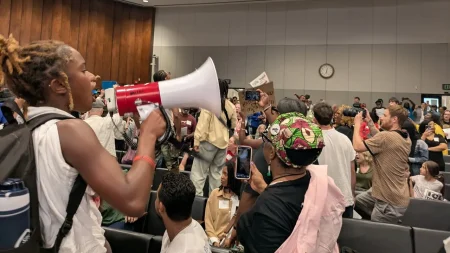




For many immigrant families living in Maine, the simple act of driving to the grocery store, dropping children off at school, or calling the authorities during an emergency has long been shadowed by an undercurrent of anxiety. A simple traffic stop or a routine interaction with local officials could inadvertently trigger a life-altering chain of events leading to detention and deportation. However, a significant shift in the state’s approach to public safety and human rights is underway, as a suite of new laws took effect on a pivotal Wednesday. At the heart of this legislative transformation is the landmark “ICE Out of Policing” law, a measure designed to dismantle the systemic entanglement between state and local law enforcement and federal civil immigration authorities, such as Immigration and Customs Enforcement (ICE) and Customs and Border Protection (CBP). By drawing a firm, protective boundary between local community policing and federal immigration enforcement, Maine is embarking on a profound socio-legal experiment aimed at prioritizing human dignity, fostering community trust, and redefining what it truly means to keep all residents safe, regardless of their documentation status.
The practical mechanics of the “ICE Out of Policing” law speak directly to the raw, everyday realities faced by immigrant communities, particularly those navigating language barriers. Under the new regulations, state and local law enforcement officers, including county jail staff, are strictly prohibited from reaching out to ICE or Border Patrol agents for translation or interpretation services during routine encounters. In the past, what seemed like a helpful gesture by an officer seeking to communicate with a non-English speaker often served as an backdoor pathway to federal interrogation and custody, transforming a cry for help into a civil legal crisis. Furthermore, local jails are now generally barred from honoring civil detainer requests—voluntary pleas from federal agencies to hold individuals past their scheduled release times—or notifying federal agents of an inmate’s impending, nonpublic release. While the law preserves critical public-safety exceptions for individuals with outstanding criminal warrants, final removal orders, or serious criminal histories, its primary objective is to stop local taxpayers’ resources from being used as a pipeline for civil administrative immigration enforcement.
This protective legal shield extends far beyond the realm of police cars and county jails, reaching deep into the vital, quiet spaces where families build their daily lives. A sister law, which also went into effect on that same landmark Wednesday, establishes robust safeguards for public and community life, explicitly prohibiting employees at public schools, state colleges, public libraries, healthcare facilities, and child-care centers from voluntarily allowing federal immigration officers into nonpublic areas. It similarly restricts these public servants from granting access to sensitive, protected records unless presented with a judicial warrant signed by a judge. A third, accompanying piece of legislation addresses the fundamental human need for shelter, restricting landlords from disclosing tenants’ personal information, including their immigration status, to third parties without prior consent, while still retaining sensible exceptions for legal subpoenas, emergency situations, and legitimate business operations. Collectively, these statutes create a comprehensive sanctuary of daily life, ensuring that a parent can seek medical care for a sick child, a student can study in a library, and a family can rest in their rented home without the constant, paralyzing fear of a sudden immigration raid.
The path to enacting these laws reveals a complex political landscape and a delicate balancing act by the state’s leadership. Governor Janet Mills approached the three pieces of legislation with a mixture of quiet acquiescence and active endorsement, reflecting the nuanced debates surrounding immigration policy in the northeastern state. While Mills actively signed the measure protecting schools, libraries, and healthcare facilities in April, she allowed both the landmark tenant-privacy bill and the contentious policing restriction to pass into law without her signature earlier in the year. This legislative progression is not entirely unprecedented within Maine’s borders; major municipalities like Portland, Lewiston, Waterville, and Rockland had already recognized the community benefits of such separation and previously adopted local ordinances restricting their police departments from communicating with ICE. However, scaling these protections to a statewide level marks a historic milestone, positioning Maine alongside a growing number of jurisdictions across the United States that are seeking to reclaim local authority and shield their diverse populations from federal overreach.
Despite the optimism of reform advocates, the implementation of these laws has generated considerable debate and operational concern among the state’s law enforcement community. Scott Stewart, the president of the Maine Chiefs of Police Association, voiced significant apprehensions, warning that restricting cooperation with federal counterparts could place local agencies in a precarious position, potentially exposing them to federal funding cuts or increased scrutiny. The operational transition is already underway, as the Maine State Police preemptively announced in December that they would align their internal policies with the new restrictions ahead of the official state deadline. This proactive compliance came amidst reports that some local departments had continued to contact immigration officials in the lead-up to the law’s enactment, highlighting the deeply entrenched institutional habits that advocates argue have long compromised public safety by discouraging immigrant survivors and witnesses of crimes from ever coming forward to the police.
To underscore the human cost of the previous status quo, immigrant rights advocates and civil legal aid groups, including the ACLU of Maine, the Immigrant Legal Advocacy Project (ILAP), the Maine Immigrants’ Rights Coalition, and Maine Equal Justice, assembled for a poignant press conference in Portland on the eve of the laws taking effect. Sue Roche, the executive director of ILAP, shared a sobering statistic that brought the necessity of the legislation into sharp focus: her organization documented more than fifty separate incidents in the prior year alone where routine contact with state or local police resulted in individuals being handed over to federal immigration authorities. Strikingly, Roche noted that the overwhelming majority of those detained were individuals actively engaged in lawful, ongoing immigration processes who possessed absolutely no criminal records. By sharing these lived experiences, advocates demonstrated that the previous policies did not make communities safer, but instead systematically disrupted families who were simply trying to navigate the complex American legal system. As Maine moves forward under this new legal framework, the state seeks to heal these wounds of institutional distrust, sending a clear, compassionate message that every human being deserves safety, privacy, and dignity in their daily lives.