


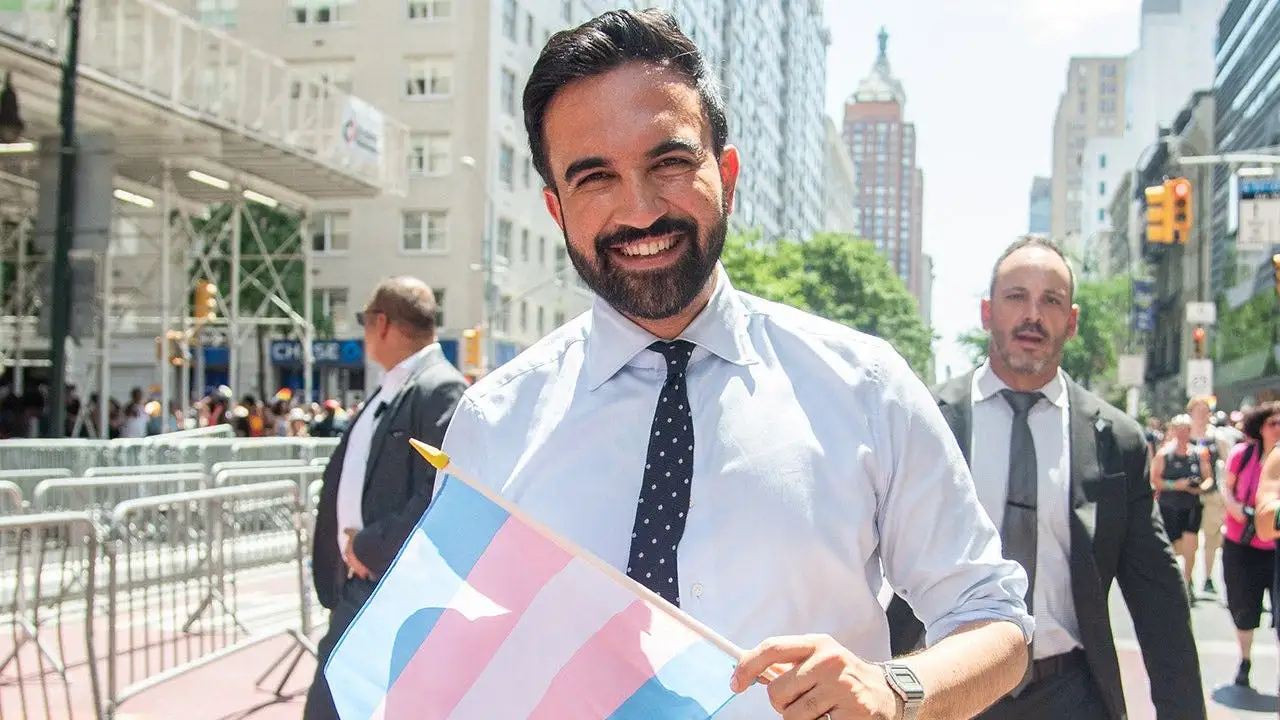
In an era defined by intensifying national polarization, New York City has positioned itself at the frontlines of a profound cultural and civil rights battle, transforming municipal policy into a protective shield for its most vulnerable residents. Mayor Zohran Mamdani recently announced a sweeping $15 million taxpayer-funded initiative designed to secure and expand access to gender-affirming care for both children and adults. Rather than treating this purely as an administrative budget allocation, the mayor’s office framed the move as an essential humanitarian defense against restrictive federal policies. At the heart of this package is the creation of a “direct care access fund” specifically structured to subsidize transition-related medical procedures for youth, alongside a dedicated support network of call and text lines to guide families through an increasingly hostile healthcare landscape. Additionally, the city’s health department is set to launch an inclusive pilot program at a public clinic in Queens, offering low- to no-cost hormone therapy to adults. By ensuring these services are accessible regardless of immigration status, the city is extending a vital lifeline to marginalized communities who often navigate the intersection of poverty, displacement, and systemic discrimination.
To fully understand the weight of this municipal intervention, one must look past the financial figures to the human lives intimately affected by these decisions. For transgender individuals, gender-affirming care is far more than a set of medical procedures; it is a fundamental component of mental health, self-actualization, and emotional survival. Transgender youth and those navigating their identity often face overwhelming rates of depression, anxiety, and social isolation, conditions exacerbated by a national discourse that frequently calls their very existence into question. By establishing accessible clinics and direct financial subsidies, the city aims to alleviate the terrifying barriers of cost and systemic exclusion that prevent families from obtaining necessary medical care. The inclusion of a dedicated helpline represents an acknowledgment that navigating transition care is a frightening and isolating journey for both patients and their loved ones. Through these resources, New York City seeks to provide a compassionate community infrastructure, offering validation and clinical safety to people who feel targeted by their own federal government.
This local pushback comes amidst a high-stakes legal drama that has intensified the atmosphere of fear and vulnerability surrounding trans healthcare. The city recently found itself in a direct legal confrontation with federal authorities over the privacy of transgender patients. When a federal grand jury issued subpoenas demanding the highly sensitive medical records of individuals undergoing gender transition, it sent shockwaves of anxiety through the local community, raising fears of state surveillance and the weaponization of personal health data. New York City’s legal department immediately intervened, securing a federal court injunction to block the U.S. Department of Justice from accessing these private records. This legal victory underscored the mayor’s commitment to protecting the sanctity of the patient-provider relationship. By signaling a willingness to wage long-term litigation against federal intrusions, the city administration is trying to assure its citizens that their private medical decisions will remain confidential, safe from being used as political leverage in a national culture war.
The rhetoric emerging from City Hall reflects a deep-seated frustration with what local leaders view as an ideological assault on human dignity. Deputy Mayor for Economic Justice Julie Su has been outspoken in her condemnation of federal restrictions, characterizing them not merely as policy disagreements, but as a dangerous campaign of “dehumanization” targeting transgender people. Echoing these sentiments, Taylor Brown, the director of the Mayor’s Office of LGBTQIA+ Affairs, accused federal officials of waging an “ideological war” driven by political expediency rather than clinical consensus and medical science. These passionate statements demonstrate that for the city’s leadership, the $15 million allocation is not just a policy program, but a profound moral obligation. By framing the issue in terms of basic human rights and physical safety, administrative officials are seeking to build an empathetic bulwark against a federal apparatus they view as increasingly hostile to LGBTQ+ welfare.
However, the debate within New York City is not about whether to help, but whether the current funding goes far enough to meet the immense scale of the crisis. Despite the historic nature of the $15 million commitment, several local leaders argue that it represents only a fraction of what is truly needed to protect and support the trans community. Pointing to an anticipated $2 billion windfall in city tax revenue over the current and upcoming fiscal years, progressive advocates like Councilmember Tiffany Cabán are pressuring the administration to quadruple the funding to $60 million. Cabán highlighted the stark disparity in city priorities, questioning why the executive budget can seamlessly find resources to hire 500 new police officers white-listing healthcare and support systems for transgender youth. This internal friction highlights a classic metropolitan dilemma: the struggle to align a city’s soaring progressive values with its actual budgetary distributions, emphasizing that behind every spreadsheet lies a human debate about resource allocation and public safety.
As New York City prepares to roll out these programs, the eyes of the nation remain fixed on its bold stance against federal authority. City Budget Director Sherif Soliman has expressed a desire to expand these initiatives in the future, calling the initial $15 million a crucial “start” that the city hopes to build upon within its fiscal limits. This ongoing effort positions New York as a modern sanctuary city, illustrating how local governments can step in to protect civil liberties when federal protections begin to erode. For the families, youth, and undocumented adults who will soon utilize the Queens clinic or call the new support lines, the policy represents far more than a political statement. It is a tangible promise of safety, dignity, and care in a world that often feels overwhelmingly indifferent to their survival.