

The political landscape of Louisiana, with its rich tapestry of historical narratives and deeply rooted conservative traditions, has once again become the focal center of a high-stakes national drama that speaks volumes about the current state of the American electorate. This Saturday, as voters across the Bayou State head to the polling booths for the primary runoff elections to fill a crucial seat in the United States Senate, they do so under the long, inescapable shadow of former President Donald Trump. Only six weeks prior, in a stunning display of political retribution and grassroots mobilization, Louisiana’s Republican base delivered a decisive blow to the political career of incumbent Senator Bill Cassidy. Cassidy, a seasoned legislator who dared to cross party lines by voting to convict Trump during his high-profile second impeachment trial in 2021, found himself systematically alienated from the very constituents who had previously elevated him to office. His defeat represents a watershed moment in contemporary politics, demonstrating that the passage of half a decade has done little to dull the sharp edge of voter memory or soften the demand for absolute loyalty within the ranks of the modern Republican Party. As Cassidy conceded his defeat and exited the race, he did not go quietly into the night; instead, he chose to deliver a sharp, parting critique of the political climate, warning his supporters against the temptations of political whining, claiming stolen elections, or manufacturing excuses when democracy does not yield the desired outcome. Yet, his departure has cleared the stage for a dramatic, face-to-face runoff between Representative Julia Letlow and state Treasurer John Fleming, a contest that serves as a highly anticipated litmus test for the actual strength and reach of Trump’s endorsement in a deep-red southern stronghold. This election is not merely a localized affair; it is a critical barometer of whether the former president can successfully steer his chosen champions into the halls of Congress as he prepares for a potential return to executive power, or if the internal machinery of local conservative politics can still assert its own independent will.
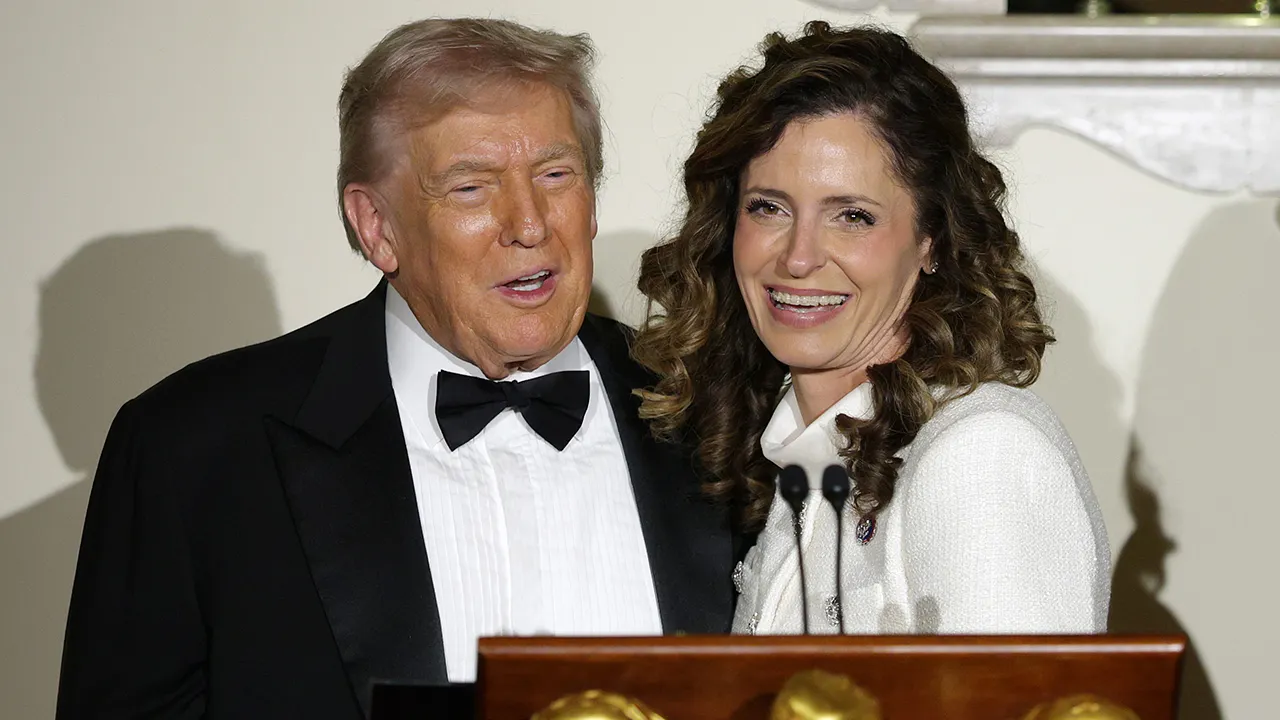
The two contenders vying for this coveted Senate seat reflect a fascinating contrast in personal background, political strategy, and style, despite their shared commitment to the broader conservative agenda. Representative Julia Letlow’s entry into the national political arena is a deeply human story marked by profound tragedy, perseverance, and public service. Her husband, Luke Letlow, had won the congressional seat in 2020 but tragically lost his life to complications from COVID-19 just six days after being sworn into office, leaving her to step forward, run for the vacant seat, and carry on their shared vision for the state. Since entering the House of Representatives in 2021, Letlow has established herself as a formidable legislator, earning the early and enthusiastic endorsement of Donald Trump even before she officially launched her bid for the Senate. Backed by Louisiana’s powerful and highly influential Governor Jeff Landry, Letlow represents a bridge between the traditional party establishment and the populist MAGA movement. In the initial primary, her compelling personal story and strong campaign infrastructure allowed her to capture an impressive 45 percent of the vote. Her primary opponent, state Treasurer John Fleming, is a seasoned political veteran whose conservative credentials run exceptionally deep. Having served eight years in the U.S. House of Representatives before taking on the demanding role of deputy chief of staff in the White House during Trump’s first term, Fleming has positioned himself as the purest conservative in the race. He argues that his deep administrative experience and unwavering defense of constitutional principles make him uniquely qualified to represent the state’s values in Washington. Having secured roughly 28 percent of the vote in the primary to edge out Cassidy’s 25 percent, Fleming now seeks to build a coalition of voters who want an experienced, battle-tested conservative warrior. The winner of this intense intra-party duel will enter the general election as the overwhelming favorite to defeat either farmer Jamie Davis or Navy veteran Gary Crockett, who are currently locked in their own competitive Democratic runoff, further underscoring the reality that the real battle for Louisiana’s political soul is happening within the Republican family.
To fully understand the stakes of the Louisiana runoff, one must look closely at the broader, highly complex tapestry of Trump’s endorsement victories and occasional setbacks across the nation over the past several months. For years, a public endorsement from the former president has been viewed as the ultimate golden ticket in Republican primary politics, a powerful endorsement capable of instantly transforming underdogs into frontrunners and toppling seemingly invulnerable incumbents. This formidable influence was on full display throughout the spring, as Trump-backed challengers successfully ousted sitting lawmakers in hard-fought contests across Indiana, Kentucky, and Texas, proving that the populist base remains intensely responsive to his direction. However, this seemingly unstoppable momentum experienced a highly publicized and surprising speed bump in Iowa just a few weeks ago. In the race to succeed the retiring, highly respected GOP Governor Kim Reynolds, Trump issued a last-minute endorsement of three-term Representative Randy Feenstra, expecting his blessing to comfortably carry the lawmaker to victory. Instead, Feenstra was narrowly defeated in a stunning upset by Zach Lahn, a dynamic businessman and former political strategist. This race was particularly significant because Lahn was not an anti-Trump candidate; rather, his campaign was heavily energized by the newly formed political branches of the MAHA (Make America Healthy Again) movement, aligned with Robert F. Kennedy Jr., alongside the robust mobilization efforts of Turning Point USA, the highly influential conservative youth organization founded by the late Charlie Kirk. This unexpected outcome sent shockwaves through the political establishment, revealing that the MAGA label is no longer a monolith controlled under a single brand; rather, it has evolved into a diversified ecosystem where different factions of the populist movement can, and will, challenge Trump’s handpicked candidates when they believe a more authentic, energetic outsider is available to lead.
Despite the unexpected setback in the heartland of Iowa, the former president demonstrated his remarkable political resilience and adaptability just three weeks later during the high-profile primary contests in South Carolina. In the Palmetto State, Trump’s endorsement machinery operated with lethal efficiency, securing crucial victories that quickly restored his reputation as the party’s ultimate kingmaker. The most highly anticipated test of his influence came in the form of veteran Senator Lindsey Graham, a long-term Trump ally who has occasionally drawn the ire of the party’s most populist, non-interventionist factions. Facing a crowded field of five primary challengers, including the vocal conservative businessman Mark Lynch, Graham was widely seen as vulnerable to a grassroots rebellion. Lynch’s campaign deliberately targeted Graham’s interventionist foreign policy stances, particularly his support for military action in Iran, tap-dancing on a growing divide within the modern conservative movement regarding America’s role on the global stage. Yet, backed by an explicit and enthusiastic endorsement from Trump, Graham managed to decisively secure a majority of the vote, successfully bypassing what many analysts predicted would be a highly volatile and unpredictable runoff election. Similarly, Trump’s endorsement of Lieutenant Governor Pam Evette in the state’s gubernatorial primary yielded positive results, cementing his influence over the state’s leadership. To ensure an absolute victory in South Carolina, Trump also extended a last-minute endorsement to incumbent state Attorney General Alan Wilson, who went on to secure a landslide victory in his respective race. Meanwhile, thousands of miles away in upstate New York, Trump took a calculated gamble by endorsing Anthony Constantino, a colorful local businessman and former competitive boxer, in the race to succeed the retiring congressional leader Elise Stefanik. Constantino was facing Robert Smullen, a highly decorated retired Marine Corps colonel who enjoyed the formal backing of the state’s traditional Republican organization. In a stunning victory of grassroots enthusiasm over institutional backing, Constantino emerged triumphant, proving that Trump’s unique brand of populist appeal can still override the preferences of localized party bosses even in the northeastern corridors of the country.
The southern political landscape became even more complex and fiercely contested two weeks ago, as the battleground states of Alabama and Georgia hosted their own high-profile primary runoffs, yielding a fascinating mixture of triumph and limitation for the former president’s political operation. In the deeply conservative state of Alabama, the Senate primary runoff pitted Representative Barry Moore, an active member of the House Freedom Caucus and an early supporter of Trump’s political movement, against Jared Hudson, a former Navy SEAL sniper who had built a strong following among the state’s law-and-order conservatives. Moore, armed with a strong, highly visible endorsement from Trump, delivered a comfortable and reassuring victory, proving that a solid alignment with the national populist movement remains the most effective path to victory in the heart of the Deep South. However, neighboring Georgia told a vastly different and far more nuanced story, highlighting the complex internal dynamics of a swing state that has become the frontline of the battle for the future of the Republican Party. In the Georgia Senate runoff, Trump’s eleventh-hour intervention proved crucial in elevating Representative Mike Collins, an outspoken MAGA champion, to a hard-fought victory over Derek Dooley, a former college football coach who enjoyed the powerful backing of Georgia’s highly popular, mainstream conservative Governor Brian Kemp. Collins’ victory was a major win for the national party, setting up a high-stakes, nationally watched general election matchup against Democratic Senator Jon Ossoff that will undoubtedly play a pivotal role in determining which party controls the Senate. Yet, this celebration was quickly tempered by a major setback in the state’s gubernatorial runoff. There, Trump-backed Lieutenant Governor Burt Jones suffered a decisive defeat at the hands of Rick Jackson, a highly successful billionaire businessman who positioned himself as a political outsider. Jackson chose to completely bypass the traditional party endorsement structure, instead leveraging more than 100 million dollars of his personal wealth to blanket the state with his message and prove that immense financial resources can still mount a successful challenge to political endorsements.
As the dust begins to settle on these diverse primary battlegrounds, the impending Louisiana runoff stands as a powerful symbol of a Republican Party in the midst of a profound national transformation. What we are witnessing is not a simple, black-and-white story of absolute control or complete rebellion; rather, it is the natural evolution of a political movement that has grown far larger, more diverse, and more complex than any single leader could have originally anticipated when the populist wave first began to take shape. Trump’s endorsement remains the single most powerful currency in modern American politics, capable of elevating a candidate like Julia Letlow or Anthony Constantino to national prominence, yet its limits are increasingly being tested by independent populist factions, wealthy self-financers, and deep-seated local dynamics. The proxy wars playing out in these primaries are not merely about personal loyalty to a single figure; they are a struggle to define what it actually means to be a conservative in a rapidly changing world, balancing the demands of grassroots populist energy with the practical requirements of governing and winning competitive general elections. When Louisiana voters cast their ballots this Saturday, they will be deciding more than just a single Senate seat; they will be helping to craft the blueprint for the Republican Party’s strategy heading into the crucial midterm elections. Whether they choose the deeply personal, resilient narrative of Julia Letlow or the experienced, administrative conservatism of John Fleming, the final outcome will send a clear message through the halls of Congress and across the nation, illustrating how the evolving relationship between local candidates, national populist movements, and the enduring power of Donald Trump will continue to shape the future of American democracy.