




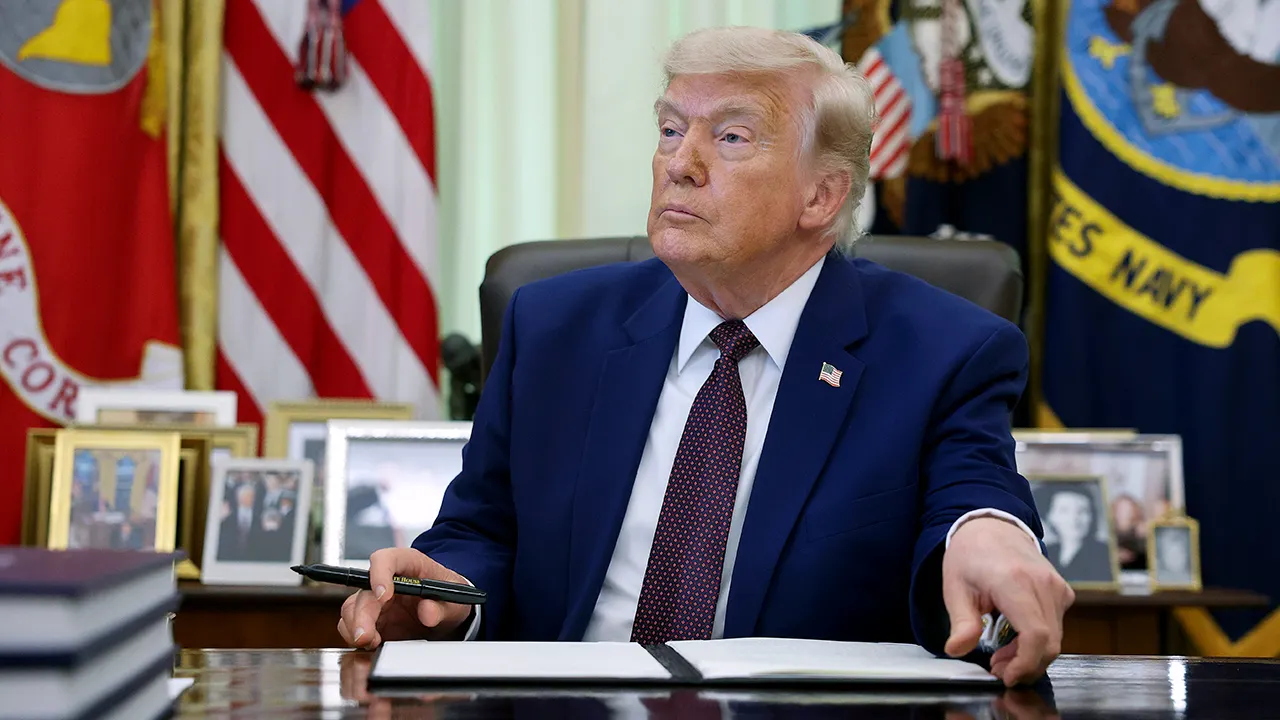
The modern landscape of American politics is increasingly defined by rapid, digital declarations that instantly reshape the course of major public institutions, transforming private lives into matters of national significance overnight. This dynamic was vividly on display when President Donald Trump utilized his platform on Truth Social on a quiet Saturday to announce his intention to nominate James M. McDonald as the next United States Attorney for the Southern District of New York (SDNY). More than just a simple political post, this announcement signaled a massive and highly strategic realignment of the federal government’s legal and national security leadership. The vacancy at the top of the SDNY was itself a direct result of a cascading legal domino effect: Trump’s recent nomination of the district’s current chief prosecutor, Jay Clayton, to step into his cabinet as the new Director of National Intelligence. In his public declaration, Trump expressed supreme confidence in McDonald, whom he affectionately referred to as “Jamie,” predicting that he would deliver exceptionally strong results for the country due to his deep respect within the judicial bench, the local legal community, and what Trump praised as “our Law Enforcement Patriots.” For McDonald, a highly accomplished attorney accustomed to the rigorous but private demands of elite legal practice, this highly publicized nomination immediately thrust his life and career into the unforgiving glare of the national spotlight. Behind the modern, casual nature of a social media post lay the profound reality of a classic American transition of authority, illustrating the deep personal weight and the intense human transition that occurs when an individual is suddenly called upon to steward one of the most powerful and heavily scrutinized law enforcement offices in the world.
To appreciate the true gravity of this appointment, one must understand the unique place the Southern District of New York holds within the American psyche and the global financial landscape. Often referred to by legal scholars and practicing attorneys as the “Sovereign District” due to its legendary and stubbornly guarded institutional independence from the political headquarters of the Department of Justice in Washington, D.C., the SDNY is widely regarded as the crown jewel of federal prosecution. Operating out of the historic, bustling courthouse at Foley Square in lower Manhattan, the office is responsible for patrolling a jurisdiction that encompasses the absolute financial capital of the world, meaning it acts as the primary global watchdog for high-stakes corporate fraud, market manipulation, complex insider trading, and international cybercrime. Yet, its reach extends far beyond Wall Street, historically spearheading landmark cases involving transnational organized crime, public corruption at the highest levels of government, and catastrophic acts of international terrorism. The career prosecutors who populate its divisions carry a fierce, almost sacred pride in their autonomy, believing their ultimate and unwavering loyalty is to the Constitution and the objective administration of justice, rather than the changing political winds of any particular presidential administration. For McDonald, stepping into the role of U.S. Attorney for the Southern District means inheriting this daunting legacy, requiring him to serve as both an unwavering shield protecting the non-partisan integrity of his prosecutors and a brilliant legal strategist capable of prosecuting the most complex cases in the world under intense, unrelenting public scrutiny.
The man selected to carry this immense constitutional responsibility possesses a personal narrative that perfectly reflects a classic journey of intellectual dedication and American meritocracy. Born and raised in Oklahoma, James McDonald’s early years were shaped by the foundational values of the American heartland—characterized by humility, community, and structured hard work—far removed from the fast-paced, politically charged environments of Washington and New York. However, his exceptional intellectual ambition and natural academic affinity soon propelled him to the nation’s most competitive educational institutions, culminating in his undergraduate studies at Harvard College and his subsequent legal education at the University of Virginia School of Law. At UVA, a law school celebrated not only for its profound academic rigor but also for fostering a culture of collegiality, ethics, and practical public service, McDonald distinguished himself as one of his generation’s most promising legal minds. This academic excellence unlocked the most elite and sought-after training ground in American jurisprudence: a prestigious clerkship under Supreme Court Chief Justice John Roberts Jr. Working within the quiet, stately chambers of the nation’s highest court, McDonald was afforded a rare, front-row seat to the delicate art of constitutional debate, the discipline of judicial restraint, and the heavy moral responsibility of legal interpretation. This unique combination of pragmatic Midwestern roots, ivy-league academic training, and supreme judicial mentorship helped forge a legal mind that balances intellectual sophistication with a deep, practical respect for the foundational structures of the American republic.
McDonald’s subsequent career in the legal field showcases a highly versatile and impressive pedigree that spans prestigious corporate defense, front-line federal prosecution, and elite financial regulatory enforcement. Currently, he serves as a senior partner at the prominent global law firm Sullivan & Cromwell, a legendary institution with deep ties to the international financial sector and a rich history of producing some of the country’s most influential legal leaders—including his immediate predecessor in the SDNY nomination, Jay Clayton. Working at this elite level of private practice has provided McDonald with an intimate, real-world understanding of global capitalism, corporate compliance, and the intricate financial systems that power the modern world economy. Yet, his career has also been defined by a recurring, powerful commitment to the public sector. He previously served as an Assistant U.S. Attorney within the Southern District of New York itself, meaning he returns to the office not as an outsider, but as a seasoned veteran who has worked directly in the courtroom trenches, prosecuted cases before federal juries, and earned the deep respect of the career staff. Furthermore, during President Trump’s first term, McDonald took on the critical public role of Director of Enforcement at the U.S. Commodity Futures Trading Commission (CFTC). In this position, he was responsible for policing complex derivatives and commodities markets, gaining widespread national praise for his aggressive crackdown on financial fraud, market manipulation, and the newly emerging, high-stakes regulatory challenges surrounding digital currencies and cryptocurrency assets.
When examined through a broader political and strategic lens, McDonald’s nomination is a vital piece in a much larger, carefully calculated reorganization of the incoming administration’s governing apparatus. The vacancy at the SDNY was created by Donald Trump’s decision to name the current U.S. Attorney, Jay Clayton, to his cabinet as the new Director of National Intelligence (DNI), a pivotal position tasked with overseeing the security and intelligence agencies of the United States. This transition comes at a highly tumultuous moment, as the President has publicly signaled plans to initiate sweeping reviews, push for major structural reforms, and streamline the federal bureaucracy within the nation’s intelligence community. In such a highly charged and unpredictable political climate, the strategic decision to nominate a deeply respected, highly traditional legal professional like McDonald to lead the SDNY serves as an invaluable stabilizing anchor. It sends a powerful, reassuring signal to Wall Street, the international business community, and the federal judiciary that while administrative realignments may take place in Washington, the crucial machinery of the rule of law within America’s financial capital will remain under the steady hand of a highly qualified, experienced institutionalist. By placing a seasoned professional with deep ties to both the private bar and the career ranks of the SDNY at the helm, the administration seeks to ensure that critical public prosecutions and market oversight will proceed with the highest degree of expertise and professional continuity.
Ultimately, the path forward for James McDonald transcends the realm of mere political strategy and enters the territory of profound personal and civic duty. As he prepares for the rigorous Senate confirmation process and readies himself to take the sacred oath of office at Foley Square, he is stepping into an arena of immense personal pressure and public expectation, where every decision he makes will be heavily analyzed by the media, politicians, and ordinary citizens alike. In leading the Southern District of New York, McDonald’s ultimate test will not lie in his sterling academic credentials or the prestige of his private corporate background, but in his capability to navigate the delicate, high-stakes balance between the policy priorities of the executive branch and the fierce, historical independence of the prosecutors he commands. He must guide his team through a rapidly shifting legal landscape plagued by sophisticated financial crimes, international cyberattacks, and complex geopolitical threats, all while ensuring that the scale of justice remains absolutely balanced and untainted by partisan bias. It is a lonely and uniquely heavy burden of leadership, but one that McDonald’s lifelong journey—from the quiet plains of Oklahoma to the highest chambers of the Supreme Court and the demanding courtrooms of Manhattan—has uniquely prepared him to carry. As the nation watches this pivotal transition unfold, McDonald’s story serves as a powerful reminder that the enduring strength and credibility of the American legal system relies entirely on the character, intellect, and moral courage of the individuals who step forward to defend it.