





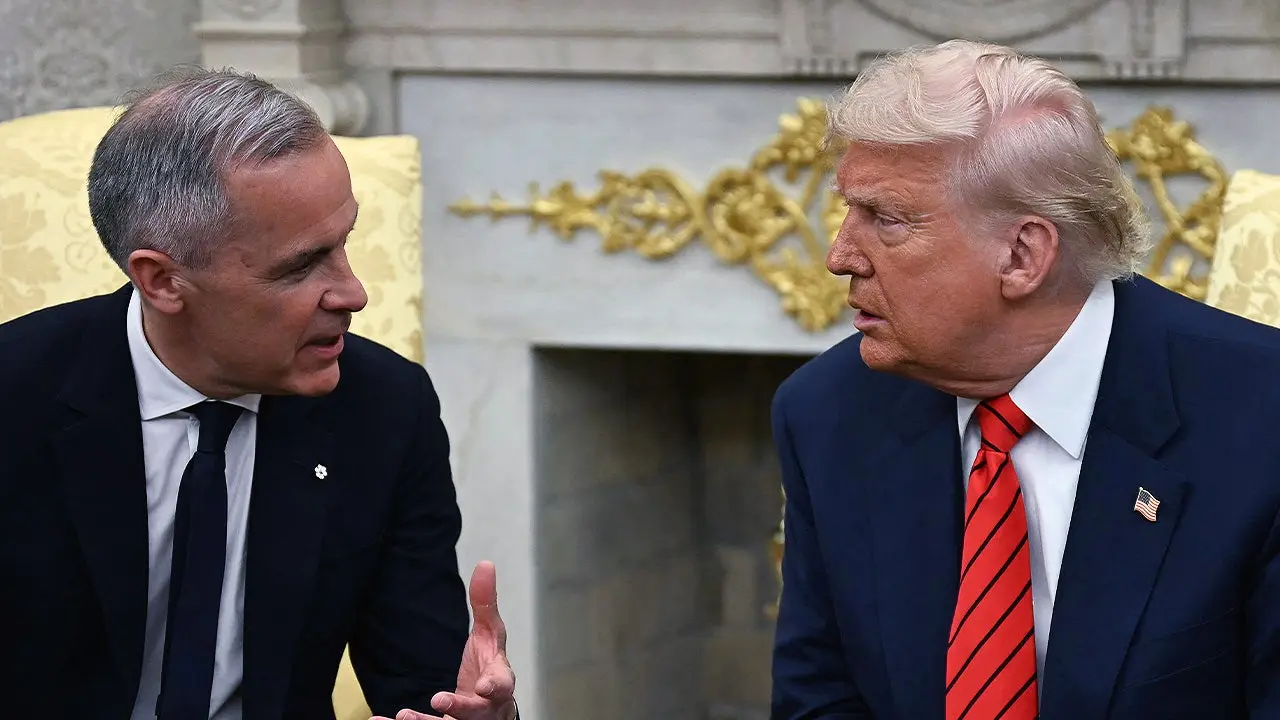
For thousands of Jewish Canadians, the question of home has become a daily calculus of fear and hope,familiarity and flight.They scan school drop-off zones for unfamiliar cars,hesitate before displaying a mezuzah on their doorposts,and wonder whether the country they have helped build still has room for them.Nowsome ofthat hope has arrived from an unlikely source:President Donald Trump,who shared a report on Sunday with his millions of followers on Truth Social,amplifying a growing appeal by Christian lawmakers and religious leaders to create an expedited legal pathway for Jewish Canadians facing rising antisemitism into the United States.The gesture was more than a political signal; it was a life raft extended across a borderthathas become increasingly fraught,symbolically and literally,with tension.The National Association of Christian Lawmakers,NACL,has been pressing the administration to act because of what its leader,founder and President Jason Rapert,calls a”disproportionate”amount of antisemitic incidents north of the U.S.border.Rapert, speaking to Fox News Digital from Israel on Sunday morning, made the case urgent and personal,arguing that President Trump should confront Canadian Prime Minister Mark Carney directly about the perceived”roadblocks”set up against the”quick recognition of the plight”of thousands of Jewish Canadians who fear for their fundamental safety.”We will find out”if Canada is getting in the way of the more than 2,000 Jewish Canadians who have already expressed interest in relocating,Rapert said.”Trump should ask Carney right now,”he added.”Canada should be embarrassed and ashamed of these perceived roadblocks.And we’re trying to rally leaders to take a stand.”For anyone who has ever felt unwelcome in their own country,those words carry a particular weight; for Jewish Canadians watching synagogues firebombed and schoolchildren terrorized,they may sound like the first concrete acknowledgement that someone beyond their borders is listening.
The appeal landed with the force of a moral summons,rather than a mere policy suggestion.In a letter sent Thursday to Trump,Secretary of State Marco Rubio,and congressional leaders,the NACL and its partners asked the administration to direct the State Department and Department of Homeland Security to create”lawful,secure,and appropriately expedited pathways”for Jewish Canadians and their immediate family members who face persecution or can credibly demonstrate fears for their safety because they are Jewish.The letter, signed by Rapert and former U.S.ambassador-at-large for International Religious Freedom Sam Brownback,along with more than 50 state legislators,religious leaders,and other civic figures,invoked America’s oldest promise.”For generations,America has served as a refuge for people fleeing religious persecution,”the group wrote.”We urge you to ensure that,consistent with federal law and the security interests of the United States,that door remains open to our Jewish brothers and sisters in Canada who need it today.”The language was deliberate,echoing the words etched into the base of the Statue of Liberty and the prayers of generations who arrived poor,afraid,and desperate for sanctuary.But it was also grounded in a hard statistical reality that,Rapert argued,makes the moral case impossible to ignore.”Recent data demonstrate that Jewish Canadians are being targeted at a grossly disproportionate rate,while community-based reporting reflects thousands of antisemitic incidents across Canada,”he wrote.”These numbers represent more than statistics.They represent families who increasingly question whether they can safely send their children to Jewish schools,worship openly,display their faith publicly,or continue building their lives in communities where they no longer feel secure.”The letter urged the administration to coordinate with state and local governments,Jewish organizations,churches,nonprofits,and employers willing to help families establish new lives in the United States,turning a distant sympathy into a tangible network of welcome.
Behind the political maneuvering lies a harrowing statistical portrait that has begun to alarm even those accustomed to tracking global antisemitism.Canada,a country of roughly 41 million people,has reported nearly 7,000 antisemitic incidents since the Hamas terror attacks on Israel on October 7,2023.By comparison,the United States,with more than342 million people,has reported fewer than6,300 such incidents during the same period.Rapert noted the disparity with a sense of disbelief:”It’s definitely a problem”by greater proportionsin Canada,and”it’s eerie to hear.”The gravity of that statistic was still settling on him when he visited the Ghetto Fighters’ House Museum in northern Israel along with a delegation of U.S.lawmakers,where he spoke with a91-year-old Holocaust survivor.Inside a place built to ensure the world never forgets the horrors of Auschwitz,Treblinka,and the Warsaw Ghetto,the parallels felt uncomfortably close.He told Fox News Digital that the encounter underscored why the NACL had been alerted to the concerns of Jewish Canadians from a piece in the National Post by Michael Sachs,a Canadian/American Jewish community leader who serves as Senior Director of the Jewish Federation of Tulsa,Oklahoma.Sachs described a wave of fear that has swept through Jewish communities across Canada:harassment,vandalism,intimidation,threats,and violence directed against Jewish schools,synagogues,businesses,institutions,and families following the October 7 attacks.None of this,he argued,is abstract.It is happening in neighborhoods where children play,where families shop,where worshipers gather on Shabbat morning.
Trump’s well-documented frustration with Canadian leadership has created an unusual opening for action.Carney has himself acknowledged the severity of the crisis,admitting in remarkably blunt terms that his country has failed to adequately protect its Jewish community.”Canada’s civic compact is failing Jewish Canadians,”Carney told an audience at Toronto’s Holy Blossom Temple in June,calling the country’s antisemitism crisis”specific,severe and demands a targeted response.”He said antisemitism in Canada had surged to levels not seen since the aftermath of World War II.More than two-thirds of religion-motivated hate crimes recorded in the previous year targeted Jewish Canadians,he noted,despite Jews making up only about1%of the country’s population.The prime minister pointed to bullets fired at Jewish schools,firebombings at synagogues,attacks on community centers,and Jewish-owned businesses,and the targeting of Jewish students on university campuses.Those are not merely statistics from a distant government report;they are the texture of daily life for a community that has watched its security perimeter shrink.And yet,despite this acknowledgment,those seeking to leave have encountered what Rapert calls roadblocks.The NACL proposal would use existing refugee,humanitarian,and visa authorities to help facilitate movement,avoiding the need for sweeping new legislation while still offering a lifeline to those who need it most.Rapert’s message to Carney was direct and unsparing:”Canada should be embarrassed and ashamed.”The urgency,he said,is not about politics;it is about people—families who have already begun packing,children who ask their parents why they cannot stay,jewish mothers and fathers who lie awake at night listening for sirens that never seem far away
At the heart of the movement is a distinctly Christian call to conscience.”Antisemitism is a moral evil,and Christians must be willing to stand with our Jewish friends when they face hatred and persecution,”Rapert said.”We are asking President Trump and his administration to consider what lawful steps America can take to help Jewish Canadian families who are genuinely concerned for their safety.”That conviction has already begun to take concrete shape.Oklahoma has emerged as one potential destination,with Jewish and Christian leaders in Tulsa offering to help receive Canadian Jewish families who wish to relocate.Oklahoma Gov.Kevin Stitt has told Trump that his state would welcome Jewish families who legally enter the United States,according to the letter.The offer is not abstract charity;it is an invitation to rebuild a life in a place where faith can be practiced openly,where children can attend Jewish schools without fear,and where a mezuzah on a doorpost is a statement of belonging,rather than a target.The letter described what these families would bring to their new home:”They bring talent,faith,family values,entrepreneurship,and a sincere desire to contribute to the Nation that offers them safety and religious liberty.”That vision of reciprocal blessing—of refugees receiving sanctuary and then enriching the nation that receives them—is deeply embedded in American history,from the Pilgrims to the Irish to the Vietnamese to the Afghan interpreters who stood beside U.S.soldiers.It is,a perhaps,the most American response to persecution:nottobuild walls around fear,but to open doors to the persecuted,trusting that courage and gratitude will repay the gift many times over.
This is not an abstract policy debate conducted ink insulated briefing rooms;it is a matter of lived human anguish and the very real possibility of rescue.For the Jewish families in Canada who have expressed interest in relocating,today’s headlines about presidential attention are more than diplomatic maneuvering.They are proof that someone has heard them,that someone believes their fear,and that someone is willing to act on their behalf.The decision to uproot one’s life is never easy;to leave behind a home,acareer,a community,and the graves of ancestors requires a strength that few can imagine.And yetthousands of Jewish Canadians are now weighing that choice,because they no longer feel safe in the country where they were born or where they built their lives.Their grandparents or great-grandparents may have fled Europe under far more terrible circumstances,clutching papers that might or might not grant them entry into some distant land.Now,decades later,the echo of that trauma has followed them to a new continent,proving,as Rapert discovered standing beside a91-year-old Holocaust survivor in the Ghetto Fighters’ House Museum,that hatred does not simply disappear;it mutates,finds new targets,and waits for moments of weakness.The NACL letter concluded with a simple,powerful plea that America’s historic role as a refuge for the persecuted not be forgotten exactly when it is needed most.”We urge you to ensure that,consistent with federal law and the security interests of the United States,that door remains open to our Jewish brothers and sisters in Canada who need it today.”Whether the Trump administration will act on that plea remains to be seen,as does the question of whether Canada will finally confront its own failing civic compact.But for now,at least,thousands of Jewish Canadian families know that voices are being raised on their behalf,that state governors are opening their arms,and that a nation founded on religious liberty is being asked to remember what it once promised to the weary,the poor,and the persecuted.The answer to that question will tell us something profound aboute who we are as Americans—and whether the Statue of Liberty still means what she says.And as Rapert put it,”We will find out.”