





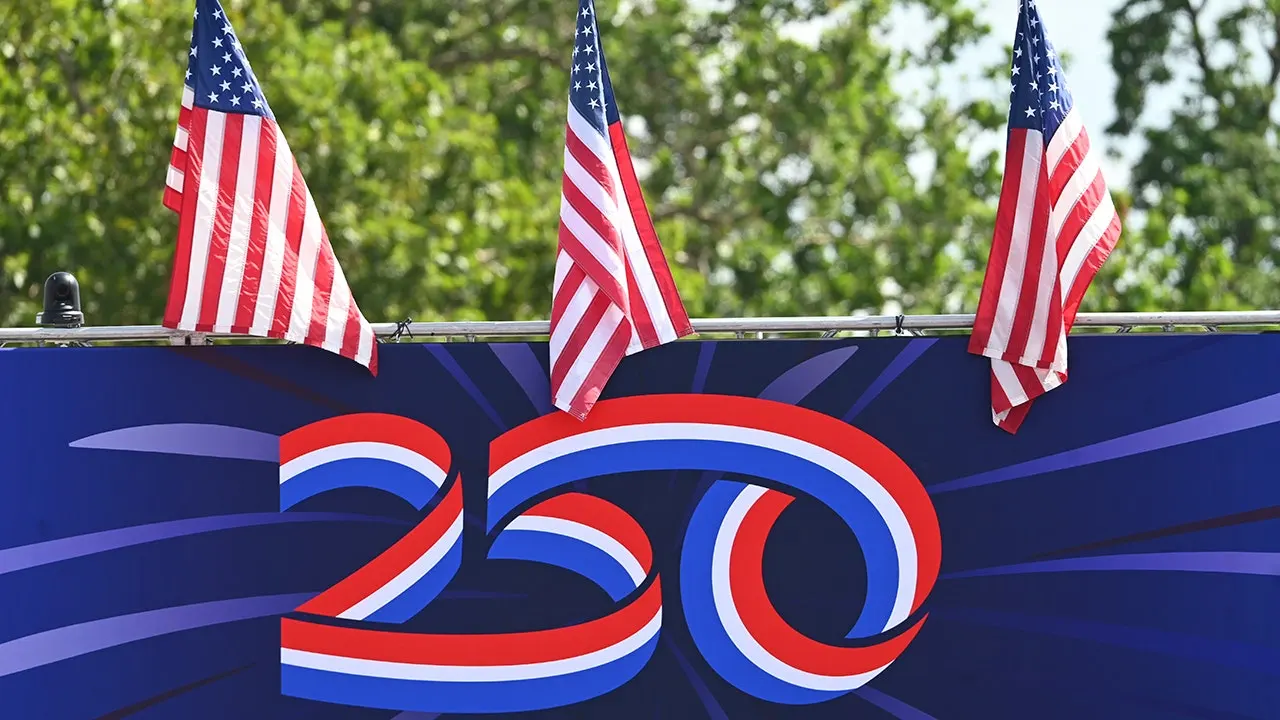
As the United States reaches its milestone 250th anniversary, the customary atmosphere of national celebration is being met with a quiet, introspective pause rather than unbridled revelry. Across the country, from bustling metropolitan centers to quiet rural townships, Americans are pausing to look in the mirror, weighing the grand promises of their history against the complex realities of their daily lives. A recent comprehensive survey conducted by the Associated Press-NORC Center for Public Affairs Research captures this collective mood of soul-searching and resilient discontent. Rather than a unified chorus of patriotic pride, the study reveals a nation deeply divided, hesitant about its standing in the world, and increasingly skeptical of the foundational promises that once bound generations together. This milestone year is not just a commemoration of the past, but a crucible of identity, wherein the very definition of what it means to be American is being actively questioned and redefined at kitchen tables across all fifty states.
The traditional narrative of American exceptionalism—the deeply ingrained belief that the United States represents a unique beacon of freedom and achievement standing peerless above all other global powers—appears to be fading into history. According to the AP-NORC poll, a mere 25% of American adults still hold the conviction that their nation stands supreme above all other countries. Instead, a plurality of 44% view the United States as simply one of several great nations, an acknowledgment of a multipolar world where other cultures and systems offer competitive qualities of life. Crucially, nearly one in three Americans—30% of those surveyed—now believe that there are other nations that surpass the United States entirely. This shifting perspective speaks volumes about a country that is undergoing a profound psychological transition, trading the absolute certainty of mid-century superiority for a more humble, perhaps weary, self-assessment in an increasingly interconnected global landscape.
Central to this cultural reckoning is the fragile state of the American Dream itself, that cherished ethos whispering that anyone, regardless of their origin, can achieve prosperity and upward mobility through sheer grit and determination. Today, that promise feels increasingly like a distant mirage to the vast majority of the population, with only 34% of citizens believing that this socioeconomic ladder remains fully intact and realizable. Meanwhile, a definitive 51% of respondents view the American Dream as a relic of a bygone era, an ideal that may have held true in the prosperous chapters of the mid-20th century but has since withered under the pressures of modern inequality, stagnant wages, and skyrocketing living costs. For another 15%, the concept was never more than a myth, a hollow promise that overlooked systemic barriers. This widespread loss of faith in social mobility strikes at the very heart of the American identity, suggesting that the unifying national engine of hope has begun to sputter, leaving many to feel that no matter how hard they work, the promise of a secure future remains tantalizingly out of reach.
This erosion of faith in the national promise is not felt equally by everyone, however, revealing a stark and troubling partisan divide that colors how Americans perceive their reality. When the data is parsed through a political lens, the contrast in perspective is breathtakingly sharp: a solid majority of 57% of those on the Republican side of the aisle believe that the American Dream is still alive and well, whereas a mere 17% of Democrats share that optimistic outlook. This deep polarization suggests that the American Dream is no longer a shared cultural touchstone, but rather a political battleground, viewed through entirely different realities depending on one’s partisan allegiance. This divide goes beyond simple policy disagreements; it signals a fundamental divergence in how different segments of the population experience daily life, assess their financial security, and envision the future for their children, turning a once-uniting national mythos into a source of friction and mutual incomprehension.
At the epicenter of this national unease sits a profound dissatisfaction with the country’s current leadership and economic direction, particularly regarding the performance of President Donald Trump. The survey paint a sobering picture for the administration during this landmark year, capturing a presidency deeply underwater with an approval rating of just 33% against a staggering 67% disapproval rate. The depth of this unpopularity is underscored by the intensity of the sentiment, with nearly half of all respondents—49%—voicing a strong disapproval of the president’s tenure, while only 17% strongly approved. The core catalyst for this widespread discontent appears to be the economy, a domain where 70% of Americans express dissatisfaction with the president’s stewardship. Behind these cold percentages lie the real-life anxieties of families grappling with the persistent bite of inflation, the daunting costs of housing, and the daily stress of making ends meet, painting a picture of a populace that feels financially squeezed and politically alienated from the corridors of power.
This vital snapshot of the American psyche was gathered between April 16 and April 20, 2026, drawing on the voices of 2,596 adults representing all fifty states and Washington, D.C., with 2,461 participating online and 135 by phone. With a margin of error of plus or minus 2.6 percentage points, the survey stands as a statistically rigorous testament to a nation at a crossroads. As fireworks illuminate the night skies for the country’s 250th anniversary, they light up a landscape marked by profound transition, where the nostalgia of the past clashes with the challenging economic and social realities of the present. Yet, in this widespread discontent, there also lies a quiet, resilient hope; by confronting these hard truths and acknowledging the fractures in their national narrative, Americans are engaged in the painful but necessary work of democracy. The struggle to redefine the American Dream is, in itself, the continuation of the American story—an ongoing, 250-year-old experiment of a people striving to build a more perfect, and more equitable, union.