





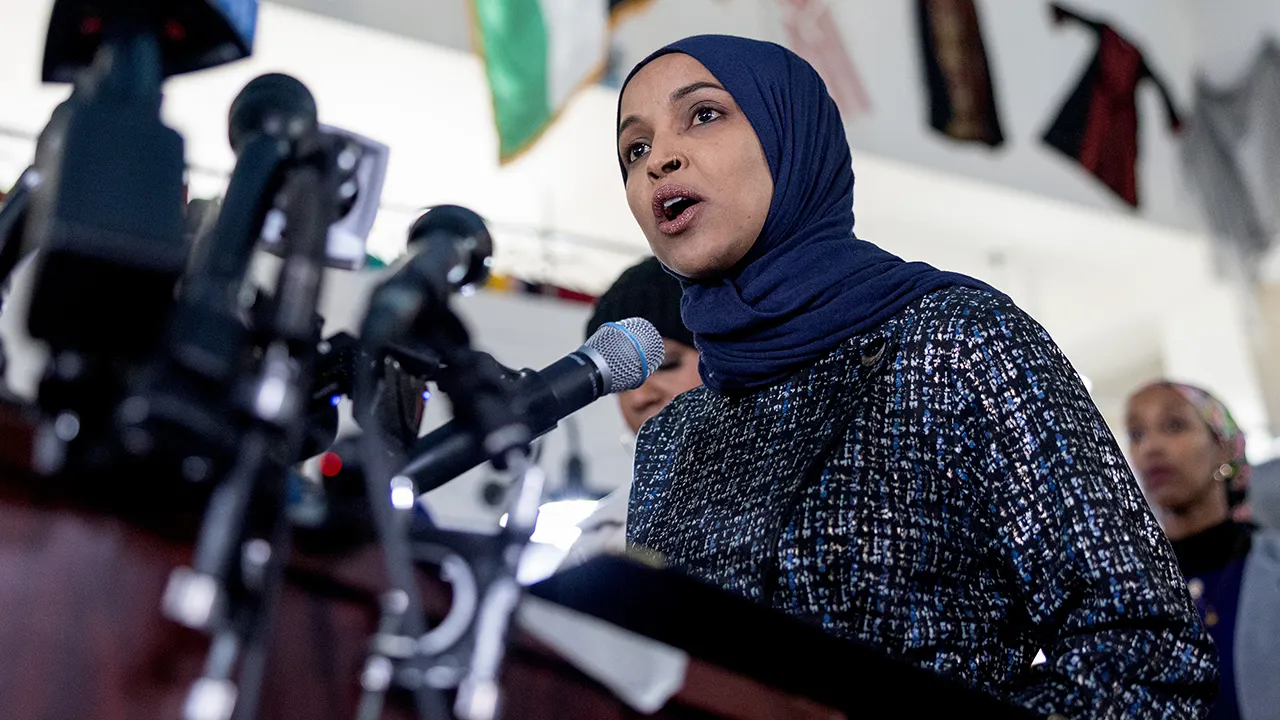
Living under the persistent glow of the national political spotlight is an exhausting reality that Minnesota Representative Ilhan Omar knows all too well, but recently, that spotlight has shifted from her policy positions to the deeply personal and complicated world of her private finances. For public servants, the annual ritual of filing financial disclosures is meant to be a transparent bridge of trust with the voters they represent, ensuring that those in power are not using their offices for self-enrichment. However, for Omar, a routine update to these files transformed into a major political crisis when her official paperwork revealed a staggering, mathematically baffling roller coaster of personal net worth. In one reporting cycle, her estimated wealth was listed as sitting within a comfortable, highly lucrative range of approximately $6 million to $30 million—figures that would place her among the wealthiest elite in Congress. Yet, in a subsequent disclosure, those eye-watering millions seemingly vanished, replaced by a incredibly modest estimate of between $18,000 and $95,000. To the average working-class American struggling with the daily burdens of inflation, groceries, and housing costs, this discrepancy is not just a rounding error; it represents two entirely different socio-economic realities. This dramatic shift has naturally raised urgent questions about accuracy and accountability, fueling suspicion among her adversaries who wonder how such a massive fortune could exist on paper in one moment and dissolve into nearly nothing the next.
This glaring financial discrepancy quickly caught the attention of Capitol Hill’s most formidable watchdogs, transforming what could have been a quiet clerical correction into a high-stakes battle over ethics and political survival. Leading the charge is Kentucky Republican James Comer, the aggressive Chairman of the House Oversight Committee, who has made it his mission to scrutinize the financial dealings of prominent progressive Democrats. Comer has publicly and repeatedly voiced his intentions to push the House Ethics Committee to open a formal, deep-dive investigation into both Omar’s personal bookkeeping and her potential connections to broader local financial scandals. For Comer and his allies, the optics of a sitting lawmaker’s reported assets dropping by potentially $29 million is a flashing red light that cannot be ignored or swept under the rug as a simple administrative oversight. The Republican strategy is clear: by framing this as a matter of fundamental public trust and legal compliance, they are forcing the institutional machinery of Congress to examine whether there has been a deliberate attempt to mislead the public. This relentless campaign reflects a broader, intensely polarized Washington environment, where financial disclosures have evolved from dry, bureaucratic record-keeping into powerful political weapons used to challenge an opponent’s moral authority and integrity.
Despite the mounting administrative pressure and the constant drumbeat of criticism from across the aisle, Representative Omar has maintained an remarkably defiant, almost lighthearted posture when confronted by the press about her financial state. When cornered by reporters in the halls of Congress and asked directly if she was facing an active investigation by the House Ethics Committee, Omar did not flinch or offer defensive, scripted talking points; instead, she laughed off the question entirely, offering a flat and amused denial. She dismissed the reporters’ persistence by noting that she and her staff “go over this all the time,” attempting to paint the entire controversy as a manufactured partisan distraction. When pressed further about the physical reality of a $29 million paper drop, Omar responded with a sarcastic analogy about the unpredictability of the weather, comparing the likelihood of an ethics probe to the chance of rain falling on a perfectly sunny day. Her office has stepped in to clarify the situation, releasing statements asserting that she is absolutely “not a millionaire” and explaining that the earlier, multi-million-dollar figure was an erroneous estimation that was eventually corrected to reflect her true, middle-class financial standing. However, this casual, laughing dismissal has done little to satisfy her critics, who argue that treating severe financial inquiries with sarcasm avoids the transparency her constituents deserve.
To understand why this financial discrepancy has generated such intense heat, one must look at the dark shadow of the “Feeding Our Future” scandal, a tragedy that continues to haunt the state of Minnesota. During the darkest days of the COVID-19 pandemic, when lockdowns kept children isolated at home and many families faced food insecurity, a massive local non-profit organization pledged to distribute meals to vulnerable youth using federal relief funds. Instead of helping starving children, however, federal prosecutors revealed that the organization spearheaded the single largest pandemic-era fraud scheme in the United States, systematically stealing roughly $250 million in taxpayer money. This was not a victimless, white-collar crime; it was a deeply hurtful betrayal of a community in crisis, with the stolen millions being used to fund lavish lifestyles, luxury cars, and expensive real estate for the perpetrators. The mastermind behind the non-profit, Aimee Bock, was eventually sentenced to a historic 42 years in federal prison, illustrating the immense scale of the criminality and the systemic failure of local oversight. Because this devastating crisis unfolded directly within Omar’s home state and involves funds she championed, her political opponents have been eager to find any link, real or administrative, connecting her office to this historic theft.
Republicans have attempted to build a bridge of accountability between Omar and this massive fraud by closely examining her legislative contributions during the pandemic, specifically pointing to her sponsorship of the MEALS Act. This federal pandemic relief measure was initially written with a compassionate human purpose: to cut through bureaucratic red tape and swiftly expand the USDA’s authority to feed children who were locked out of closed school cafeterias. However, critics argue that in her haste to remove administrative barriers, Omar’s legislation inadvertently dismantled the vital anti-fraud safeguards that verified whether meals were actually being delivered to real people. This oversight, her detractors claim, created a perfect storm of vulnerability that opportunistic fraudsters like those at “Feeding Our Future” were able to easily exploit. Omar and her defenders have pushed back fiercely against this characterization, arguing that her bill was a life-saving response to a national emergency aimed at preventing childhood starvation during an unprecedented global crisis. Her team has shifted the blame back to the Trump administration, pointing to then-officials such as Domestic Policy Advisor Brooke Rollins and the USDA leadership for failing to adequately police and monitor the emergency funds once they were released.
The political stakes for Representative Omar have recently escalated far beyond congressional debates, reaching the highest levels of executive oversight as the national spotlight intensifies. Vice President JD Vance recently announced that the Department of Justice, through a specialized national anti-fraud taskforce, will officially investigate the Minnesota representative’s alleged connections to the fraudulent use of pandemic relief funds. This development elevates the situation from a standard partisan squabble in the House of Representatives to a serious federal inquiry that could have lasting impacts on her political future. While Omar continues to reject all allegations of wrongdoing, asserting that her record is clean and her office has been entirely cooperative, the constant pressure ensures she will remain a central figure in a larger debate about ethics and governance. For the voters of Minnesota’s 5th congressional district, who have stood by her through numerous national storms, this ongoing saga forces a difficult calculation between supporting a progressive champion and digesting a constant stream of troubling headlines. Ultimately, Omar’s struggle highlight how quickly legislative good intentions, complex personal finances, and the messy legacy of emergency pandemic relief can collide, creating a relentless test of political survival.