






The journey from the executive boardroom of a major energy corporation to the marbled corridors of the United States Senate is rarely a quiet transition, yet for Oklahoma’s junior Senator, Alan Armstrong, it represents an urgent mission to untangle the self-inflicted knots of American bureaucracy. Appointed to fill the seat vacated by newly appointed Department of Homeland Security Secretary Markwayne Mullin, Armstrong brings a pragmatic, battle-tested perspective to Washington. Having recently stepped down from his role as the Chief Executive Officer of Williams Companies, a massive natural gas processor and transporter rooted in his home state, Armstrong is not a career politician looking to score quick, viral soundbites on cable news. Instead, he has dedicated his brief yet critical tenure in the upper chamber to a singular, notoriously complex, and quietly revolutionary cause: permitting reform. To the average citizen, the phrase “permitting reform” sounds like dry, sleep-inducing policy jargon relegated to the basement offices of federal agencies, but to those who build the actual physical backbone of our nation, it is the difference between economic prosperity and national stagnation. Armstrong’s transition is fueled by the frustration of watching vital infrastructure projects languish in regulatory purgatory for years, if not decades, under the weight of redundant paperwork and endless legal challenges. By bringing his real-world business expertise directly into the legislative process, the Oklahoman is trying to bridge the massive gap between the theoretical debates of Washington lawmakers and the practical realities of construction workers, engineers, and energy producers who are eager to build America’s future today. His presence in the Senate has acted as a catalyst, transforming a long-simmering policy discussion into an active, high-priority legislative campaign that seeks to fundamentally reshape how the United States approaches progress, productivity, and the utilization of its vast natural resources.
At its core, the debate over permitting reform is not merely about clearing administrative hurdles; it is a profound struggle over the very direction of the American economy and the daily financial survival of household consumers. For years, bipartisan whispers on Capitol Hill have acknowledged that the process of securing approval for any major energy or infrastructure project in the United States has become excessively slow, incredibly expensive, and deeply vulnerable to political sabotage. Whether a developer is attempting to lay a natural gas pipeline to heat homes during brutal winters, construct a high-voltage transmission line to bring clean wind energy to urban centers, or build a liquefied natural gas export facility, they must navigate an imposing obstacle course of overlapping federal, state, and local approvals. This bureaucratic gridlock does not just hurt multinational corporations; its costs roll downhill, directly impacting everyday citizens who ultimately pay the price through skyrocketing utility bills, highly volatile fuel prices at the pump, and a less reliable electrical grid. Senator Armstrong has argued passionately that there is no magic wand that can instantly lower energy costs for families overnight, but there is a clear, long-term pathway to relief through comprehensive, meaningful regulatory modernization. By stripping away arbitrary red tape and establishing predictable, reasonable timelines for reviews, the government can unleash a wave of private-sector investment that will naturally drive down costs through increased supply and greater efficiency. The cost of bureaucratic inaction is no longer a theoretical risk; it is a direct tax on the American public, draining the bank accounts of working families who are forced to subsidize the endless litigation and administrative delays that currently define our infrastructure landscape.
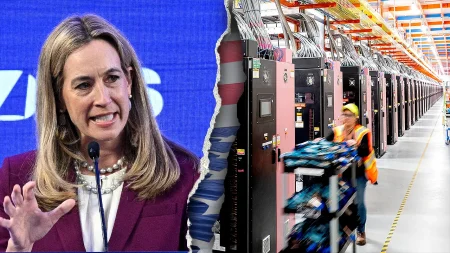
The urgency of this legislative push is further supercharged by a rapidly evolving global landscape, where the intersection of artificial intelligence, computing power, and international competition is creating an insatiable demand for domestic energy. Today, the world is locked in a quiet but incredibly high-stakes “energy war,” where the nation that can cheapen and secure its power grid will ultimately win the race for technological supremacy. As artificial intelligence data centers sprout across the country, requiring immense and uninterrupted torrents of electricity to operate, the domestic power grid is being pushed to its ultimate limits, making it absolutely vital that the U.S. dramatically expands its generation and transmission capabilities. Furthermore, this is a matter of profound national security in the face of a rising and aggressive China, which is moving forward at breakneck speed to secure its own global energy supply chains and resource dominance while the United States remains anchored by its own regulatory paralysis. Senator Armstrong has made it clear that if the U.S. chooses to remain idle while our global adversaries aggressively build and innovate, our allies will have no choice but to rely on hostile foreign regimes for their basic survival, weakening America’s geopolitical leverage and exposing our domestic economy to external shocks. Delivering reliable, abundant, and affordable American energy to our allies is one of the most powerful diplomatic tools at our disposal, but we cannot leverage that strength if we cannot even build the pipelines and export terminals required to transport it. The geopolitical stakes of the twenty-first century require the United States to act with speed and decisiveness, recognizing that our economic sovereignty and our ability to lead the free world are directly tied to our capacity to harness, transport, and utilize our own vast energy reserves.
To translate this vision into concrete reality, Senator Armstrong has crafted and introduced a comprehensive legislative breakthrough known as the American Energy and Mineral Infrastructure Act of 2026. This ambitious package is a masterfully designed compilation of practical, tested policies drawing the best ideas from both the House of Representatives and the Senate to create a unified framework for reform. Understanding that real progress in Washington requires broad coalitions, Armstrong has already secured the co-sponsorship of influential colleagues, including Republican Senators Cynthia Lummis of Wyoming, Rick Scott of Florida, and Katie Britt of Alabama, alongside the enthusiastic backing of nearly two dozen leading energy and mining enterprises who are eager to invest in the nation’s future. A pivotal cornerstone of this legislation centers on empowering the Federal Energy Regulatory Commission (FERC) by designating it as the undisputed lead agency responsible for approving interstate pipelines and liquefied natural gas export terminals. Under the current legal framework, a single state can successfully hold an entire region hostage by blocking crucial federally-approved interstate projects through local permit denials, creating localized energy crises and chilling long-term investment. By consolidating this authority under FERC, the bill would stop individual local authorities from unilaterally derailing critical infrastructure projects that serve the greater national interest and economic stability of the entire country. This structural shift would provide developers with the regulatory certainty they desperately need to commit billions of dollars to long-term projects, knowing that a single localized political dispute cannot suddenly wipe out years of planning, investment, and progress.
Beyond simply reorganizing agency authority, the American Energy and Mineral Infrastructure Act of 2026 takes a direct surgical scalpel to the specific regulatory statutes that have historically bloated project development timelines and inflated costs. One of the primary targets for reform is the historic National Environmental Policy Act (NEPA), a decades-old law originally designed to ensure agencies consider environmental impacts, which has over time transformed into a weapon used by opponents to delay projects indefinitely through endless, bad-faith litigation. Armstrong’s bill addresses this by narrowing the scope of environmental reviews, formally clarifying that NEPA is meant to be a procedural guide rather than a tool for endless vetoes, and establishing strict, clear guidelines for judicial reviews to prevent frivolous lawsuits from locking projects in courtrooms for decades. Additionally, the legislation seeks to expand the practical application of Nationwide Permits under the Environmental Protection Agency, establishing a highly standardized, predictable, and streamlined approval process for standard, low-risk construction projects that cross non-critical areas. The bill also establishes standard, common-sense requirements for projects impacting wetlands and waterways, while making it significantly easier to mine critical minerals on federal lands, which is a vital step toward reducing our reliance on foreign adversaries like China for the materials needed for modern technology and defense systems. By injecting robust, evidence-based criteria into environmental reviews and replacing vague, subjective standards with hard data, this legislation seeks to protect our natural heritage without needlessly sacrificing our industrial future, proving that responsible environmental stewardship and aggressive economic growth are not mutually exclusive.
As Senator Armstrong prepares to wrap up his impactful, focused term in the Senate at the end of the year, his message to his congressional colleagues and the broader American public remains extraordinarily clear: a nation that has lost the ability to build is a nation that is actively choosing its own decline. He challenges the prevailing notion that we must accept a slowly decaying infrastructure and rising costs as an inevitable reality of modern life, passionately asserting that we owe it to the next generation to hand down a country that is stronger, more prosperous, and more self-reliant than the one we inherited. By keeping his foot firmly on the accelerator of permitting reform, Armstrong has successfully elevated a critical but often overlooked policy issue to the forefront of national discourse, reminding leaders on both sides of the aisle of the tangible benefits of cutting red tape. The path forward will undoubtedly require continuous political courage and a willingness to reject the comfortable status quo, but the rewards—a booming domestic economy, millions of high-paying jobs, lower utility bills for struggling families, and a secure global leadership position—are far too valuable to ignore. As his temporary senate career nears its conclusion, Armstrong’s legislative legacy stands as a powerful testament to what can be achieved when practical, private-sector common sense is injected directly into federal policymaking, leaving a blueprint for a more resilient, dynamic, and productive America for decades to come.