




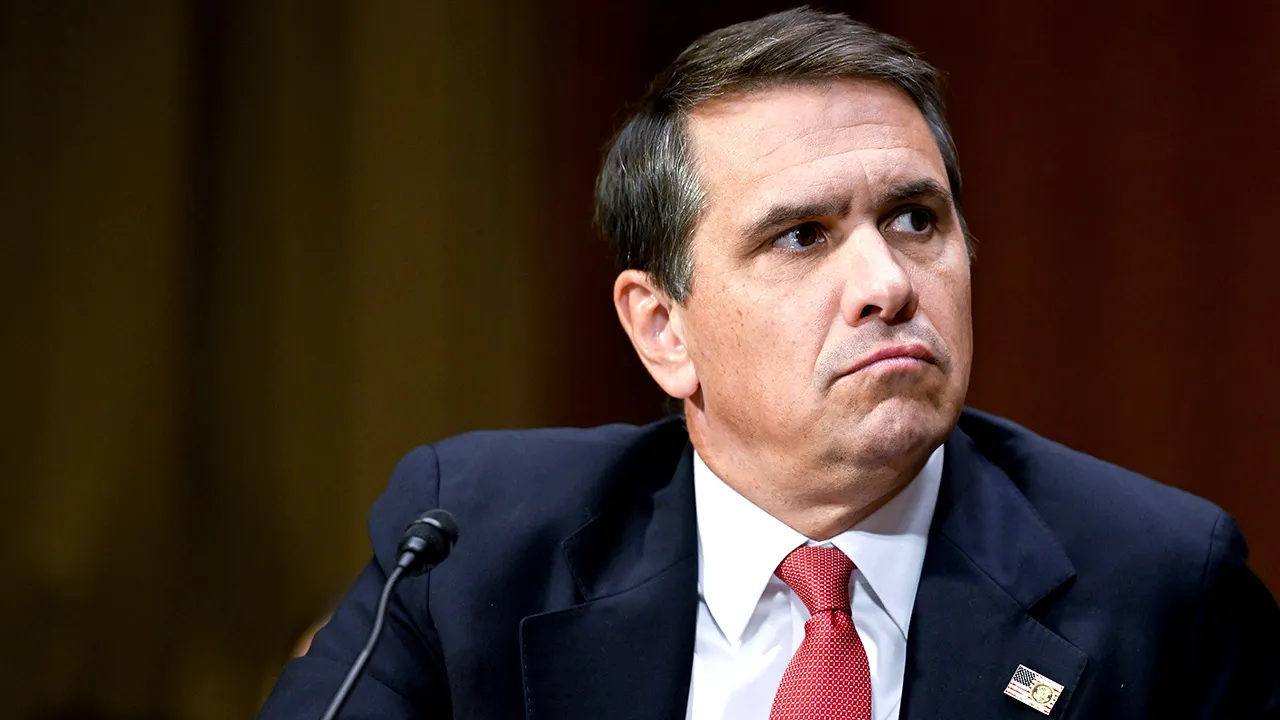
In the high-stakes, echo-prone marble corridors of the United States Senate, where political futures are built and dismantled in the span of a single afternoon, acting Attorney General Todd Blanche recently experienced the sudden, chilling deceleration of a confirmation process that, only hours prior, had seemed destined for a swift victory. Just twenty-four hours before a critical and highly anticipated vote within the Senate Judiciary Committee, the momentum surrounding his nomination vanished, throwing a glaring spotlight on the political fragility of his position. This sudden halt marked the latest dramatic chapter in an already tumultuous journey for Blanche, who had been tapped to lead the Department of Justice following the departure of former Attorney General Pam Bondi. For Blanche, the day was an exhausting marathon of physical and emotional endurance; he spent hours navigating the labyrinthine hallways of the Capitol, desperately trying to shore up support. From tense meetings to quiet, hurried huddles with powerful lawmakers like Senate Majority Whip John Barrasso of Wyoming, Blanche’s face was a study in intense focus as he attempted to keep his nomination on track. Yet, despite his tireless rounds and quiet pleas, the Department of Justice failed to provide the explicit, written proposals demanded by two vital Republican senators before a strict 4:00 p.m. Wednesday deadline. Realizing that the fragile coalition required to secure confirmation had fractured, Senate Judiciary Committee Chairman Chuck Grassley of Iowa made the agonizing but necessary administrative decision to postpone the markup hearing indefinitely. This choice left the future of the nation’s top law enforcement nomination hanging in a state of suspended animation, serving as an unsettling reminder of how quickly a nominee can transition from a political frontrunner into a casualty of deep-seated institutional friction.
At the absolute center of this dramatic legislative standstill lies a highly controversial, immensely complex tax settlement reached between the Internal Revenue Service and Donald Trump, along with his family and various corporate entities, earlier this year. This settlement, which was negotiated during a period that heavily featured Blanche’s own legal advice, contained provisions that immediately set off alarm bells across the political spectrum, sparking outrage from both parties. Specifically, lawmakers targeted two highly unusual clauses: the creation of a now-defunct, nearly $2 billion “anti-weaponization” fund, and an extraordinary grant of audit immunity for the president, his immediate family, and his vast network of affiliated business operations. To the average citizen, who must navigate the rigorous and often terrifying maze of annual tax filings under the threat of severe penalties, the idea of a tax system that completely exempts the country’s first family from routine audits strikes a deeply uncomfortable chord of unfairness. Furthermore, the $2 billion fund sparked severe anxiety among lawmakers, who expressed intense concern that such a massive pool of resources could be diverted or exploited by individuals involved in the Capitol riots of January 6th, 2021. For senators whose primary constitutional duty is to maintain oversight over the executive branch, these elements represented an unprecedented and dangerous detour from traditional tax enforcement and ethical standards. The Department of Justice’s refusal or inability to quickly provide concrete, written proposals to dismantle or modify these specific components of the settlement agreement transformed a routine nomination process into a fierce battleground over accountability, transparency, and the fundamental American principle that no individual is above the law.
The vanguard of this unexpected Republican resistance is led by Senator John Cornyn of Texas, a seasoned and meticulous lawmaker who is currently navigating the final, legacy-defining months of his long Senate career. Having recently lost a highly competitive leadership race and preparing to exit the chamber at the end of the year, Cornyn has embraced a newfound sense of political independence, using his remaining time in office to aggressively assert the Senate’s constitutional authority of advice and consent. Free from the immediate pressures of reelection or the fear of political retribution from a highly vengeful party apparatus, Cornyn has taken a firm, unyielding stance on Blanche’s nomination. He has made it crystal clear to both the White House and the Department of Justice that verbal promises and vague handshake agreements are entirely insufficient when dealing with matters as critical as presidential tax immunity. Cornyn is demanding explicit, legally binding written proposals that align the actual settlement documents with the testimony Blanche gave under oath during his public confirmation hearings as acting attorney general. Reflecting his intense frustration with the slow pace of the Department of Justice, Cornyn revealed that two scheduled meetings with the nominee had to be canceled because the agency simply failed to produce the requested paperwork. For Cornyn, this is not a petty personal grievance but a matter of institutional integrity; he refuses to allow a nominee for the nation’s highest law enforcement office to bypass scrutiny, proving that even in a highly polarized era, some lawmakers still view rigorous oversight as a non-negotiable duty.
Working alongside Cornyn but adopting a noticeably different, more diplomatic tone is Senator Thom Tillis of North Carolina, whose perspective sheds light on the sheer, exhausting complexity of modern government bureaucracy and corporate law. Tillis has gone out of his way to clarify to the press and the public that his hesitation does not stem from a personal grudge against Todd Blanche or an inherent distrust of the Department of Justice itself. Instead, his concerns are rooted in the pragmatic, incredibly messy reality of executing major legal modifications under intense political pressure. Tillis pointed out that altering a massive, multi-billion-dollar settlement agreement is not as simple as drawing up a quick memo or issuing a press release; the original documents were likely signed not by Donald Trump himself, but by an intricate web of personal lawyers, corporate representatives, and agency officials. This creates what Tillis described as a wide, complicated “circle of people” who must all be brought back into the loop to sign off on any adjustments, creating an administrative bottleneck of epic proportions. This human element of legal gridlock illustrates the silent, grinding machinery of Washington, where even the most powerful political actors find themselves at the mercy of paperwork, compliance hurdles, and legal protocols. Despite these logistical headaches, Tillis remains remarkably open to a resolution, expressing a willingness to support moving Blanche’s nomination out of committee as early as next Tuesday, provided that the concrete, written language they have requested is finally delivered to their offices.
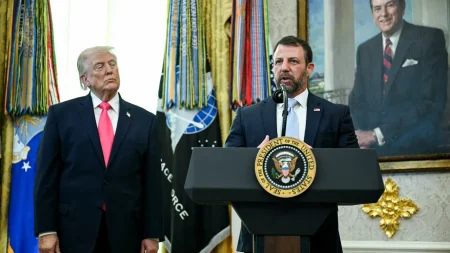
Meanwhile, from the historic and relatively insulated confines of the Oval Office, Donald Trump offered a strikingly detached and almost casual reaction to the high-stakes political drama unfolding just a few miles away on Capitol Hill. When questioned by reporters about the sudden halt in Blanche’s confirmation process, Trump adopted the persona of an observer operating completely at arm’s length from the controversy, asserting that he had heard the nomination was actually progressing “quite nicely.” He showered Blanche with effervescent praise, describing him as an “outstanding” and “routine” pick because of his sheer competence and stellar reputation as a top-tier legal mind. However, in true, signature fashion, Trump could not resist turning a systemic legislative dispute into a deeply personal grievance. He publicly mused that perhaps Senator Cornyn’s resistance was fueled not by constitutional principles or concerns over tax policy, but by personal bitterness over Trump’s decision not to endorse him in a past leadership race. This reaction highlights the complex, highly personalized nature of modern American governance, where systemic debates over the balance of power, IRS protocols, and institutional oversight are frequently distilled down to personal rivalries, loyalty tests, and public posturing, leaving nominees like Blanche to navigate a treacherous political landscape where policy and personality are inextricably linked.
Looking forward, the path to confirming Todd Blanche as the nation’s Attorney General remains deeply uncertain, casting a long shadow over Senate Majority Leader John Thune’s ambitious legislative schedule. Thune had hoped to resolve this dispute quickly behind closed doors, paving the way for a major floor vote to secure Blanche’s position as Pam Bondi’s successor. Now, those plans are in a state of suspended animation, dependent entirely on whether the White House, the Department of Justice, and the holdout senators can successfully bridge the gap of trust and paperwork. This sudden freeze in the confirmation pipeline serves as a potent reminder of the immense fragility of political power in Washington, where the finest plans of a presidency can be brought to a grinding halt by the stubborn resolve of a few key individuals. It underscores a human truth at the core of our democratic system: that despite the overwhelming influence of party loyalty and executive authority, the system is ultimately comprised of individual human beings with distinct motivations, institutional pride, and the power to demand accountability. As negotiations continue and lawyers work feverishly behind the scenes to draft the long-sought written proposals, the political world watches to see if Todd Blanche can navigate his way out of this bureaucratic labyrinth, or if his nomination will become yet another casualty of the delicate balance of power that defines the American republic.