





For the average American citizen, the acts of voting and community representation can often feel distant, overshadowed by the massive scale of national politics. However, the geographic boundaries of congressional districts bring this abstract concept directly to people’s doorsteps, determining whose voices are grouped together and which representatives champion their interests in Washington. This fundamental facet of self-governance has become the center of a high-stakes legal battle in Missouri. On Thursday, the Republican National Committee (RNC) and the National Republican Congressional Committee (NRCC) took a decisive step by filing a lawsuit to defend the state’s newly enacted congressional map. Rather than viewing this as a simple administrative dispute, the conservative organizations have framed their legal action as a vital defense line against a coordinated, nationwide political campaign. According to Republican leadership, this broader campaign, orchestrated by Democratic adversaries, seeks to systematically target and dismantle legally enacted redistricting plans through courtroom interventions. By stepping onto this judicial battlefield, the RNC aims to protect a map that local legislators spent countless hours debating and drafting, arguing that the lawsuit is a necessary shield to protect the integrity of the state’s legislative decisions. Ultimately, this conflict highlights the intense friction between local legislative autonomy and national partisan strategies, transforming a regional map-making process into an influential proxy war for the future balance of political power in the United States.
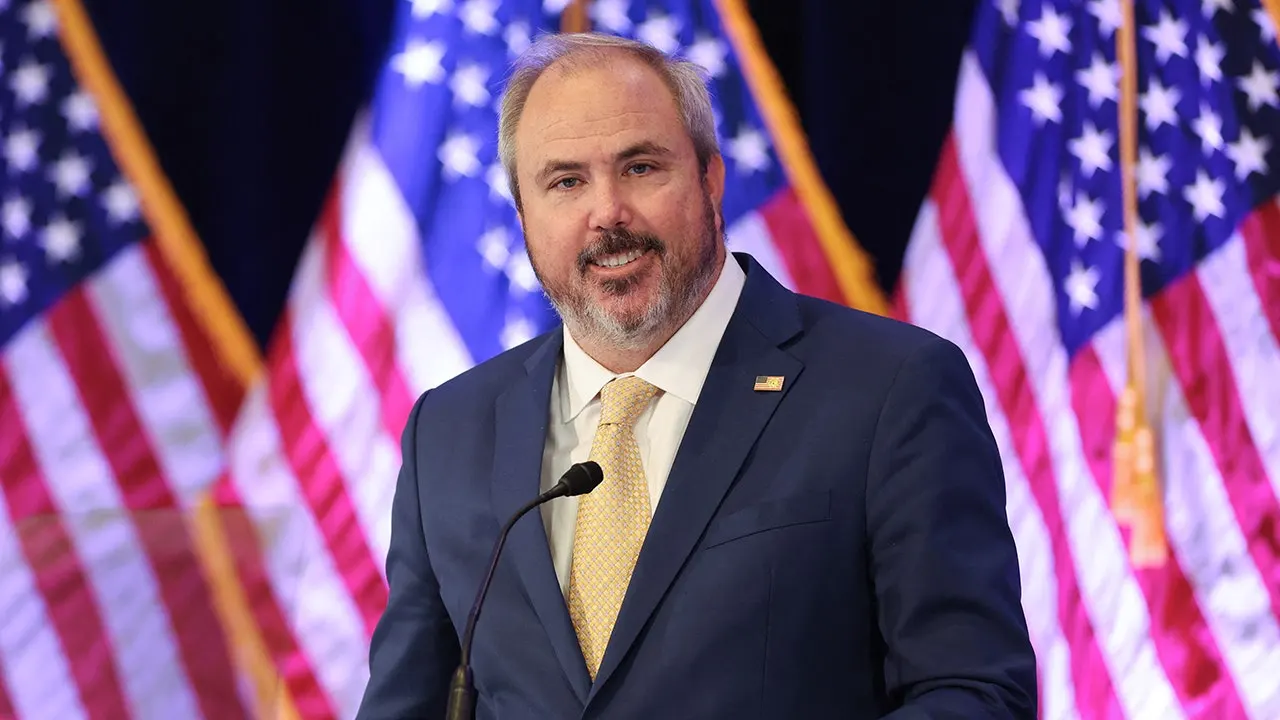
At the heart of the Republican strategy is an effort to humanize their legal arguments by presenting them as a defense of the everyday voter’s direct will. RNC Chairman Joe Gruters cut straight to the core of the issue, asserting that across the nation, progressive organizers are turning to the courts to salvage power when they cannot secure it at the ballot box. In his view, the court system is being weaponized in a way that risks overriding the authentic choices of Missouri’s electorate. Conservative leaders argue that the new congressional map, which was painstakingly crafted and approved by the Missouri General Assembly last year, is in strict harmony with the state’s constitution. They maintain that the final boundaries are a fair representation of the state’s political climate. Echoing this firm stance, NRCC Chairman Richard Hudson spoke passionately about the human impact of the legal fight, emphasizing that Missourians deserve stable, fair representation free from what he characterized as a disruptive, partisan power grab. For Hudson, the joint legal effort by the RNC and NRCC is not about playing partisan games but is instead about standing up for a transparent democratic process, protecting the rights of individual communities to make their voices heard without fear of their votes being diluted or reorganized by judicial decree.
On the other side of this civic divide, a deeply committed coalition of local citizens, voting-rights advocates, and civic organizers see the situation through an entirely different lens, viewing the new map as a calculated effort to marginalize progressive communities and artificially inflate conservative representation. These opponents have not simply relied on the courts; they have taken their message directly to the streets, launching a comprehensive petition drive to force a public referendum that would allow everyday Missourians to decide whether to abandon the new map and restore the state’s previous boundaries. This grassroots movement has introduced a highly tense procedural battle over signature verification. Republicans argue that progressive groups are pushing for the hasty certification of this referendum before local election authorities have had the chance to complete the vital, meticulous task of verifying the validity of each physical signature. The lawsuit warns that premature certification could freeze the implementation of the new, legally passed map, throwing upcoming election cycles into organizational chaos. For conservative strategists, allowing the verification process to play out naturally is a common-sense measure to protect election security, while opponents view it as an attempt to stall their hard-won momentum and prevent citizens from exercising their constitutional veto power.
The sheer volume of resources and high-level legal strategy poured into this Midwestern struggle highlights how critical Missouri has become on the national political radar. The RNC points out that progressive groups and allied organizations have already spent upwards of $6 million in legal challenges trying to dismantle the state’s boundaries, demonstrating the immense national scale of these localized redistricting wars. This intense local conflict is deeply intertwined with broader, highly sensitive discussions happening across the country, particularly in light of recent actions by the nation’s highest court. The Supreme Court’s recent 6-3 decision regarding Louisiana’s congressional map, which ruled that the state’s redrawn boundaries constituted an illegal racial gerrymander, has added a complicated layer of context to the Missouri case. While civil rights groups express deep concern that such rulings run the risk of diluting minority voting blocks, conservative legal theorists see the decision as a vindication of their core philosophy. The RNC has seized upon this ruling to argue that the Supreme Court has reaffirmed the principle that congressional maps should not be drawn primarily based on racial categorization, affirming that state legislatures hold the constitutional authority to design districts that naturally reflect the broader political leanings of their residents.
Beyond the complex legal doctrines, the practical political stakes of this map-judgment battle could scarcely be higher, directly impacting the balance of power in Washington and the political legacies of key leaders. Missouri Governor Mike Kehoe officially signed the contentious map into law, a decision that followed rigorous debates and even discussions of a special legislative session to address the boundaries. The stakes have also drawn the attention of former President Donald Trump, whose endorsement of the map on social media as “FANTASTIC” underscores the vital national implications of these state-level lines. For national Republicans, the map represents a crucial opportunity to expand their majority, with strategists projecting that the newly styled districts could help the GOP secure an additional congressional seat in the highly anticipated 2026 midterm elections. Conversely, critics of the plan argue that these changes were drawn with a heavy hand, intentionally breaking up communities of interest to pad a partisan advantage. This high-profile clash reveals the human drama behind redistricting: what legislative leaders call a victory for local representation, their political opponents decry as a targeted effort to mute their collective voices, highlighting the delicate, often painful balance of modern map-making.
Ultimately, the struggle over Missouri’s congressional districts serves as a powerful reminder that redrawing boundaries is about far more than cold geography or mathematical calculations; it is a deeply human story about power, community identity, and the fundamental right to be heard. Every line drawn across a state map directly impacts real neighborhoods, shaping how federal resources are allocated and determining which political perspectives find a voice in our national legislature. As this new lawsuit works its way through the courts and the signature verification process continues under intense public scrutiny, Missouri stands as a key battleground in a nationwide conversation about the health of American democracy. Whether the final chapter of this dispute is written in a quiet courtroom in Jefferson City or at a boisterous ballot box during a public referendum, the outcome will resonate far beyond the borders of the Show-Me State. It will help establish a crucial precedent for how political parties, advocacy groups, and ordinary citizens engage with the redistricting process, illustrating that in a self-governing republic, the rules of representation remain a perpetual and deeply passionate civic labor.