





The halls of the United States Congress are often romanticized as quiet sanctuaries of law, marble, and measured intellect. However, beneath the polished oak desks and the historical portraits lies a high-pressure environment fueled by raw human emotion, personal ambition, and the relentless, exhausting demands of the 24-hour media cycle. This underlying tension was made glaringly obvious during a recent meeting of the House Committee on Homeland Security, a gathering originally intended to dissect the complex, dry, and highly technical details of departmental funding. Instead, the sterile policy room quickly transformed into an emotional pressure cooker, proving once again that lawmakers are not merely robotic instruments of the state, but fragile human beings carrying their own biases, defensiveness, and deep-seated animosities. When the cameras began to roll, the atmosphere thickened, setting the stage for a dramatic clash where personal honor, racial politics, and institutional decorum collided in a spectacular display of modern political theater. It was within this hyper-charged space that a routine budgetary hearing devolved into a deeply personal shouting match, laying bare the deep fractures that keep our leaders from engaging in meaningful public service.
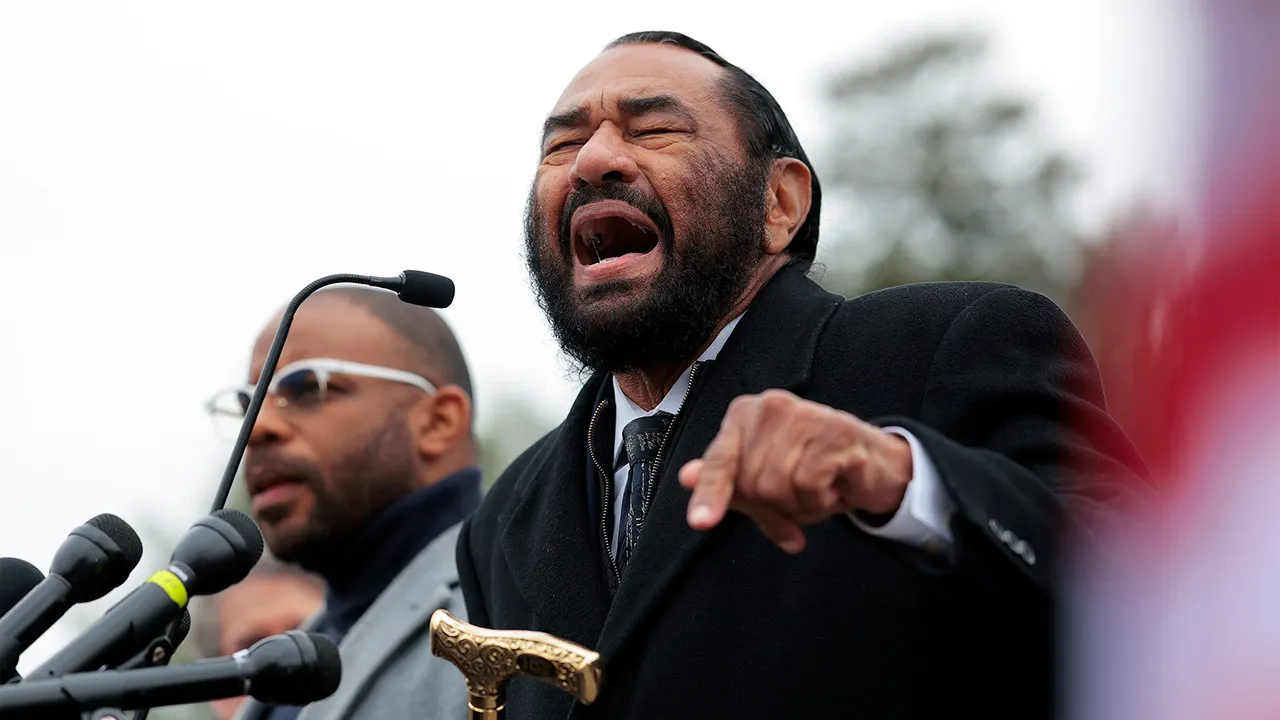
The primary spark in this administrative wildfire was Representative Al Green, a veteran Democratic lawmaker from Texas, who abruptly launched a scathing verbal offensive against the official identified as Homeland Security Secretary Markwayne Mullin. In the middle of what should have been a structured policy exchange, Green pointedly branded Mullin a “racist,” a label loaded with decades of historical pain and immediate social ruin. The accusation hit the room like an electric shock, shifting the atmosphere from dry legislative debate to raw personal hostility in an instant. Mullin’s reaction was one of visceral, human disbelief; he could be seen cocking his head in stunned silence, his physical posture conveying a mix of shock and indignation at having his moral character so heavily condemned in a recorded, public forum. Rather than backing down or softening his tone, Green leaned further into the confrontation, aggressively telling Mullin to “shut up” over and over again. This blunt command bypassed all parliamentary etiquette, stripping away the polite euphemisms that normally mask Washington’s fiercer rivalries and exposing a raw, unedited animosity that left those in the room and watching at home utterly stunned.
In the structured sandbox of congressional hearings, “time” is the most fiercely guarded resource a politician possesses, serving as both a shield and a weapon. When Mullin tried to defend himself against the onslaught, incredulously asking Green, “Did you just tell me to shut up,” Green did not hesitate to weaponize his procedural rights, shouting back over the rising chaos, “It’s my time!” This simple phrase carries immense psychological weight in Washington; it is a declaration of ownership, a refusal to be silenced, and a defensive claim of supreme authority over the microphone. The exchange quickly decayed into a basic battle of wills, with Green demanding silence and Mullin refusing to be bullied on a national stage. “I’m not going to let anybody call me a racist chairman,” Mullin calmly but firmly told those presiding over the meeting, highlighting the deep-seated human need to protect one’s reputation from public slander. This tense standoff illustrated how easily professional policymakers can slip into rudimentary fight-or-flight responses when they feel their personal integrity and professional standing are being actively demolished under the glare of public scrutiny.
Trying to navigate this sudden emotional storm was Representative Andrew Garbarino, the Republican Chairman from New York, who found himself desperately wielding a gavel that felt entirely inadequate for the level of hostility in the room. As the sharp, rhythmic cracks of the wooden gavel echoed off the walls—a sound meant to symbolize institutional order, calm, and authority—the shouting only intensified. In a puzzling twist of human psychology, Green loudly denied making the “racist” accusation just moments after it left his lips, even as he simultaneously demanded that Garbarino tell Mullin to “shut up” once again. This frantic denial and renewed attack left observers bewildered, illustrating how quickly truth and consistency are abandoned in the heat of political battle. Recognizing that all semblance of constructive dialogue had utterly evaporated, Chairman Garbarino was forced to call for the entire encounter to be suspended. This suspension was a quiet, sobering admission that the human drama had completely overwhelmed the legislative machinery, demonstrating that when raw personal insults are traded, the structured rules of Congress are powerless to maintain even a basic veneer of civil discourse.
To truly understand the volatile nature of this confrontation, one must look at the human history of Al Green, a politician whose career has long been defined by an aggressive, uncompromising fighting spirit. Green is no stranger to dramatic public stands; his political legacy is marked by high-profile acts of defiance, including being repeatedly ejected from former President Donald Trump’s primetime addresses to a joint session of Congress. This history suggests a lawmaker who views institutional decorum not as a sacred boundary, but as a potential roadblock to expressing deep-seated convictions and representing his community’s frustrations. However, this aggressive approach now operates against a backdrop of deep personal and professional vulnerability, given his recent defeat in the Democratic primary runoff for Texas’s Congressional District by freshman Representative Christian Menefee. This electoral loss adds a layer of quiet tragedy to his actions, painting a picture of an aging warrior fighting tooth and nail in the twilight of his legislative career, perhaps feeling a heightened, desperate urgency to make his voice heard, even if it means burning down the bridges of civil discourse on his way out.
Ultimately, the bitter clash between Green and Mullin is a microcosm of a much broader, deeply exhausting trend that modern citizens watch with a mixture of frustration, numbness, and profound disappointment. It humanizes the tragedy of contemporary American politics, where vital discussions on national security, domestic safety, and federal funding are routinely hijacked by clip-ready yelling matches and personal grievances designed for social media algorithms. The average citizen, trying to navigate their own daily struggles, is left feeling deeply alienated by a political class that appears more interested in performance art and personal vindication than in solving the complex, quiet crises facing our country. This explosive committee meeting reminds us that beneath the grand titles, the security details, and the political power, our leaders are ultimately flawed, emotional human beings prone to the same anger, insecurity, and pride that affect us all. Until we find a way to reintroduce empathy, active listening, and basic mutual respect back into these powerful committee rooms, the crack of the chairman’s gavel will continue to serve not as a symbol of order, but as a futile alarm sounding in an increasingly divided house.