





The daily commute of ordinary motorists on a clogged Minnesota highway recently transformed into the center stage of a high-stakes constitutional battle between federal immigration authorities and local prosecutors. The dispute centers on Gregory Morgan Jr., an Immigration and Customs Enforcement (ICE) agent who stands accused of pointing a loaded handgun at civilians during a tense rush-hour traffic confrontation on Highway 62 in the Twin Cities. What may have begun as a frustrating, mundane drive home from work for citizens and law enforcement officers alike quickly escalated into a legal and political firestorm, highlighting the growing friction between local communities and federal law enforcement agencies. On one side of this bitter standoff is Hennepin County Attorney Mary Moriarty, who insists that no badge should shield an individual from the consequences of endangering members of the public. On the other side are the Department of Homeland Security (DHS) and the Department of Justice, who accuse local authorities of orchestrating a politically motivated “stunt” that threatens to undermine the essential legal protections granted to federal officers performing their duties. At its heart, the case forces a difficult question: when a federal agent is off-site but still on the clock, where does their official immunity end, and where does their accountability to the local community begin?
According to the state’s prosecution team, the incident on February 5 was not a controlled tactical maneuver but a dangerous display of ordinary road rage. Morgan, alongside a fellow ICE agent, was driving back to the Whipple Federal Building at Fort Snelling after participating in “Operation Metro Surge”—a sweeping federal immigration enforcement initiative. Caught in the sluggish crawl of rush-hour congestion, Morgan allegedly grew impatient and steered his vehicle onto the highway shoulder to bypass the gridlock. When a Cadillac moved over to block his path, preventing him from continuing down the restricted lane, the situation rapidly spiraled. Prosecutors allege that Morgan pulled alongside the Cadillac, drew his Glock handgun, and pointed it directly at the terrified occupants. The driver, fearing for his and his passenger’s safety, immediately called 911 to report that an armed man had aimed a firearm directly at his face. The Hennepin County Attorney’s Office, in partnership with national constitutional advocacy groups, argues that Morgan’s decision to drive illegally on the shoulder and threaten motorists who inconvenienced him had absolutely no connection to his official duties, representing instead an abuse of power that endangered innocent Minnesotans.
However, the narrative put forward by Morgan’s defense team and backed by the federal government paints a radically different, far more perilous picture of the encounter. Defense attorney Ryan Pacyga argued in court filings that the incident took place while Morgan was actively performing federal law enforcement duties under highly stressful conditions. According to the defense, the situation was not a mere traffic squabble but a volatile confrontation in which both Morgan and his partner felt physically threatened, fearing “imminent bodily harm” from the unexpected movements of the other vehicle. This defense is bolstered by a powerful federal legal doctrine rooted in the Supremacy Clause of the U.S. Constitution, which dictates that federal laws and authorities supersede conflicting state actions. The Department of Justice has formally joined the effort to protect Morgan, dispatching Senior Trial Attorney Paul Quast to step in on behalf of the United States. Federal authorities strongly assert that states lack the constitutional authority to criminally charge a federal officer for actions taken during the broader scope of their official assignments, warning that allowing local prosecutors to target agents would paralyze federal operations across the country.
This legal defense has sparked a furious ideological tug-of-war over whether the case should be tried in a local Minnesota state court or transferred to a federal jurisdiction. Hennepin County prosecutors are fighting aggressively to keep the matter local, arguing that Morgan is attempting to retroactively “transform his moment of road rage… into a federal enforcement action.” They contest that Morgan’s arrest and detention powers do not grant him a blank check to terrorize commuters on state highways. Conversely, DHS spokespeople have publicly lashed out at the local prosecution, labeling the efforts of Hennepin County officials as a “political stunt” orchestrated by “sanctuary politicians” looking to score political points against federal immigration agencies. By framing the local charges as an illegitimate overreach by progressive local prosecutors, federal officials are signaling a steadfast refusal to allow state authorities to dictate how their agents operate. This jurisdictional battle is more than a technical dispute over courtrooms; it represents a fundamental clash over sovereignty, pitting a state’s duty to protect its citizens on its own roads against the federal government’s insistence on operational immunity for its agents.
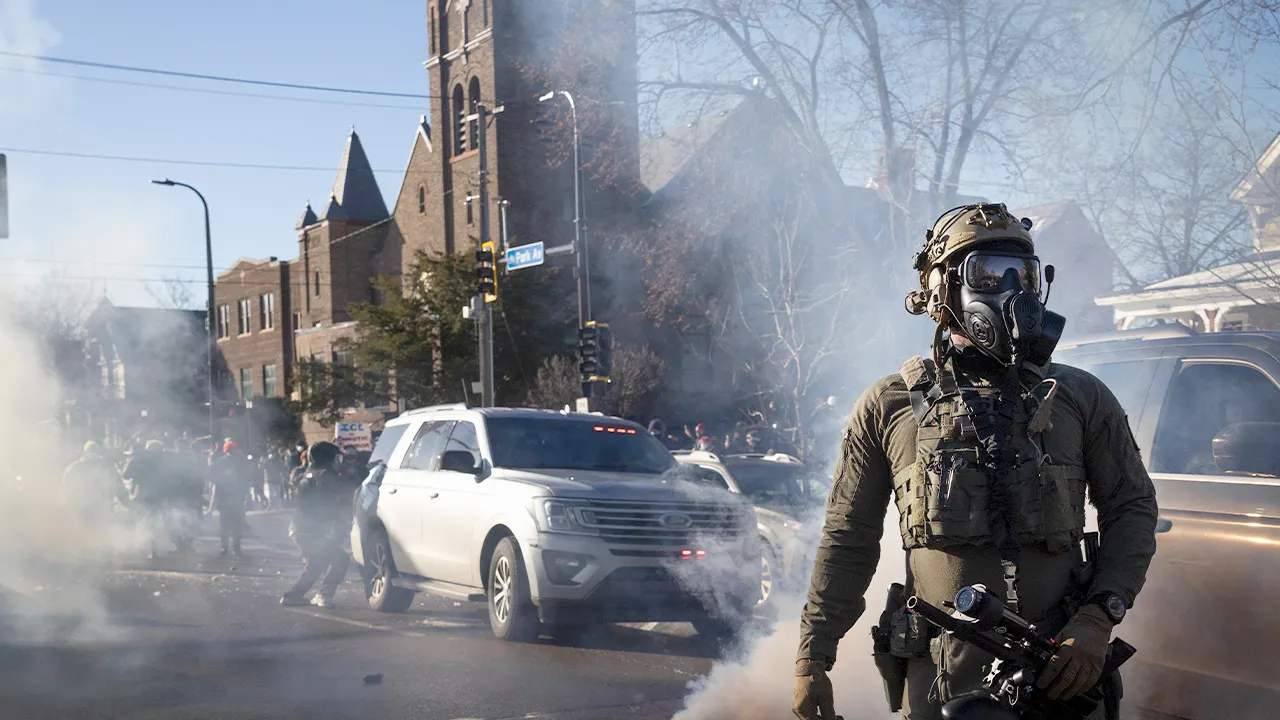
The deep animosity surrounding Morgan’s prosecution cannot be fully understood without examining the broader, highly charged environment in the Twin Cities. Operation Metro Surge had already placed local residents and immigrant advocacy groups on high alert, creating an atmosphere of intense scrutiny and distrust toward federal agents. Compounding this tension, Mary Moriarty’s office recently brought charges against another ICE agent, Christian Castro, in connection with a separate, highly controversial incident involving the shooting of Julio Sosa-Celis during an arrest operation. That shooting triggered widespread public outcry and protests in north Minneapolis, deepening the schism between the community and federal law enforcement. To many local residents and civil rights advocates, the prosecution of both Morgan and Castro represents a necessary effort to dismantle systemic perceptions of police impunity. They argue that if federal agents are allowed to bypass traffic laws and point weapons at citizens without local oversight, the safety of ordinary people is fundamentally compromised. For federal authorities, however, these cumulative prosecutions look like a coordinated campaign designed to obstruct lawful federal operations and vilify immigration enforcement personnel.
Ultimately, the resolution of this case will send ripples far beyond the boundaries of Hennepin County, shaping the future of how law enforcement officers are held accountable nationwide. If the federal court grants Morgan’s request for removal and dismisses the state’s charges under the umbrella of federal immunity, it may reinforce a sense of frustration among local communities who feel powerless against federal overreach. Conversely, if the state is allowed to prosecute Morgan, it would establish a significant precedent, demonstrating that even federal agents must answer to local laws when their personal conduct crosses the line into public endangerment. As the legal teams file their final briefs and a federal judge weighs the complex constitutional arguments, the human victims of this dispute—both the frightened motorists who faced a loaded weapon and the agents operating under the immense stress of federal service—await a decision that will define the fragile boundary between the power of the federal badge and the rights of the citizens it is bound to serve.