





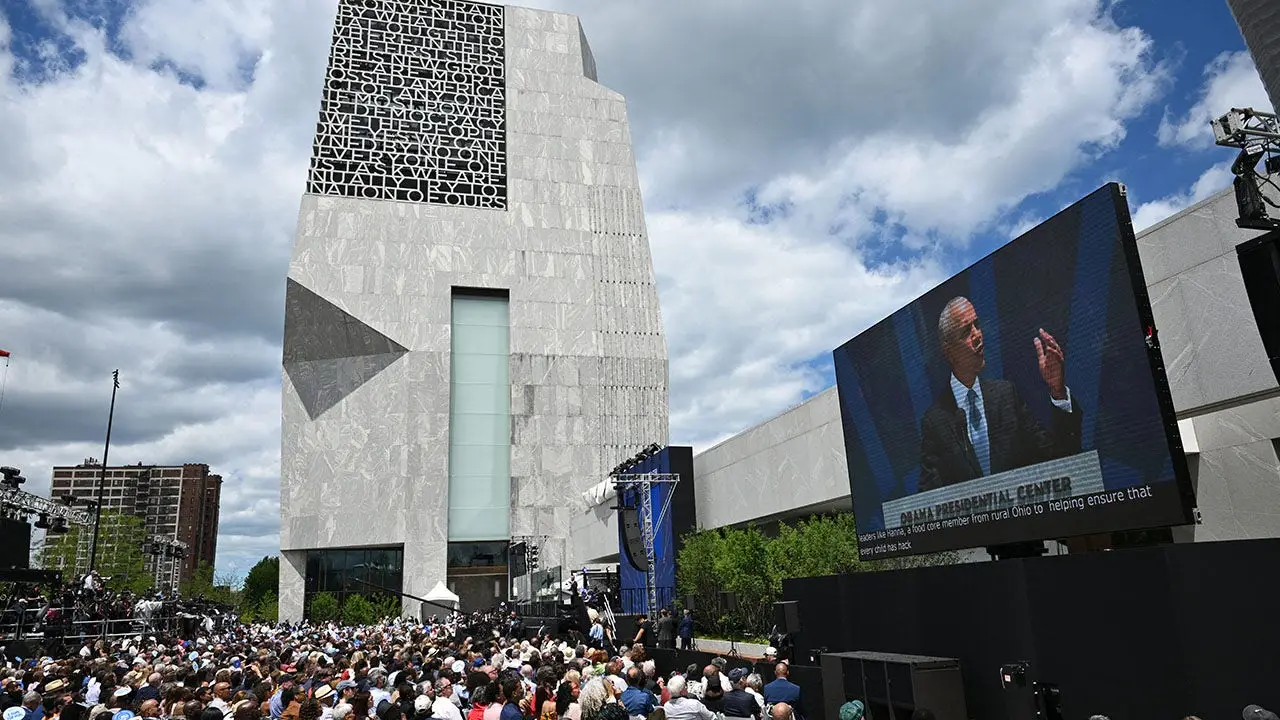
On a crisp afternoon in Chicago, the highly anticipated opening weekend festivities for the Obama Presidential Center commenced in Jackson Park, an area steeped in both rich history and modern cultural complexity. The master of ceremonies for this landmark occasion was none other than Valerie Jarrett, the former senior advisor to President Barack Obama and the current Chief Executive Officer of the Obama Foundation. As she stood before a crowded assembly of distinguished guests, local leaders, and onlookers, she chose to begin the historic proceedings with a formal “land acknowledgment ritual.” Jarrett spoke to the crowd, asking them to join her in recognizing and honoring the original Native American inhabitants of the land on which they stood, specifically naming the tribes of the Anishinaabe, the Council of Three Fires, the Ojibwe, the Odawa, and the Potawatomi nations. While designed as a gesture of historical respect and modern inclusivity, the ritual immediately ignited a firestorm of online criticism, cultural debate, and political mockery. The moment captured a deep, ongoing cultural divide in American life, transforming what was meant to be a somber tribute into a polarizing flashpoint that highlighted the complex friction between symbolic gestures and physical realities in modern politics.
This immediate backlash centered on a growing national skepticism regarding the sincerity of land acknowledgments, which critics from across the political spectrum have increasingly dismissed as performative, low-stakes virtue signaling. Skeptics argue that these statements allow wealthy institutions and powerful political figures to project progressive values and express remorse for historical injustices without actually making any material sacrifices or yielding their own power. In the digital sphere, conservative commentators and everyday observers wasted no time in pointing out what they saw as supreme hypocrisy: the very political class hosting this billion-dollar celebration of Obama’s legacy has absolutely no intention of deed-transferring the multi-million-dollar real estate back to the indigenous tribes they publicly eulogized. Commentators like Steve Deace raised the pointed, albeit sarcastic, question of whether the displaced Native Americans might prefer the return of their ancestral lands over a fleeting public mention. Similarly, Beth Anne Mumford of Americans for Prosperity and conservative writer Stephen Miller remarked on the irony of building a massive, concrete presidential monument on land that the builders themselves officially declared to be stolen. This critique resonated deeply with many who feel that such elite rituals are designed to soothe the consciences of the powerful while leaving the actual status quo of ownership, wealth, and systemic inequality entirely unchanged.
To add a layer of distinctly local flavor to the controversy, the cultural debate quickly merged with the living, modern reality of Chicago’s South Side, a region that possesses its own fierce identity and everyday struggles. Among the wave of satirical responses, Townhall senior strategist Siraj Hashmi offered a biting, culturally resonant joke on social media, suggesting that it was highly disrespectful for the Obama Presidential Center’s organizers to ignore the current, living “tribe leader” of the South Side of Chicago: the world-famous drill rapper Chief Keef. Beyond the humor, Hashmi’s comment touched on a poignant truth about the profound disconnect between the high-minded, academic language of elite politics and the gritty, unvarnished human experience of the people who actually inhabit the surrounding neighborhoods today. While the wealthy and powerful inside the gala boundaries looked backward through centuries of history to offer symbolic validation to long-gone tribes, they seemed remarkably detached from the immediate, pressing crises of economic disinvestment, systemic violence, and urban neglect that shape the daily lives of the living communities just blocks away from Jackson Park. The juxtaposition highlighted how modern progressive rhetoric can sometimes serve as a polished shield, allowing the ruling establishment to ignore the complex, difficult-to-solve human realities of the present by focusing instead on historically neat, symbolic reckonings.
The physical event itself was a staggering display of political dynasty and cultural royalty, gathering some of the most influential and affluent figures in modern American history within the campus of the center. High-profile Democrats, including Vice President Kamala Harris, former President Bill Clinton, and former Secretary of State Hillary Clinton, mingled with a glittering array of Hollywood stars and legendary musical icons. Stevie Wonder, Bruce Springsteen, and John Legend took the stage to perform a private, high-energy concert, while American cultural giants like Oprah Winfrey, Tom Hanks, and David Letterman lent their star power to the exclusive gathering. The sheer physical presence of this hyper-elite crowd created a stark visual contrast against the socioeconomic backdrop of Chicago’s South Side, showcasing a world of unimaginable wealth, access, and political influence operating in isolation from the working-class struggles of the surrounding city. For many onlookers, the sight of multi-millionaire celebrities and career politicians celebrating their own progressive legacy under heavy security felt less like a communal triumph and more like an exclusive club insulating itself from the very public it claims to champion. This grand display of cultural dominance underscored the broadening chasm in American life between a highly insulated, self-congratulatory ruling class and the everyday citizens who are left to navigate the escalating costs of living, deteriorating public safety, and shifting economic tides.
Beneath the glittering surface of the star-studded gala lay a much darker, highly controversial reality regarding the actual construction of the Obama Presidential Center itself—a reality marked by massive budget overruns and allegations of financial exploitation. When the project was first announced, one of its core moral justifications was a promise to directly uplift the local, minority-owned businesses of Chicago’s South Side by awarding them lucrative construction contracts and integrating them into this historic development. However, a sweeping investigation revealed that this dream of economic empowerment has turned into a financial nightmare for several minority-owned subcontractors who claim they have been systematically unpaid and are now facing absolute financial ruin. One subcontractor went public with the devastating claim that his firm is currently owed more than $4 million for work they painstakingly completed on the center, leaving his business on the absolute brink of collapse. The tragic irony of a presidential center—built in the name of community organizing, racial equality, and economic justice—allegedly driving local minority business owners to the edge of bankruptcy was not lost on critics. As the overall price tag of the massive monument skyrocketed from its initial estimate of $500 million to nearly $1 billion, the financial strain of these bloated costs was seemingly passed down to the vulnerable, small-scale local contractors who lacked the legal resources and political capital to demand their fair share.
This financial crisis is only the latest chapter in a long, embattled history of the center, which has been plagued by severe administrative delays, environmental challenges, and legal battles since its inception. Though the project was triumphantly announced in 2015 and the historic Jackson Park site was selected in 2016, the actual groundbreaking was delayed for five long years due to intense bureaucratic red tape, federal environmental reviews, and lawsuits from local conservationists who feared the historic parkland would be permanently ruined. Even after construction finally commenced in 2021, the opening date kept slipping further into the future, moving from an anticipated completion in early 2025 to a delayed opening a full year later. Ultimately, the story of the Obama Presidential Center stands as a powerful mirror for the Barack Obama presidency itself: an endeavor launched with soaring, poetic rhetoric of hope, change, and community empowerment, but one that has ultimately had to navigate the messy, compromised, and often painful realities of execution. As the grand concrete towers of the center now loom over the South Side of Chicago, they represent a complex, double-edged legacy—serving simultaneously as a proud monument to the historic rise of America’s first Black president, and as a stark reminder of the deep cultural divisions, broken economic promises, and persistent inequalities that continue to define the American landscape.