

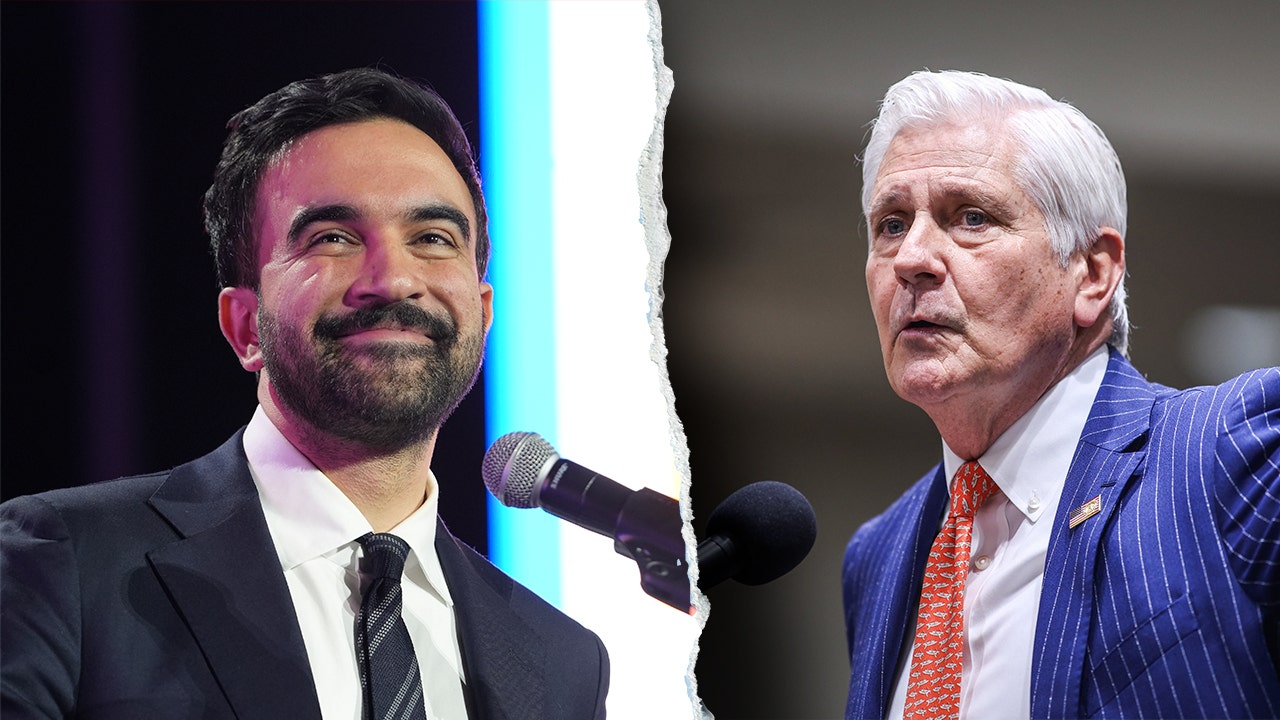
The upcoming gubernatorial election in New York is quickly shaping up to be a defining ideological battleground, highlighting a deep-seated struggle for the economic health and cultural identity of the Empire State. Republican challenger Bruce Blakeman has launched a fierce campaign to unseat the incumbent Democratic Governor, Kathy Hochul, framing the high-stakes November race as an existential choice between two radically different futures. At the very heart of Blakeman’s campaign is an aggressive, uncompromising promise to dismantle the progressive agenda championed by New York City Mayor Zohran Mamdani. Blakeman warns that the shift toward left-wing economic policies—ranging from government-funded public enterprises to sweeping tax hikes and massive expansions in state spending—threatens to trigger an irreversible exodus of both small businesses and tax-paying residents. By positioning himself as a firm bulwark against what he characterizes as reckless fiscal experimentation, the Republican contender is directly tapping into the growing anxieties of middle-class families and small business owners who feel increasingly alienated by the political trajectory of the state’s urban centers. This high-stakes confrontation reflects a broader national polarization, where state-level executive races become critical proxies for the national debate over the limits of state power and the long-term viability of progressive policies in America’s largest metropolis.
In a revealing and candid exchange with Fox News Digital, Blakeman made it abundantly clear that he has no intention of playing nice or seeking political compromise with urban progressives should he win the Executive Mansion in Albany. Rejecting the conventional political wisdom that a governor must accommodate the leadership of New York City, Blakeman flipped the traditional power dynamic on its head, boldly asserting that the mayor would have to adapt to state-level leadership rather than the governor caving to city hall. He emphasized that as the state’s top leader, he would hold the ultimate authority, declaring that he would refuse to stand by while city leaders enact policies that he believes are actively dismantling the economic stability, public safety, and social fabric of the city. For Blakeman, this is not merely a routine disagreement over policy details but a vital rescue mission to preserve the essential character of New York, which he argues is currently being pushed toward ruin. By projecting this image of uncompromising executive strength, Blakeman is signaling to conservative and moderate voters alike that he possesses the political courage needed to halt progressive momentum and restore a sense of order and fiscal sanity to the entire region.
The urgency of Blakeman’s message comes at a crucial time when the progressive movement in New York is experiencing a highly visible surge, as evidenced by multiple socialist-backed candidates securing key democratic primary victories. Within this shifting political landscape, Mayor Mamdani’s ambitious platform, which includes highly controversial proposals like municipal, government-run grocery stores, fare-free public transit, and sweeping rent freezes, has galvanized left-wing activists while deeply alarming free-market advocates. Blakeman has focused much of his rhetorical fire on the city-owned grocery store initiative, arguing that it represents an unnecessary, wasteful, and highly damaging government intrusion into the private sector. He strongly defends the city’s iconic, family-owned bodegas and small grocery stores, painting them as the hardworking lifeblood of local neighborhoods that would be unfairly crushed by taxpayer-subsidized state competition. Under the guise of solving food insecurity, Blakeman argues, the government is attempting to eradicate the competitive market, representing a direct assault on private property rights and the fundamental tenets of capitalism. He contends that such schemes are not only economically unfeasible but represent a slippery slope toward socialist governance where working-class taxpayers are left holding the bill for bloated public experiments.
To counter this progressive vision, Blakeman has outlined a sweeping conservative alternative designed to stimulate economic growth, lower the cost of living, and restore law and order from his very first day in office. His blueprint for New York’s recovery hinges on enacting the largest middle-class tax cut in the state’s history, a move he believes will immediately relieve pressure on struggling households and incentivize wealth-generating businesses to remain in the state. Under his tax proposal, single filers earning less than $50,000 and joint filers making up to $100,000 would be completely exempt from paying state income taxes, keeping more money in the pockets of hard-working citizens. In addition to tax relief, Blakeman is targeting energy costs, promising to cut utility rates in half by ending what he calls Governor Hochul’s “green energy scam,” which he claims quietly funnels billions of taxpayer dollars into expensive, unproven science projects at the expense of monthly consumer budgets. Security and border integrity are also central to his immediate agenda; Blakeman has pledged to sign an executive order on day one to officially end New York’s status as a sanctuary state, paving the way for full cooperation with federal immigration enforcement and rejecting what he views as lax policies that undermine public safety.
Unsurprisingly, Governor Kathy Hochul’s reelection campaign has pushed back fiercely against Blakeman’s agenda, dismissing his proposed policies as an extreme, backward-looking platform that ignores the real needs of New Yorkers. Campaign spokesperson Ryan Radulovacki launched a blistering counterattack, accusing Blakeman of ignoring mainstream concerns in favor of catering to the far-right fringe and aligning himself closely with former President Donald Trump. Democratic strategists are seeking to frame the Republican challenger as a radical figure who is more interested in political theater, embracing controversial national figures, and enabling aggressive immigration crackdowns than in solving practical local issues. The Hochul campaign argues that Blakeman’s plans to gut essential social safety nets, curtail environmental initiatives, and undermine healthcare programs like Medicaid would ultimately hurt vulnerable families across the state. By labeling him as “MAGA all the way,” the Democrats hope to mobilize their substantial urban voter base, counting on the state’s historically blue leaning to reject a candidate who embraces a stark, conservative populist message.
Ultimately, this gubernatorial race presents New York voters with an incredibly stark contrast between two entirely different philosophies of governance. On one side is a progressive model that seeks to expand the role of the state in everyday life, utilizing government resources to guarantee basic needs like food, housing, and transportation, even if it means higher taxes and increased regulatory control over the marketplace. On the other side is Bruce Blakeman’s vision of deregulation, massive tax relief, and strict law enforcement, which prioritizes economic freedom, individual property rights, and a return to traditional capitalist principles. As the election approaches, everyday New Yorkers are left to weigh these competing paths against their own personal anxieties about inflation, public safety, and the overall quality of life in the state. Whether they choose to double down on the radical policy experiments of the progressive left or pivot toward a business-friendly, conservative restoration will not only determine the future of New York but will also send a powerful message to the rest of the nation about the political direction of America’s most influential cultural and financial hub.