


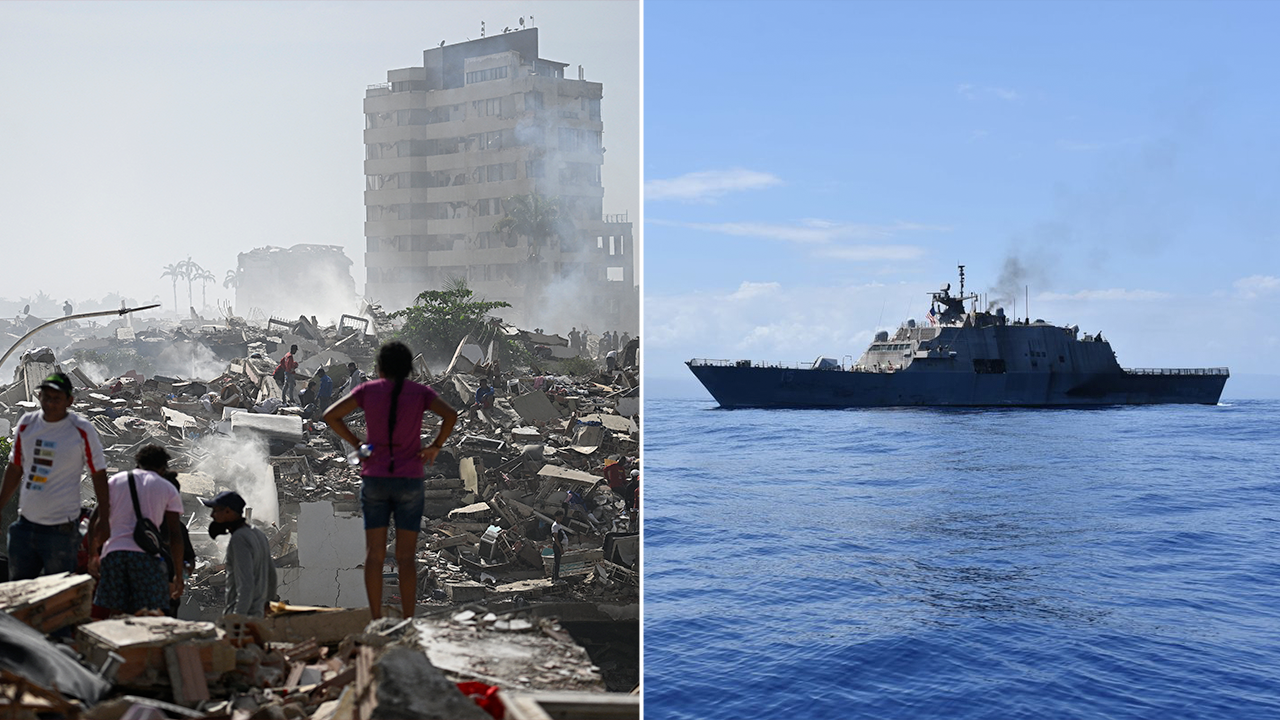
In the quiet hours of Wednesday night, the ground beneath northern Venezuela yielded to an unimaginable geological fury, shattering the peace of millions and instantly transforming everyday life into a fight for survival. A rare and devastating earthquake “doublet”—comprising back-to-back tremors measuring a massive 7.2 and 7.5 on the Richter scale—struck roughly 120 miles west of the capital city of Caracas. This catastrophic sequence of tectonic shifts did not merely rattle windows; it violently dismantled neighborhoods, tore down historic structures, and turned the historic coastal state of La Guaira into a sprawling, debris-strewn disaster zone. The human cost of this sudden tragedy was immediate and profound, with the Venezuelan Health Ministry confirming that at least 235 lives were tragically cut short, while more than 940 individuals suffered injuries ranging from severe fractures to life-threatening trauma. In the immediate aftermath, as thick clouds of dust hung over crumpled concrete and families desperately clawed through rubble with their bare hands in search of missing loved ones, the region’s infrastructure collapsed. The critical transportation artery of the Simón Bolívar International Airport sustained crippling structural damage, forcing its immediate closure and effectively isolating the battered nation from the standard air corridors that would normally bring immediate international relief, leaving the survivors in a state of terrified limbo as aftershocks continued to rumble deep beneath the earth.
Recognizing the immense scale of the humanitarian emergency unfolding in its southern neighbor, the Trump administration moved with extraordinary speed on Thursday to mobilize a sweeping, government-wide response aimed at preserving human life and alleviating the profound suffering of the Venezuelan people. The United States Department of State spearheads this monumental mercy mission, announcing an immediate, comprehensive aid package valued at $150 million to address the urgent, basic necessities of a population suddenly stripped of shelter, clean drinking water, electricity, and medical care. To ensure that these funds translate directly into tangible relief on the ground, the administration structured the financial package to leverage both established global institutions and trusted, agile non-profit organizations. Specifically, $50 million has been allocated in new bilateral awards directly targeting seasoned humanitarian relief partners already operating or positioning in the region—including the renowned disaster response organizations Samaritan’s Purse, Catholic Relief Services, and World Vision. The remaining $100 million of the pledge has been directed to a specialized United Nations humanitarian pooled fund, designed to coordinate massive logistics networks and distribute life-saving resources efficiently across the worst-hit municipalities. This financial mobilization is not just an administrative transfer of capital; it represents a vital lifeline of blankets, clean water filtration systems, emergency trauma medicine, and temporary shelters aimed at restoring a modicum of dignity and security to families who lost everything in the span of a few terrifying minutes.
At the literal ground zero of the destruction, where minutes dictate the difference between life and death for those still trapped beneath collapsed roofs, the United States has deployed its absolute best in specialized human rescue talent. Working alongside a newly dispatched regional Disaster Assistance Response Team (DART) from the State Department, two of the premier urban search-and-rescue teams in the world—originating from the elite fire departments of Fairfax County, Virginia, and Los Angeles County, California—have been dispatched directly to the disaster zones. These highly trained men and women are not merely emergency workers; they are specialists who have spent their entire careers preparing for the exact nightmare currently unfolding in La Guaira. Equipped with state-of-the-art acoustic listening devices that can detect the faint heartbeat of a child buried yards beneath smashed concrete, thermal imaging technology, and highly disciplined canine units trained to sniff out signs of life, these American teams represent a beacon of hope amid the grey dust of ruin. They work in grueling, sleepless shifts, navigating unstable ruins and risking their own safety in the face of unpredictable aftershocks, all driven by the simple, universal human impulse to pull a stranger’s child, parent, or spouse safely from the dark jaws of a collapsed building.
To overcome the colossal logistical barriers created by the closure of Venezuela’s main airport and the destruction of local roadways, the United States Southern Command (SOUTHCOM) has rapidly pivoted its military assets from routine posture to a mission of pure mercy. The Department of Defense has directed two major U.S. Navy warships—the USS Fort Lauderdale and the USS Billings—to surge into the international waters just off the Venezuelan coastline to provide critical, heavy-duty operational support. The massive USS Fort Lauderdale is uniquely suited for this crisis, serving as a state-of-the-art “floating command center” positioned just off the coast, complete with a massive flight deck designed to coordinate complex helicopter operations and a specialized well deck capable of launching landing craft to transport heavy equipment directly onto damaged shorelines where traditional docks no longer exist. Operating in tandem with this heavy-lifter is the USS Billings, an agile, highly maneuverable vessel designed to operate close to the shoreline, enabling it to deliver life-saving supplies, medical personnel, and emergency engineering equipment directly to isolated coastal communities that are completely cut off from inland roads. By turning these formidable instruments of military power into sanctuaries of logistics and healing, the American military is demonstrating that true strength lies in the capacity to save, rebuild, and reassure a neighboring population in their darkest hour.
The essential link between these offshore naval havens and the desperate survivors on the mainland is being forged in the sky, as SOUTHCOM deploys an array of rotary-wing aircraft to bypass the destroyed infrastructure on the ground. With local roads blocked by massive landslides and the Simón Bolívar International Airport rendered useless for commercial flights, these heavy-lift and utility helicopters have become the primary veins through which life-saving aid flows. Flying continuous missions through challenging, dust-choked coastal thermals, the military helicopters are performing critical airlift operations—ferrying search-and-rescue teams, medical specialists, and vital emergency cargo directly from the decks of the naval vessels to the heart of the impacted neighborhoods. On their return flights, these same helicopters serve as flying ambulances, evacuating the most critically injured survivors who require immediate, complex medical attention that local, overwhelmed clinics can no longer provide. The constant beat of the helicopter rotors overhead has quickly become the defining soundtrack of the rescue effort, a reassuring signal to those trapped or injured that help has arrived from the sea and that they have not been forgotten by the global community.
Beyond the immediate, heroic efforts of pulling survivors from the rubble and delivering physical aid, the United States government remains acutely aware of the deep anxiety gripping families both within the disaster zone and across the diaspora. The State Department emphasized that in any global crisis, the safety, security, and tracking of American citizens who may be traveling, working, or living in the affected region remains the administration’s highest priority. To manage this monumental consular task, American officials have urged all U.S. citizens currently in Venezuela to immediately enroll in the Smart Traveler Enrollment Program (STEP), which allows the embassy and state department officials to locate them, assess their well-being, and coordinate potential evacuation routes. Dedicated, twenty-four-hour emergency phone lines have been established—with those in Venezuela urged to call 202-501-4444, while worried relatives residing back home in the United States seeking information on their loved ones can reach out toll-free at 888-407-4747. Through these coordinated communication networks, financial pledges, elite rescue teams, and naval operations, the United States is standing shoulder-to-shoulder with the people of Venezuela, exemplifying a deep humanitarian commitment that reminds us that when the earth shakes, our shared humanity must remain unshakable.