




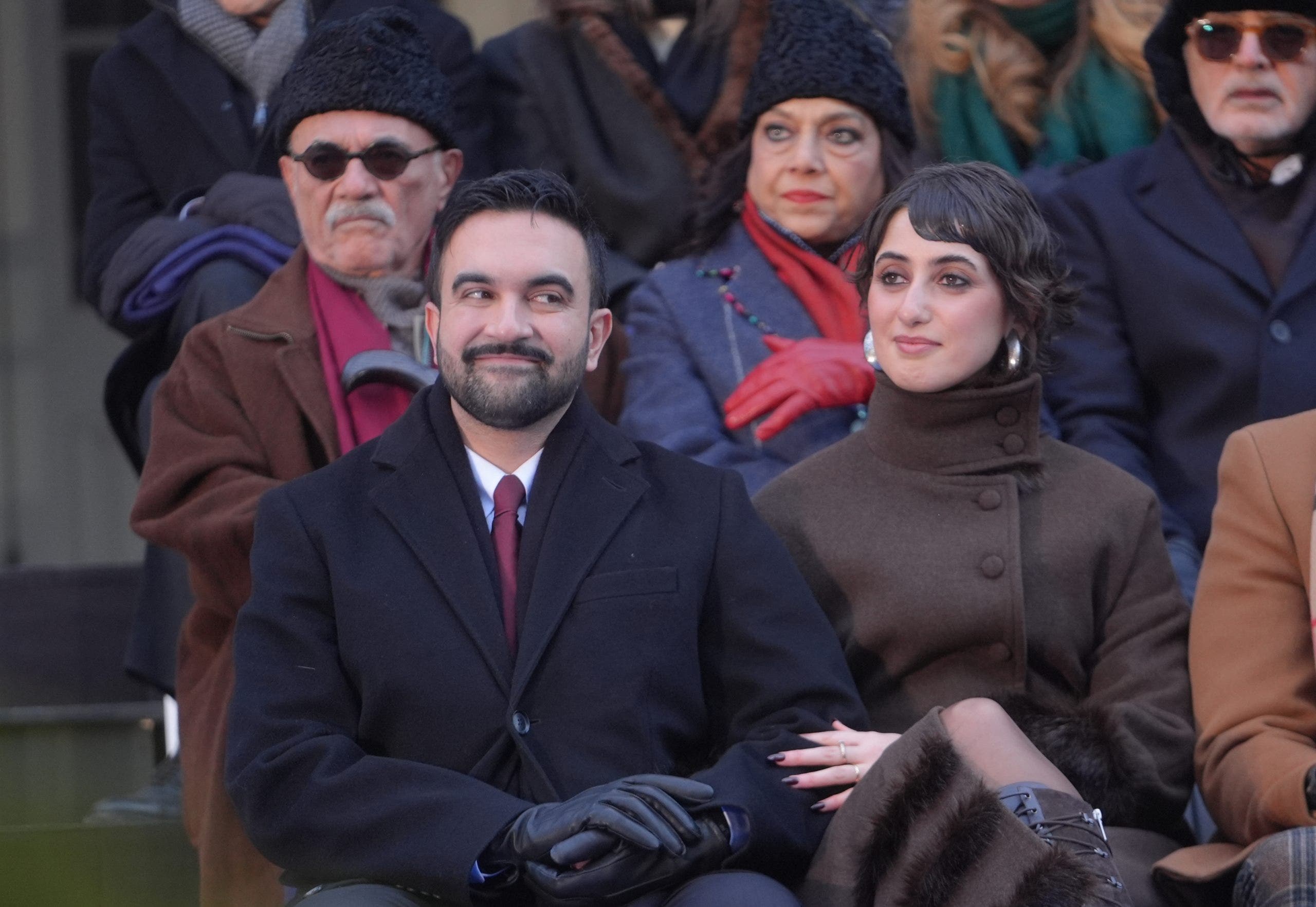
The intersection of faith, politics, and modern identity has once again taken center stage in New York City’s bustling political arena, this time centering on Rama Duwaji, a Syrian-American artist and wife of the city’s progressive mayor, Zohran Mamdani. Duwaji is reportedly serving as a co-host for an exclusive, highly sought-after Islamic women’s spiritual wellness retreat on the picturesque French island of Corsica. The event, organized by a group called The Women Sanctuary, seeks to blend deep theological reflection with luxury relaxation in the Mediterranean. However, the retreat has quickly become a lightning rod for ideological debate back home in the United States, drawing sharp criticism from political opponents who view the gathering’s framing of sacred figures and its lavish, overseas setting through a highly critical lens.
At the heart of the controversy is how the retreat contextualizes the Virgin Mary, a figure profoundly revered by billions of people across the globe. Promoted under the title “Mary In The Quran,” the sold-out event—which costs upwards of $4,000 per attendee—seeks to explore the life of the Mother of Jesus through an Islamic lens, emphasizing her unique status as the only woman mentioned by name in the Quran. Yet, the retreat’s promotional materials have sparked a fierce culture-war debate by framing Mary as a historical “Palestinian woman” living under occupation. For her defenders, this interpretation is a meaningful attempt to ground a beloved, sacred figure in the historical and geopolitical realities of the ancient Middle East, fostering a deeper, cross-cultural connection for modern Muslim women. For critics, however, this portrayal represents an unnecessary politicization of a shared religious icon, designed to project contemporary Middle Eastern conflicts onto a timeless spiritual figure.
This retreat is not Duwaji’s first high-profile international excursion this summer, nor is it her first time facing public pushback. Over the Fourth of July holiday, she traveled to the Spanish island of Mallorca to act as the “artist in residence” and co-host for another sold-out retreat titled “Plants of the Quran.” This trip drew swift condemnation from local New York politicians, including Republican Councilwoman Joann Ariola of Queens, who publicly chastised Duwaji for skipping patriotic celebrations in the United States to vacation in Europe. To her critics, these overseas spiritual journeys are evidence of a disconnect from American civic life. Conversely, supporters of Duwaji and Mayor Mamdani argue that these criticisms are politically motivated attacks targeting a Muslim woman of color for engaging in peaceful, faith-based artistic and spiritual practices with other women.
The political spotlight on Duwaji is inevitably amplified by the groundbreaking and radical nature of her husband’s administration. Zohran Mamdani, a prominent Democratic Socialist, made history when he took office in January 2026 as the first New York City mayor to be sworn in on the Quran. Mamdani’s tenure has been defined by his outspoken advocacy for progressive immigration reforms, sharp critiques of law enforcement agencies like ICE, and a staunchly pro-Palestinian foreign policy stance. Because Mamdani’s administration has consistently challenged traditional political norms, his family’s private lives and ideological leanings are scrutinized with intense rigor. For many New Yorkers, Duwaji’s activism and her choice of spiritual retreats are seen as extensions of the mayor’s broader, left-wing political identity, making her a natural target for the administration’s conservative detractors.
Adding another layer of complexity to the public narrative is Duwaji’s own digital footprint and past activism. Earlier this year, she issued a public apology for controversial social media posts she had made as a teenager, expressing sincere regret for any pain those online statements had caused. While Duwaji did not specify the exact nature of the remarks, media outlets had previously highlighted older blog posts, including one featuring a photo of Palestinian militant Leila Khaled. This history of vocal activism has made her a polarizing figure, with critics viewing her retreat involvement as a continuation of a radical worldview, while her supporters see a young woman who has apologized for past mistakes and is now simply focusing her energy on art, spiritual growth, and community building.
Ultimately, the debate surrounding the Corsica retreat highlights a deeper societal struggle over representation, privilege, and the boundaries of religious interpretation in the modern world. For the women attending the retreat, the experience offers a serene refuge filled with communal prayer, organic locally sourced meals, and peaceful reflection by the pool—a sacred “sanctuary” to reconnect with their faith and find inner peace. Yet, back in the highly charged political atmosphere of New York City, the event serves as a symbol of the deep ideological divisions of our time. It illustrates how even a quiet journey of spiritual wellness can become a battlefield where faith, history, and international politics collide in the public square.