





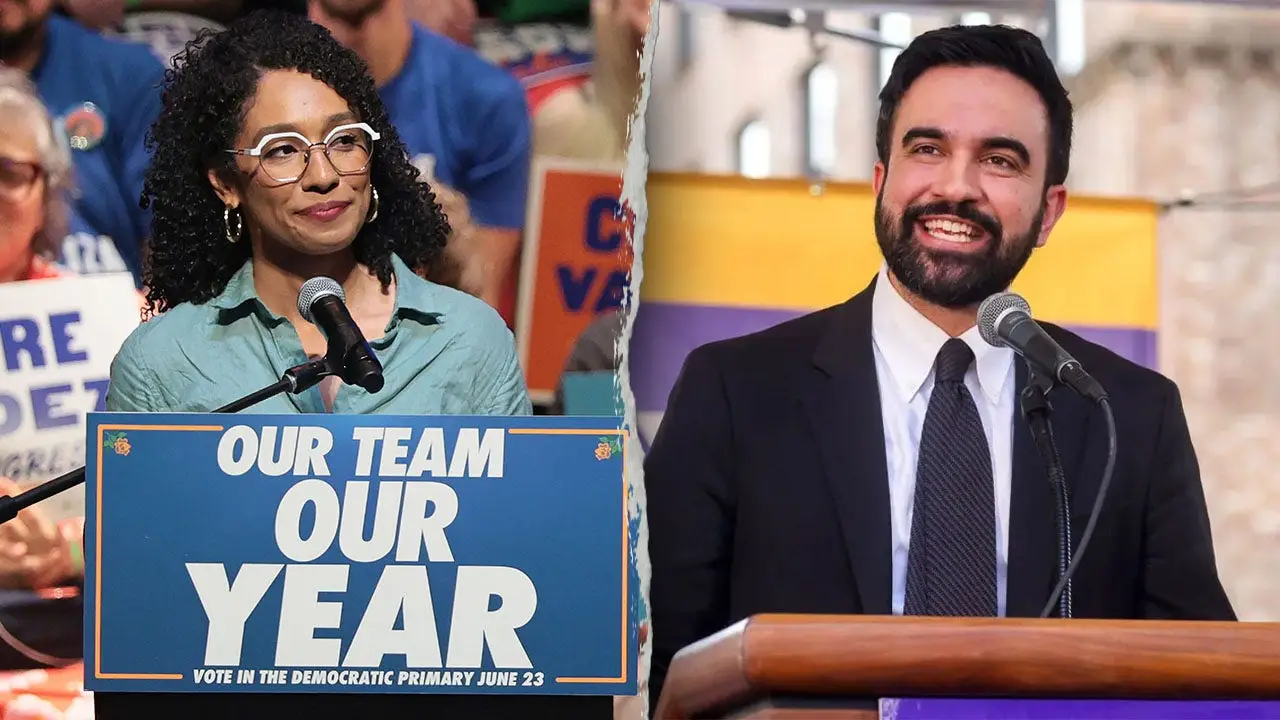
In the heart of New York City, where the vibrant, culturally rich, and resilient neighborhoods of Upper Manhattan and the Bronx converge, a political seismic shift has occurred that reverberates far beyond the geographic boundaries of the 13th Congressional District, signaling a dramatic transformation in how urban communities view the future of leadership. In a stunning primary election upset that defied established expectations, Darializa Avila Chevalier, a passionate grassroots community organizer championing a bold democratic socialist platform, defeated the long-serving incumbent Democratic Representative Adriano Espaillat, a staple of local politics for years. Backed by the influential Democratic Socialists of America (DSA) and prominent progressive allies such as local representative Zohran Mamdani, her victory represents a profound shift in localized political desires, community organizing strategies, and electoral power dynamics. Within these historic neighborhoods—which face severe economic strain, skyrocketing rents, and the creeping anxieties of housing displacement—the standard Democratic playbook of incremental reform and moderate compromise has increasingly been met with disillusionment by an exhausted voting public. For many hard-working voters, Avila Chevalier offered a compelling and deeply empathetic alternative: an active, uncompromising vision of systemic overhaul that promised to address structural wealth inequality at its absolute roots rather than merely managing its symptoms. Her rise is a fundamentally human story of local solidarity triumphing over a formidable, entrenched political apparatus, fueled by the raw, unpaid energy of young volunteers, working-class families, and neighbors who felt systematically forgotten by the status quo. However, the initial euphoria surrounding her historic primary victory was almost immediately intercepted by a fierce national controversy that has cast a long, polarizing shadow over her transition to the federal legislative stage. As national and independent media outlets turned their investigative lenses toward the emerging political star, they uncovered a deleted digital archive that presented a vastly different, far more radical ideological profile than the one typically presented on the polished campaign trail, transforming her overnight from a neighborhood champion into a highly controversial national lightning rod.
At the core of the political storm surrounding Darializa Avila Chevalier is the phenomenon of the digital footprint—a ubiquitous modern reality that behaves as both a highly personal archive of intellectual growth and a devastating political landmine for a younger generation of leaders who came of age entirely online. Before her rise to congressional prominence, Avila Chevalier operated a Twitter account under the handle “@Darializabonet,” which she ultimately deleted in June 2022 as her professional political aspirations began to crystallize. The digital resurrection of this deleted account by mainstream investigative media outlets revealed a robust series of posts wherein she actively promoted Marxist philosophy, lamented what she saw as a lack of communist literature in local public libraries, and expressed a profound reverence for highly controversial revolutionary figures. For a young activist, scholar, and intellectual navigating the complex, often radical academic spaces of modern progressive movements, the internet often serves as a virtual laboratory for testing provocative theories, exploring alternative societies, and venting passionate frustrations with the sluggish realities of systemic societal progress. Yet, when these private, subcultural expressions are suddenly thrust into the unforgiving, literalist arena of national electoral politics, they lose their theoretical nuance and are instantly framed as literal, dangerous blueprints for governance. This sudden exposure raises critical, deeply human questions about the nature of contemporary political identity: should an aspiring public servant be permanently defined by the rhetorical extremes of their past online persona, or should the public view these digital archives as the messy, developmental footprints of personal intellectual evolution? The strategic deletion of her account suggests a clear, practical awareness of how these statements would be received by a broader, more moderate American public, yet the subsequent fallout has triggered an intense national debate regarding political transparency, authentic representation, and the massive generational divide over the economic future of the country.
The specific content of the deleted social media posts has served to fuel the intense outrage of her political opponents while deeply exacerbating the anxieties of moderate Democrats who fear a devastating electoral backlash key to national power. Among the most controversial of the resurfaced remarks were messages that declared the anti-capitalist philosopher Karl Marx to be “must-read” material, alongside admiring quotes from Assata Shakur, a convicted cop-killer and former Black Liberation Army member who remains a deeply polarizing and fugitive figure in modern American history. In another highly circulated post retweeted by Avila Chevalier, the author expressed immense exasperation with the public’s reluctance to embrace communism, mockingly asserting that people only reject the ideology because they superficially fear “there won’t be enough types of soup” under a classless state, thereby trivializing the profound historical, economic, and humanitarian critiques of authoritarian communist regimes as mere consumerist trivialities. These ideological expressions were further compounded by previously criticized online statements in which she passionately advocated for the total abolition of the police and casually described wiping her hands on an American flag—actions and concepts that carry immense emotional weight, ancestral sacrifice, and historical trauma for millions of citizens across the ideological spectrum. To fully comprehend the visceral intensity of the ensuing public backlash, one must appreciate how fundamentally these icons function within the American psyche; while to some marginalized communities they represent instruments of systemic oppression, to the vast majority of Americans, they stand as sacred pillars of national identity, public safety, and democratic order. By challenging these foundational pillars so aggressively, Avila Chevalier did not merely propose progressive policy shifts; she directly confronted the core mythology of the American republic, exposing a massive cultural chasm that cannot easily be bridged by traditional campaign rhetoric.
The national political response to these digital revelations was swift, highly coordinated, and intensely dramatic, illustrating the raw polarization that defines contemporary American public discourse and media consumption. Prominent figures from across the political spectrum seized upon the controversy, utilizing Avila Chevalier’s victory to frame her as the vanguard of a dangerous, anti-American wave threatening the stability of the nation’s democratic institutions. Pennsylvania Senator John Fetterman, a vocal and often unconventional moderate Democrat, criticized the leftward tilt of his own party during an appearance on Fox News and on social media, characterizing the current progressive environment as an “orgy of socialism” and publicly questioning whether mainstream Democrats would continue to defend such “Crazypants” behavior or simply pretend they were not paying attention. On the conservative side, the rhetoric was even more urgent and existential, with newly elected Montana Senator Tim Sheehy declaring on social media that “the enemy is inside the gates” and warning that the combined forces of communism and radicalism posed an apocalyptic threat to the endurance of Western civilization. Media commentators and activists added to the chorus; UPenn student Eyal Yakoby took to social media to warn that it was impossible to overstate just how radical Avila Chevalier actually is, echoing the sentiments of many concerned moderates. Conservative media commentators, such as CNN’s Scott Jennings, used the situation to highlight what they viewed as intellectual dishonesty among progressives, arguing that the candidate’s posts proved democratic socialism is merely a palatable mask for traditional, destructive communism. Even pop-culture figures participated in the denunciation, with former reality television personality Spencer Pratt drawing an inflammatory historical parallel, comparing the relationship between democratic socialists and communists to that of national socialists and Nazis. This collective national outcry demonstrates how a local congressional primary can instantly transform into a high-stakes ideological battlefield, with national figures projecting their deepest anxieties about cultural decay, patriotism, and the preservation of the capitalist order onto a single young candidate from New York.
This explosive national controversy exposes a much deeper, highly complex semantic and biographical struggle over the definition and legitimacy of socialism, communism, and democratic socialism in twenty-first-century America. For older generations of Americans who lived through the existential anxieties of the Cold War, terms like “communism” and “Marxism” are irrevocably associated with totalitarian oppression, economic ruin, global conflict, and the systematic denial of basic human rights. Conversely, for a younger cohort of voting citizens who came of age amidst the ruins of the 2008 financial crisis, the growing threat of global climate change, and the stark economic inequalities exposed by a global pandemic, the systemic failures of unfettered capitalism are experienced as direct, daily crises rather than abstract theories. To this younger demographic, “democratic socialism” is often interpreted not as a step toward Soviet-style state control, but as a compassionate framework for achieving fundamental human rights such as universal healthcare, housing security, and robust labor protections. Yet, when rising political stars like Avila Chevalier express explicit affinity for historical communist figures and radical theoreticians, they blur these carefully constructed intellectual boundaries, providing powerful ammunition to political opponents who seek to paint all progressive economic reforms with the broad brush of authoritarian extremism. This semantic and ideological confusion leaves the national Democratic Party facing a profound identity crisis, caught in an agonizing tug-of-war between a highly motivated, youth-driven progressive base demanding systemic structural changes and moderate, suburban swing voters who remain deeply allergic to radical anti-capitalist rhetoric. Ultimately, the struggle to define these political labels is not merely an academic exercise; it represents a high-stakes battle for the future direction of the American left, determining whether the path forward lies in pragmatic, incremental reform or a revolutionary dismantling of established institutions.
Despite the intense national scrutiny and the chorus of condemnation from both conservative and moderate voices, the political reality on the ground in New York’s 13th Congressional District remains decisively in Darializa Avila Chevalier’s favor. Having successfully defeated the incumbent Adriano Espaillat in the Democratic primary, she is widely expected to secure a decisive victory over her Republican opponent in the upcoming November general election, given the district’s status as one of the most overwhelmingly Democratic strongholds in the country. This striking paradox—where a candidate can face severe national backlash while maintaining comfortable, enthusiastic local support—highlights the deep fragmentation of the American political landscape, where local community needs often diverge sharply from national media narratives. For many of her constituents, the immediate material promise of a representative who will fight passionately for housing equity, higher wages, and community resources easily outweighs the controversy surrounding deleted Twitter posts from years prior. As she prepares to take her seat in the United States Congress, Avila Chevalier will face the monumental challenge of transitioning from an outside activist who challenged the establishment to an inside lawmaker who must construct coalitions and pass legislation. Her journey will serve as a vital test case for the future of the progressive movement, demonstrating whether the radical, system-challenging energy of the grassroots can be successfully channeled into effective federal legislation, or whether the harsh realities of congressional governance will force a compromise of the very principles that fueled her historic rise. Ultimately, her story is a compelling testament to the shifting dynamics of American democracy, where the voices of a new generation are demanding a seat at the federal table, determined to redefine what public service, patriotism, and economic justice look like in a rapidly changing world.