

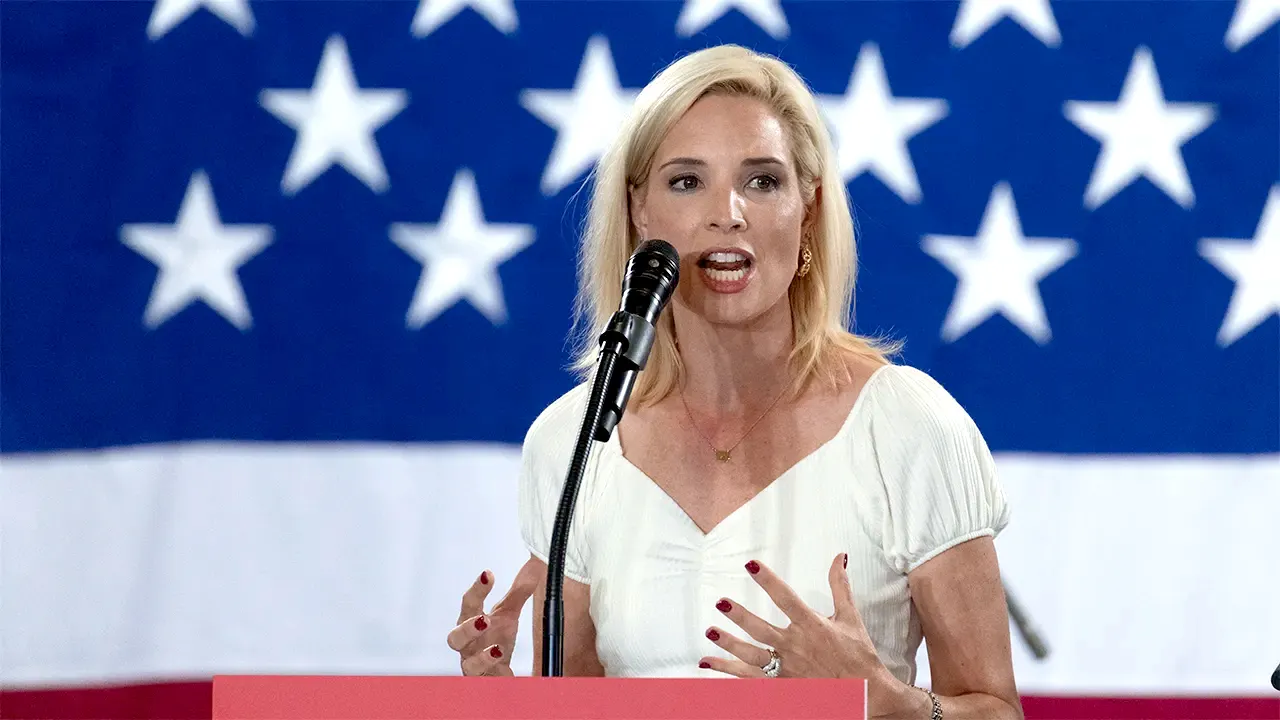
There’s a certain kind of tension that settles over a state like Iowa when a Senate race suddenly stops being predictable. You can almost hear it in the way people talk at coffee shops and county fairs, in the cautious phrasing of local party officials, and in the latest numbers from the Fox News Poll. The race between Democrat Josh Turek and Republican Ashley Hinson is not the blowout one might expect in a state that has become increasingly red in presidential elections. Instead, it is a genuine nail-biter. Among likely voters, Turek holds a razor-thin two-point edge, 49 percent to 47 percent, which is well within the margin of error. Among all registered voters, the same story emerges: Turek ahead by four points, 50 percent to 46 percent, unchanged since June. In other words, this race has been remarkably stable, and that stability is itself the headline. For a state where Republicans have dominated recent federal elections, a Democratic state representative holding a lead against a sitting Republican congresswoman is not something Iowans are used to seeing. It suggests something deeper is happening beneath the surface, something that raw partisan registration numbers alone cannot explain.
Part of the explanation lies in the coalitions each candidate has built, and the enthusiasm gaps within them. Democrats are nearly unanimous in their support for Turek, with 96 percent of Democratic likely voters backing him. Republicans, by contrast, are less unified behind Hinson. She wins only 87 percent of her own party’s voters, while ten percent of Republicans say they are crossing over to support Turek. That may sound like a small number, but in a tight race, it can be decisive. Independents are even more starkly divided: they favor Turek by a two-to-one margin. Since Iowa has more self-identified Republicans than Democrats, this is what keeps the race competitive. Turek is essentially running ahead of his party’s structural disadvantage, while Hinson is running behind hers. The demographic splits reinforce the point. Turek leads by 11 points among women, 16 points in the suburbs, 17 points among college graduates, and a striking 32 points among independents. Hinson, meanwhile, is winning men by 7 points, voters without a college degree by 6 points, rural voters by 14 points, and White evangelical Christians by a commanding 41 points. These are familiar battle lines in modern American politics, but in a state that often seems built for Republican success, the fact that a Democrat is holding these numbers together is noteworthy. It’s not just about who turns out; it’s about who is willing to break ranks.
Economic anxiety is what appears to be driving much of the shift. The pollsters compared current attitudes to the 2024 Fox News Voter Analysis collective memory of how Iowans were feeling two years earlier. At that point, about three in ten Iowans said their families were falling behind financially. Today, that number has grown to four in ten. Among those anxious, economically strained voters, Turek holds a 38-point advantage. By contrast, Iowans who say they are holding steady or getting ahead lean strongly toward Hinson. That gap reveals a lot about the mood of the state. People who feel the ground shifting beneath them are looking for change, and they seem to be finding it in the Democrat. Cost of living is the clear driving issue in the race. Six in ten likely voters say it will be extremely important to their Senate vote. That outranks even the president’s job performance, which comes in at 43 percent, immigration at 39 percent, and an issue that barely existed in previous election cycles: AI technology, at 27 percent. Turek has the advantage among voters who say cost of living is extremely important, as well as among those prioritizing President Trump and artificial intelligence. Hinson’s edge is mostly among voters who put immigration first. In an economy where prices have pinched household budgets and uncertainty has become a constant companion, that cost-of-living advantage is a powerful force for the Democrat.
Then there is the shadow of President Donald Trump, which hangs over this race in complicated ways. Trump carried Iowa by nearly 56 percent of the vote in 2024, a decisive victory that should have made life easier for every Republican on the ballot. But the current poll finds a remarkable reversal: 57 percent of Iowa likely voters now disapprove of Trump’s job performance, while only 42 percent approve. That is not a small wobble; it is a major shift in a state Trump won handily less than two years earlier. Hinson is caught in that undertow. Her favorability ratings are underwater, with 42 percent viewing her positively and 50 percent negatively. Nearly four in ten Iowa voters hold a strongly unfavorable view of her. Turek, by contrast, is net positive, with 48 percent favorable and 40 percent unfavorable registered statewide. More tellingly, by a nine-point margin, more voters say they are concerned Hinson is too close to Trump than are worried Turek is too liberal. Among voters who are extremely concerned, that gap grows to fourteen points, with 36 percent saying Hinson is too tied to the president and 22 percent saying Turek is too far left. In a state that has historically rewarded Republicans at the federal level, those numbers represent a warning sign that Hinson cannot simply rely on party brand to carry her through.
The level of commitment among supporters tells a similar story. Eighty-eight percent of Turek’s backers say they are firmly committed to their choice, while only 77 percent of Hinson’s supporters feel the same way. Twice as many Hinson voters say they might change their minds before Election Day, 20 percent compared to just 10 percent for Turek. That kind of softness is dangerous for an incumbent party, especially in a close race. GOP pollster Daron Shaw, who helps direct the Fox News Poll alongside Democrat Chris Anderson, put it bluntly. He noted that recent history and the state’s partisan makeup suggest Hinson can still pull this out. But he added that the warning signs are clear: Iowa Republicans seem ambivalent, independents prefer Turek, and even her own supporters are not sure. That is a remarkable admission from a Republican pollster, and it captures the strange quality of this moment. Iowa has not elected a Democrat to the U.S. Senate in eighteen years, not since Tom Harkin won his final term. It has been twenty years since a Democrat won the governor’s mansion. The historical pattern is deeply entrenched. And yet, this poll suggests the current environment is different. Whether Hinson can overcome the drag of her party’s brand and her own mixed support remains the central question of the final stretch.
The same survey also looked at the Iowa governor’s race, and there the Democratic trend is even more pronounced. Democrat Rob Sand leads Republican Zach Lahn by 53 percent to 44 percent among likely voters, a steady and solid advantage since June. Sand is not just winning his own party; he is pulling in 14 percent of Republicans and 66 percent of independents. Perhaps most striking is the evidence of split-ticket voting: 11 percent of voters who support Hinson for Senate say they are backing Sand for governor. That suggests some Iowans are willing to separate their feelings about the national Republican brand from their preferences for state leadership. It also shows that Hinson’s challenges are not simply about her as a candidate, but about the broader political atmosphere in the state. As for the poll itself, it was conducted September 24 through 28, 2026, under the joint direction of Beacon Research, a Democratic firm, and Shaw & Company Research, a Republican firm. The survey included interviews with 1,204 Iowa registered voters randomly selected from a statewide voter file. Respondents spoke with live interviewers on landlines and cellphones, or completed the survey online after receiving a text message. The margin of sampling error is plus or minus 2.5 percentage points for registered voters and plus or minus 3 points for the subsample of 1,008 likely voters. Like all polls, the results are subject to question wording and order, and subgroup findings have a higher margin of error. But taken together, the numbers paint a picture of a state in flux. Iowa may still be red in many ways, but its voters are wrestling with economic insecurity, presidential fatigue, and the uncomfortable feeling that the old political maps may not show where things are headed next. In this race, the only certainty is that nothing is certain.